Proficiency testing (PT) is a part of the continuous quality assurance of a laboratory’s analytical results. This is an external quality control that demonstrates the laboratory's overall ability to analyze and report correct answers on agreed parameters over time.

Proficiency Testing (PT) is an essential tool for laboratories seeking to demonstrate quality, build confidence, and support continuous improvement. It is a recognized performance assessment scheme that allows laboratories to demonstrate and verify their analytical competence.

Participants receive identical test samples, analyse them using their routine methods, and submit their results for evaluation. The results are then compared with those of laboratories worldwide, providing valuable insight into performance, highlighting strengths, and identifying areas for improvement. As such, PT is a key element of an effective quality assurance programme.

PT Program 2027

Eurofins Food & Feed Testing Norway AS offers proficiency testing programmes in microbiology for food, water, and hygiene testing. These programmes are accredited in accordance with the requirements of ISO/IEC 17043.

Registration & Log in

Please register through the Eurofins HUB portal.

Eurofins HUB

Eurofins HUB User Guide


An Essential Tool for Demonstrating Quality

mikroskop

What is Proficiency Testing?

Proficiency testing (PT) is a part of the continuous quality assurance of a laboratory’s analytical results. This is an external quality control that demonstrates the laboratory's overall ability to analyze and report correct answers on agreed parameters over time.

Expand_img

Eurofins Food & Feed Testing Norway AS offer PTs in the field of microbiology, for foods, simulated water and hygiene. These PT schemes are accredited according to the requirements in ISO/IEC 17043.

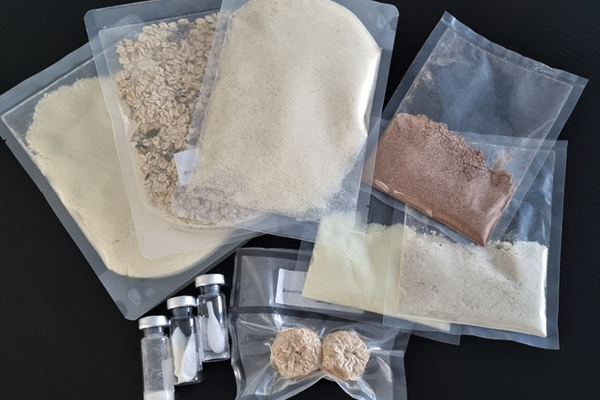
The test material is either dry natural foods, freeze dried microorganisms or swabs/cloths.

The test material is produced by IFM Quality Services Pty. Ltd, Australia. IFM is an accredited reference material producer, and produce these materials according to the requirements in ISO 17034.

mikrobiologisk-stammebank

Why participate in PT trials?

Participation provides valuable insight into a laboratory’s strengths and potential areas for improvement, making it an essential part of an effective quality assurance program.

Expand_img
  • To have the quality of your test results assessed by an external partner
  • To identify needs for training, maintain competence and indicate areas of improvement
  • To make sure that the laboratory is able to deliver reproducible results to its customers
  • To test new methods or equipment
  • To meet the requirements of ISO/IEC 17025
  • PTs must cover all accredited analyzes if such programs exists
slp-proevemateriale

How are PT trials organized?

Participants will receive their PT samples approximately the week before the period of analysis starts. Perform the analysis’ of your interest, use methods that are fit for the purpose of the target organisms, and participate in the trials of your choice.

Expand_img

Results must be entered into the portal before the due date. When a trial closes, there will be issued two reports; Preliminary report will be issued within 2 weeks and a final report will be issued within 4 weeks. The final report will include overview of results, and participants are able to compare their results against other participants.

dame-mikroskop-laks

Assessment of Participant Results

The assessment of participant performance is carried out according to ISO/IEC 17043. The respective assigned values are determined by consensus, after all participants have submitted their test results.

Expand_img

The consensus value is determined by robust statistics according to ISO 13528 (Algorithm A). Participants assessment is given by z-score for quantitative analysis and for the qualitative analysis, the assessment will be Pass of Fail.

Results need to be reported in the portal within the due date, in order for the results to be included in consensus values, and to receive an individual assessment.

avvik

Deadline for reporting of participant results

It is important that laboratory results are reported within the deadline. We recommend reporting the results well in advance in case you might need technical assistance from Eurofins. If results are not reported within the deadline, it is not guaranteed that your results can be included. Please contact us as soon as possible, no later than the day after the reporting deadline, to find out if it will be possible to have your results included.

food-quality-control-expert-inspecting-specimens-of-groceries_7500-x-5625-px-1

How often to participate in a PT?

The frequency of participation in PT trials is part of the laboratory’s risk assessment, however here are some issues that can be considered when planning:

Expand_img
  • What kind of risks are associated with the analyzes performed by the laboratory?
  • Does the laboratory have many different methods of analysis or different techniques?
  • Do you have many or few analysts?
  • Are your analysts experienced or new?
  • What level of competence do the analysts have?
  • How is the turnover in your lab?
  • What other kinds of control samples are used by the laboratory?
  • If you receive an unsatisfactory PT result, you need to consider how much time has passed since your last satisfactory PT result
slp-proevemateriale

Our PT samples

Throughout the year our trials will offer different challenges.

Expand_img

Most of our trials are composed of 3 samples (exceptions are hygiene and seafood, where the number of samples are two). The target organisms may be present in 1, 2 or 3 samples. Duplicate samples may occur. The level of target organisms may vary from low to high. As a result of this, the limit of detection may be challenged, and also the ability to make satisfactory dilution series. Relevant target strains are used. Mostly, target strains are characteristic for the particular analysis, however we may add atypical strains from time to time. Our PTs contain several target organisms at the same time, this means that a sample may have both a positive target combined with negative or background flora. For the food scheme, the matrix will also vary during the year.

The different frequency of added target organisms, the inoculated level and a variation of strains, is the best way of simulating real life samples. This will measure real competence. Remember to report your results from approved staff, not from staff in training.

Registration for 2027 is now open

Eurofins Food & Feed Testing Norway has more than 25 years of experience organizing proficiency testing schemes in microbiology for laboratories around the world. Participants include laboratories accredited to ISO/IEC 17025, as well as in-house laboratories within the food and beverage industry and the water sector.

By participating in our PTS programs, laboratories can demonstrate analytical competence, monitor performance over time, and gain confidence that their methods and procedures continue to deliver reliable results.

Prices

Expand_img

Price per round

PT Food

1 sample set 8 166,-
2 sample sets (within the same round) 12 249,-
3 sample sets (within the same round) 14 701,-
Seafood program  8 166,-

PT Water

1 round 8 166,-

PT Hygiene

Non-pathogens 6 823,-
Pathogens 7 814,-
Full program
(non-pathogens + pathogens)
13 166,-

CRM

1 round 1 870,-

Other costs

Repeat sample 741,-
Manual submission of results by Eurofins 1 343,-
Shipping cost From 610,-

All prices are quoted in NOK.

Accredited Scope

Expand_img

Object

Test item

Parameter

Food Natural dried food
  • Aerobic colony count
  • Lactic acid bacteria
  • Contaminating microorganisms
  • Enterobacteriaceae
  • Coliform bacteria
  • Thermotolerant coliform bacteria
  • Escherichia coli
  • Mould
  • Yeast
  • Presumptive Bacillus cereus
  • Enterococcus
  • Coagulase positive Staphylococcus
  • Clostridium perfringens
  • Anaerobic sulfite reducing bacteria
  • Clostridium spp.
  • Listeria monocytogenes
  • Salmonella spp.
  • Listeria spp.
  • Escherichia coli O157:H7 (stx negative)
  • H2S producing bacteria
Food Freeze dried microorganisms
  • Enteropathogenic Vibrio spp.
    (V. cholera/V. parahaemolyticus)
  • Campylobacter spp.
Water Freeze dried microorganisms
  • Culturable microorganisms
    (22 og 36°C)
  • Coliform bacteria
  • Thermotolerant coliform bacteria
  • Escherichia coli
  • Intestinal enterococci
  • Clostridium perfringens
  • Pseudomonas aeruginosa
  • Mould
  • Yeast
  • Enteropathogenic ibrio spp.
    (V. cholera/V. parahaemolyticus)
  • Campylobacter spp.
  • Salmonella spp.
  • Coagulase positive Staphylococcus
Hygiene Cloth or swab
  • Aerobic colony count
  • Enterobacteriaceae
  • Coliform bacteria
  • Escherichia coli
  • Mould
  • Yeast
  • Salmonella spp.
  • Listeria monocytogenes
  • Coagulase positive Staphylococcus

The accreditation document at the Norwegian accreditation body web site may deviate from the above list. Eurofins has an accreditation with a flexible scope, meaning that there is an opportunity to expand the accreditated scope without pre-authorization from the accreditation body. The accreditation document at the Norwegian accreditation body web site will be updated regularly.

The latest valid accreditation document is available from the website of the Norwegian Accreditation body.

Confidentiality

Expand_img

As a PT provider Eurofins is obliged to keep the identity and the PT performance of the participating laboratories confidential, unless agreed to share this information. If Eurofins is required by law to release confidential information, you will be notified.

A few participants will receive their PT samples directly from IFM. Laboratory identity and laboratory performance will be kept confidential.

crm

Get in Touch

Telephone hours: Monday to Friday, 08:00-16:00

+47 481 80 117

PT001@ftn.eurofins.com