Food additives
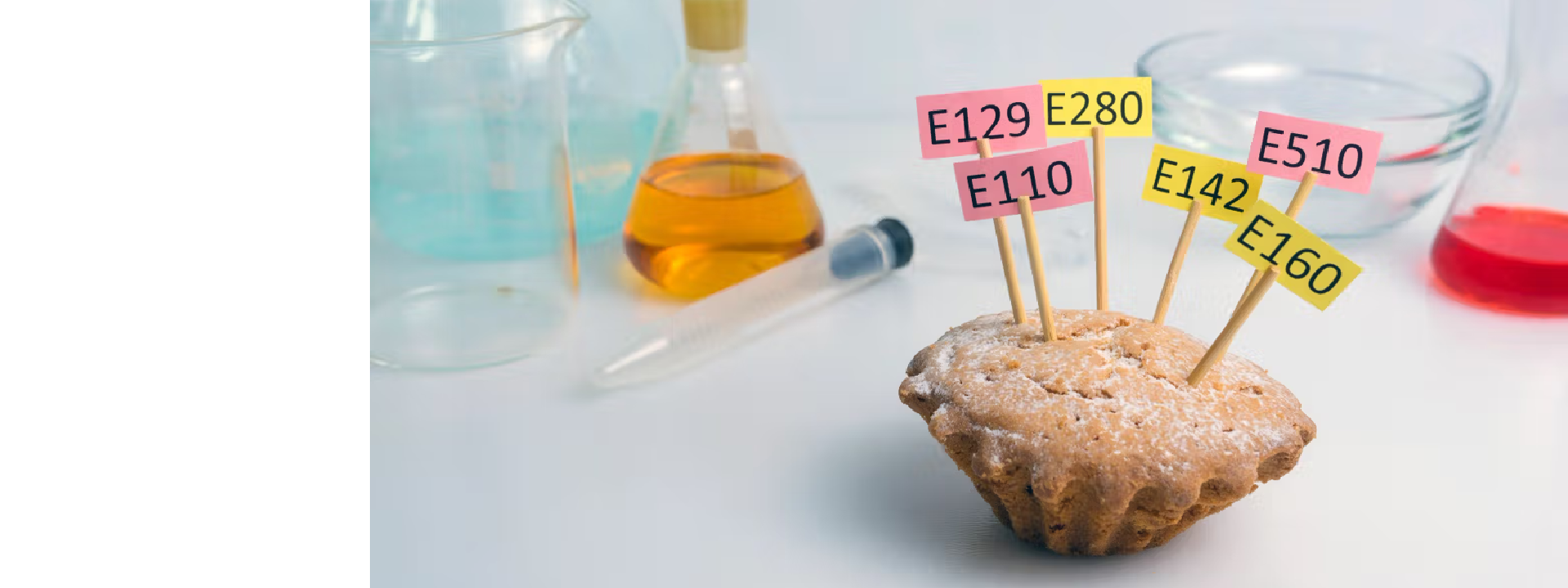
Food additives testing
The improper use of food additives—whether regarding dosage or type, and particularly the misuse of additives not permitted in food—can lead to unpredictable consequences. Acute exposure can result in food poisoning.
Understanding food additives
According to the Codex Alimentarius Commission (CAC), food additives are substances intentionally added to food to perform specific technological functions during manufacturing, processing, packaging, storage, transportation, or to improve the technical and sensory characteristics of food products.
Food additives may be natural, synthetic, semi-synthetic, or produced through biological processes such as enzyme and microbial fermentation. When used appropriately, for their intended purpose, and within permitted limits, food additives help maintain product quality, extend shelf life, improve sensory attributes, enhance product stability, and support food production processes.
Why is food additive testing necessary?
Food additives are chemical or biological substances used directly in food products. Food additive testing helps determine purity, active ingredient content, related compounds, impurities, and potential contaminants that may arise during manufacturing.
Under current regulations, food additives are required to undergo testing to support Product Self-Declaration or Product Registration/Declaration before being placed on the market. Food Additive Analysis and quality testing also help businesses meet the requirements of customers, retailers, regulatory authorities, and export markets.
For consumers, food additive testing and food additive analysis contribute to product safety by ensuring additives comply with permitted use conditions and do not contain substances that may pose a risk to human health.
Food additive testing enables manufacturers and importers to evaluate product quality, purity, and safety, while supporting product self-declaration and product registration requirements. Testing programs may be conducted in accordance with the requirements of Decree No. 15/2018/ND-CP and Circular No. 17/2023/TT-BYT, with reference to internationally recognized standards and guidance documents for food additives, including Codex General Standard for Food Additives (Codex STAN 192-1995) and safety evaluations established by the Joint FAO/WHO Expert Committee on Food Additives (JECFA).
In practice, the letter "E" followed by a number is commonly found on the packaging of various products (e.g., MSG/monosodium glutamate (E621); tartrazine/lemon yellow (E102); sodium benzoate preservative (E211)). These are international codes designating food additives that have undergone rigorous safety assessments established by the European Community (EC) and the Scientific Committee on Food (SCF).
Furthermore, regulations dictate that the use and quality testing of food additives must adhere to permitted dosage limits; additionally, they must not be carcinogenic to humans, nor—based on experimental evidence—induce cancer in any animal species, regardless of the dosage or route of administration.
Classification of food additive groups for quality testing
There are various ways to classify food additives; however, they are often categorized by function into specific groups for the purpose of quality testing, as follows:
- Flavor Enhancers (QCVN 4-1:2010/BYT): Monosodium Glutamate (MSG/E621), Disodium Inosinate (E631), Disodium Guanylate (E627), and other flavor-enhancing agents.
- Humectants (QCVN 4-2:2010/BYT): Glycerol, Sorbitol, Propylene Glycol, and other moisture-retaining agents.
- Raising Agents (QCVN 4-3:2010/BYT): Sodium Bicarbonate, Ammonium Bicarbonate, and other leavening agents.
- Anti-Caking Agents (QCVN 4-4:2010/BYT): Silicon Dioxide, Calcium Silicate, and other anti-caking substances.
- Color Retention Agents (QCVN 4-5:2010/BYT): Nitrites, Nitrates, and other color-fixing agents.
- Antioxidants (QCVN 4-6:2010/BYT): BHA, BHT, TBHQ, Ascorbic Acid, Tocopherols, and other antioxidants.
- Antifoaming Agents (QCVN 4-7:2010/BYT): Dimethylpolysiloxane and other antifoaming substances.
- Artificial Sweeteners (QCVN 4-8:2010/BYT): Aspartame, Acesulfame-K, Saccharin, Sucralose, Steviol Glycosides, and other sweetening agents.
- Firming Agents (QCVN 4-9:2010/BYT): Calcium Chloride, Calcium Lactate, and other firming agents.
- Food Colors (QCVN 4-10:2010/BYT): Tartrazine (E102), Sunset Yellow (E110), Allura Red (E129), Caramel Color, and other approved food colorants.
- Acidity Regulators (QCVN 4-11:2010/BYT): Citric Acid, Lactic Acid, Phosphoric Acid, and other acidity regulators.
- Preservatives (QCVN 4-12:2010/BYT): Sorbic Acid, Potassium Sorbate, Benzoic Acid, Sodium Benzoate, Natamycin, and other food preservatives.
- Stabilizers (QCVN 4-13:2010/BYT): Carrageenan, Xanthan Gum, Guar Gum, Pectin, and other stabilizing agents.
- Sequestering Agents (QCVN 4-14:2010/BYT): EDTA and other metal-chelating agents.
- Flour Treatment Agents (QCVN 4-15:2010/BYT): Ascorbic Acid and other flour treatment additives.
- Bulking Agents (QCVN 4-16:2010/BYT): Maltodextrin, Cellulose, and other bulking materials.
- Propellants (QCVN 4-17:2010/BYT): Nitrogen, Carbon Dioxide, and other food-grade propellants.
- Modified Starch Preparations (QCVN 4-18:2011/BYT): Modified starches, oxidized starches, acetylated starches, and starch derivatives.
- Food Enzymes (QCVN 4-19:2011/BYT): Amylase, Protease, Lipase, Cellulase, and enzyme preparations used in food processing.
- Glazing Agents (QCVN 4-20:2011/BYT): Beeswax, Shellac, and other glazing agents.
- Thickeners (QCVN 4-21:2011/BYT): Xanthan Gum, Guar Gum, Alginate, and other thickening agents.
- Emulsifiers (QCVN 4-22:2011/BYT): Lecithin, Mono- and Diglycerides, Polysorbates, and other emulsifying agents.
Food additive testing
Eurofins Food and Feed Testing in Vietnam provides comprehensive testing, inspection, audit, and certification solutions across the food value chain, with dedicated support for food additive manufacturers, importers, distributors, food producers, and brand owners in managing food additive quality and compliance from raw materials to finished products.
Food additive content analysis
Identification and quantification of preservatives, sweeteners, flavor enhancers, antioxidants, food enzymes, food colorings, emulsifiers, stabilizers, and other food additives to verify compliance with product specifications, technical requirements, and product declaration dossiers.
Purity and composition analysis
Assessment of food additive purity, active ingredient content, related compounds, process impurities, by-products, and category-specific quality parameters to support product quality assurance and regulatory compliance.
Detection of unauthorized food additives
Testing for Rhodamine B, Sudan dyes, Auramine O, unauthorized sweeteners, industrial colorants, prohibited substances, and undeclared food additives to help businesses manage compliance risks and ensure product conformity.
Heavy metal and contaminant analysis
Determination of lead (Pb), cadmium (Cd), arsenic (As), mercury (Hg), residual solvents, dioxins, PCBs, PAHs, and other contaminants that may affect the quality, safety, and compliance status of food additives.
Microbiological and enzyme analysis
Testing for total viable count, yeasts and molds, indicator microorganisms, and evaluation of enzyme activity for enzyme preparations and biologically derived food additives.
Label verification and technical documentation review
Verification of actual product composition against product labels, specifications, Certificates of Analysis (COAs), technical documentation, product declaration dossiers, and manufacturer information to ensure accuracy, transparency, and regulatory compliance.
Food Safety Solutions
- Support for shelf-life and stability studies, product declaration and regulatory compliance, export market requirements,
- Nutrition labelling review,
- Customized technical and regulatory workshops, and implementation of GMP, HACCP, ISO 22000,
- FSSC 22000, BRCGS, and customer-specific food safety requirements.
Environmental compliance testing and consulting services supporting food manufacturing operations
- Environmental monitoring programs,
- Industrial hygiene sampling,
- Water quality assessment,
- Production environment monitoring, sanitation verification,
- Environmental compliance testing, and consulting services supporting food manufacturing operations.
Get in touch
Would you like to find out more about our testing solutions, or do you need tailored analytical support? Contact us today to get in touch with our experts.