Canned Foods
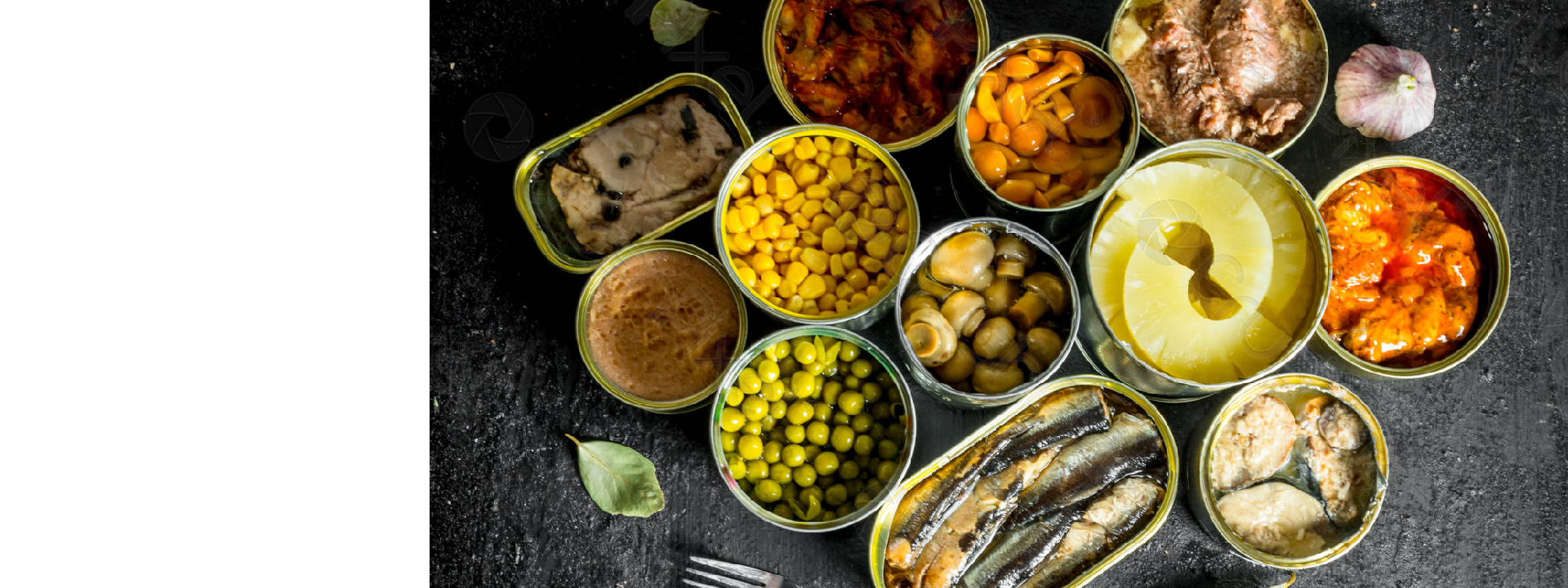
Canned food products analysis
Testing canned food products for the purpose of declaring quality standards is a crucial step that enables state authorities to evaluate and inspect product quality and determine whether the products meet the requirements for market circulation.
Why is it necessary to test canned food?
Canned foods are food products sealed in containers designed to preserve product quality and safety throughout extended storage and distribution periods. These products may be packaged in metal cans, aluminum containers, retort pouches, glass containers, plastic containers, or other suitable packaging materials. Canned foods provide convenience, long shelf life, and reliable product availability, making them a widely consumed food category worldwide.
Because canned foods undergo thermal processing and extended storage, Canned Food Testing plays a critical role in verifying product safety, quality, stability, regulatory compliance, and market readiness. Testing helps manufacturers, importers, exporters, distributors, retailers, and brand owners demonstrate compliance with food safety requirements, product specifications, and applicable regulations while protecting consumers from biological, chemical, and physical hazards.
Regulations on the testing of canned food in accordance with current standards
Reference Frameworks and Applicable Regulations
Currently, in Vietnam, testing parameters for canned foods are carried out in accordance with the following regulations:
- QCVN 8-1:2011/BYT – National Technical Regulation on the Limits of Mycotoxin Contamination in Food
- QCVN 8-2:2011/BYT – National Technical Regulation on the Limits of Heavy Metal Contamination in Food
- QCVN 8-3:2012/BYT – National Technical Regulation on the Limits of Microbiological Contamination in Food
- Codex Standards – Codex Alimentarius Standards, Guidelines and Codes of Practice
- Corresponding TCVN standards, customer specifications, retailer requirements, food safety regulations, nutrition labeling requirements, and internal company standards.
Key Quality Criteria for Canned Foods
- External appearance and packaging quality: Container integrity, seam quality, packaging condition, swelling, corrosion, leakage, deformation, product appearance, and labeling compliance.
- Microbiological quality: Commercial sterility, spoilage microorganisms, pathogenic microorganisms, heat-resistant microorganisms, and other microbiological indicators relevant to canned foods.
- Chemical and contaminant quality: Heavy metals, process contaminants, migration substances, pesticide residues, food additives, preservatives, and other chemical hazards.
- Physicochemical and nutritional quality: pH, moisture content, water activity, nutritional composition, salt content, acidity, texture, and other product-specific quality parameters.
- Sensory quality: Appearance, color, odor, flavor, texture, and overall consumer acceptability.
Canned food testing
Eurofins Food and Feed Testing Vietnam provides comprehensive Farm-to-Fork solutions for manufacturers, importers, exporters, distributors, retailers, and brand owners of canned food products. Through an integrated portfolio of testing, inspection, auditing, and certification services, we help ensure product quality, food safety, regulatory compliance, and market access across the entire food supply chain.
Microbiological testing
Detection of Clostridium botulinum, Salmonella spp., spoilage microorganisms, heat-resistant microorganisms, indicator organisms, yeasts, molds, and other microbiological hazards to ensure food safety and commercial sterility.
Sterilization and thermal process validation
Evaluation and validation of pasteurisation, sterilisation, retort processes, thermal processing parameters, and commercial sterility requirements to verify the effectiveness of food preservation systems.
Shelf-life and stability studies
Assessment of product stability, packaging performance, microbiological stability, sensory characteristics, and quality retention throughout the declared shelf life under various storage and distribution conditions.
Physicochemical and nutritional analysis
Evaluation of pH, moisture content, water activity, salt content, acidity, nutritional composition, texture, product consistency, and other quality parameters relevant to canned food products.
Heavy metal and contaminant analysis
Testing for lead (Pb), cadmium (Cd), arsenic (As), mercury (Hg), residual contaminants, migration substances, process contaminants, and other food safety hazards potentially originating from raw materials or packaging materials.
Packaging integrity and food contact material testing
- Assessment of seam integrity, packaging performance,
- Migration testing,
- Food-contact material compliance,
- Container compatibility, packaging durability, and protection against contamination and spoilage.
Product authenticity and label verification
- Verification of product composition,
- Ingredient declarations, nutritional labelling, product specifications, authenticity claims, customer requirements, and compliance with applicable labeling regulations.
Food Safety Solutions
- Support for shelf-life and stability studies, product declaration and regulatory compliance, export market requirements,
- Nutrition labeling review,
- Customized technical and regulatory workshops, and implementation of GMP, HACCP, ISO 22000, FSSC 22000, BRCGS, and customer-specific food safety requirements.
Environmental compliance testing and consulting services supporting food manufacturing operations
- Environmental monitoring programs,
- Industrial hygiene sampling,
- Water quality assessment,
- Production environment monitoring, sanitation verification,
- Environmental compliance testing, and consulting services supporting food manufacturing operations.
Get in touch
Would you like to find out more about our testing solutions, or do you need tailored analytical support? Contact us today to get in touch with our experts.