Dioxins and PCBs
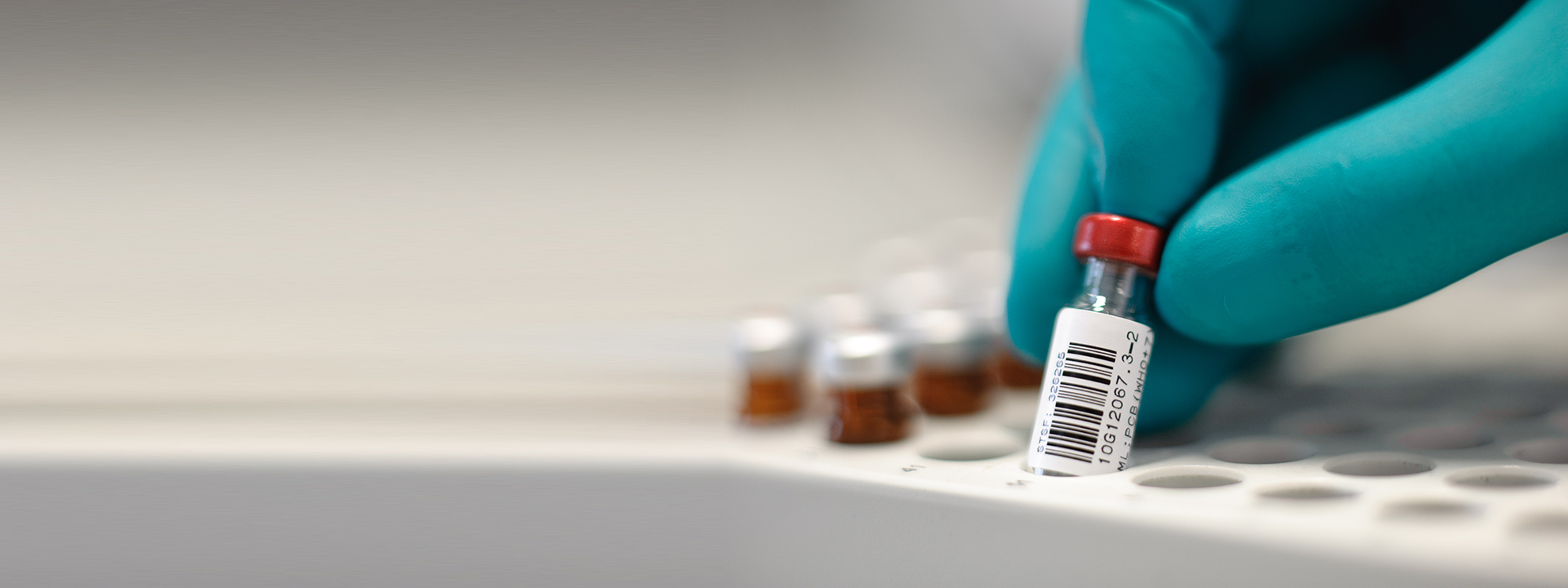
Dioxins and PCBs
Ensure the safety and compliance of your food and feed products by taking advantage of our accredited analysis of dioxins and polychlorinated biphenyls (PCBs). Our advanced testing services help you meet stringent EU regulations, reduce health risks, and maintain consumer trust.
Key services
- Polychlorinated dibenzodioxins and -furans (PCDD/Fs) – all 17 toxic congeners
- Dioxin-like PCBs (DL-PCBs) – 12 PCB congeners with WHO-assigned toxic equivalent factors
- Non-dioxin-like PCBs (NDL-PCBs) – 6 indicator congeners (ICES6-PCBs)
- Total PCB analysis – all 209 congeners, in line with California Proposition 65 and GOED standards
- TEQ calculation – based on WHO(2005)-TEF and optionally WHO(2022)-TEF, other TEF-systems on request
- Accredited methods – according to DIN EN ISO/IEC 17025:2018
Additional services
Beyond standard testing, Eurofins Food & Feed Testing also offers:
- Analysis of biota, water, soil, sediments, materials, chemicals, and human samples (e.g. breast milk, blood)
- Monitoring programmes for food and feed producers
- Consultation and data evaluation for regulatory compliance and risk assessment
- Customised reporting for specific regulatory frameworks (e.g. US EPA Method 1668)
Dioxins and PCBs: how are they classified
Dioxins – toxic legacy of industrial processes
Dioxins, or polychlorinated dibenzo-p-dioxins and -furans (PCDD/Fs), are a group of highly toxic, persistent organic pollutants (POPs) formed as unintentional by-products in industrial and combustion processes involving chlorine. Of the 210 known congeners, 17 are particularly toxic, with 2,3,7,8-TCDD being the most toxic, classified as carcinogenic to humans by the World Health Organization (WHO). Dioxins are chemically and thermally stable, fat-soluble, and resistant to biological degradation. As a result, they accumulate in the food chain – mainly in meat, eggs, dairy products, fish and shellfish – posing long-term health risks to humans through dietary exposure.
PCBs – Industrial chemicals with lasting impact
Polychlorinated biphenyls (PCBs) are a group of 209 synthetic chlorinated compounds that were widely used in industrial applications. Although banned in many countries, they persist in the environment and food chain, where they accumulate, particularly in animals. In recent years, it has also been found that PCBs can be formed as unwanted by-products in industrial processes. Of the 209 congeners, 12 show toxicological properties similar to dioxins and are classified as dioxin-like PCBs (DL-PCBs), while the remaining are referred to as non-dioxin-like PCBs (NDL-PCBs). Both types pose significant health risks, including endocrine disruption, immune system impairment and potential carcinogenicity. Due to their widespread historical use and environmental persistence, PCBs remain a critical focus of food and feed safety monitoring.
Your Competence Centre for POPs
At the Eurofins Competence Centre for dioxins and PCBs, we combine decades of experience with cutting-edge technology to deliver:
- Analysis of nearly every matrix including food and feed, biota, environmental matrices, chemical and consumer products
- Analysis of compliance with EU requirements using GC-MS/MS or GC/HRMS-techniques
- Regulatory expertise
- Rapid turnaround times and tailored customer service
- Continuous innovation, e.g. automatisation of sample preparation
Legal framework and guidelines*
- Commission Regulation (EU) 2023/915 (maximum levels for contaminants in food)
- Directive 2002/32/EC (maximum levels for undesirable substances in animal feed)
- Commission Recommendation 2013/711/EU (reduction of dioxins and PCBs in food and feed)
- Stockholm Convention on Persistent Organic Pollutants (global framework for POPs)
- Directive 2000/60/EC (EU Water Framework Directive and Environmental Quality Standards (EQS) for priority substances)
- EN 1948 -Dioxins and PCB in stationary source emissions
* Regulatory information is provided for general guidance only and may not reflect the most recent regulatory changes. Always consult official sources for up‑to‑date legislation. For market‑specific support, please contact your local Eurofins Food & Feed Testing laboratory. Our specialists offer tailored support through horizon scanning and food safety consultancy services.
Get in touch
Would you like to find out more about our testing solutions, access our competence centre services, or do you need tailored analytical or consultancy support?
Contact Eurofins Food Testing Ireland today to speak to our experts by submitting an enquiry form or calling +353 (0)1 431 1306