
Food labelling
Learn how to correctly prepare food labels in accordance with legislation and NVWA guidelines.

With Eurofins Academy's e-learning courses, you can learn everything about food safety, legislation and quality management at your own pace. Our online training courses are developed by specialists and are closely aligned with day-to-day practices in the food industry.

Below you will find all e-learning courses currently available through the Eurofins Academy.
The range of courses is regularly expanded and continuously updated.
Learn how to correctly prepare food labels in accordance with legislation and NVWA guidelines.

Labelling regulations are complex and mistakes can easily be made. As a QA professional, you want to be sure that your labels are correct. In this e-learning course, you will learn how to correctly label food products and use legislation and the NVWA handbook to prepare accurate labels.
Practical information:
Learning objectives
You will learn how to:
Who is this training for?
This training is suitable for anyone who wants to master the preparation and verification of food labels.
Learning outcome
After completing this e-learning course, you will be able to prepare and verify labels based on applicable legislation. In short, you will be able to prevent labelling errors and confidently explain your labels during inspections or when responding to questions in practice.

Apply NVWA guidelines in practice and substantiate your Listeria control strategy.
Under Regulation (EC) 2073/2005, it must be demonstrated for food products that there is no risk to consumers from contamination with Listeria monocytogenes. The NVWA Food Microbiology Handbook provides guidelines for this. In practice, these guidelines can raise questions. Does my product fall under category 1.2 or 1.3? When is ‘absence in 25 grams’ required, and when is <100 CFU/g sufficient? And is my justification robust enough? In this e-learning course, you will learn how to apply these guidelines in practice.
Practical information:
Learning objectives
You will learn how to:
Who is this training for?
This training is intended for anyone who wants to learn what Listeria monocytogenes is and how to control this pathogen in a product or production environment.
Learning outcome
After completing this e-learning course, you will be able to find the applicable legislation, identify risks of Listeria growth and determine which measures are needed to control these risks. You will do this using the NVWA decision tree for Listeria studies. In short, you will have a clear rationale during inspections and be able to explain your decisions.

Conduct audits with greater confidence and create more value for your organisation.
Internal audits are a powerful tool for fostering a culture of continuous improvement within your organisation. They are also required by many standards. As an internal auditor, you need sound knowledge and practical guidance to conduct audits with confidence and deliver maximum value to your organisation. This e-learning course will help you develop both.
Practical information:
Learning objectives
You will learn:
Who is this training for?
This training is intended for anyone who wants additional background information on conducting an internal audit. Would you like to become officially certified as an internal auditor? Consider supplementing this e-learning course with our live internal auditor training.
Learning outcome
After completing this e-learning course, you will be able to conduct an internal audit objectively in accordance with applicable legislation and certification standards. In short, you will conduct internal audits with confidence and deliver demonstrable value to your organisation.

Practical training in the fundamentals of HACCP and food-safe working practices on the production floor.
Working safely with food is a basic requirement for food production. As products are manufactured every day within your organisation, employees ruquire knowledge of HACCP. In this training course, production employees learn what working safely with food involves and why everyone has a responsibility to contribute to food safety every day.
In practice, risks often arise from small actions: quickly picking something up, skipping a step or not considering the impact an action may have on food safety. Mistakes are more likely to occur during routine work or under time pressure. This training helps employees recognise risks and handle food safely.
Practical information:
Learning objectives
You will learn:
Who is this training for?
This training is intended for anyone working in a food production environment who needs to understand the basics of HACCP and working safely with food.
Learning outcome
After completing this e-learning course, you will understand what working safely with food entails. You will be able to explain what a contamination hazard is and how to identify and/or prevent it. You will also understand what CCPs are. In short, you will actively contribute to the safe production of food and help reduce food safety risks.
Would you like to take this training together with the ‘Hygienic working practices for production employees’ course? Let us know and we can combine them into one training course.
We will also be launching a food defence training course for production employees soon. This is a great combination with this training, so keep an eye on our range of courses!

Make hygienic working practices a natural part of everyday production activities.
Working hygienically is a basic requirement for food production. Products are manufactured every day in your organisation, making hygienic working practices essential.
In practice, hygiene often comes down to small actions: washing your hands, wearing work clothing correctly, keeping clean and dirty areas separate or using materials correctly. During routine work or under time pressure, important hygiene steps can sometimes be skipped. This training helps employees remain aware of their role and make hygienic working practices a natural part of their daily work.
Practical information:
Learning objectives
You will learn:
Who is this training for?
This training is intended for anyone working in a food production environment who needs to understand the basics of hygienic working practices.
Learning outcome
After completing this e-learning course, you will be able to work according to the basic principles of hygienic working practices and identify deviations on the production floor and take appropriate measures. In short, your daily actions will actively contribute to a hygienic and safe production environment.
Would you like to take this training together with the ‘HACCP for production employees’ course? Let us know and we can combine them into one training course.
We will also be launching a food defence training course for production employees soon. This is a great combination with this training, so keep an eye on our range of courses!

Read reports correctly and draw well-founded conclusions for your organisation.
Correctly interpreting analysis reports is essential for making well-founded decisions within your organisation. Whether you work in QA, production or in a laboratory, an analysis report contains valuable information, provided you know what to look for.
In practice, reports often raise questions. What does a result with ‘<’ mean? Is the reporting limit suitable for my assessment? Is the method used accredited? And can I conclude from this result that my product meets the applicable standard? Incorrect interpretation can lead to poor decisions or unnecessary concern.
In this e-learning course, you will learn how to read and correctly interpret analysis results and draw well-founded conclusions based on the results of the analyses performed.
Practical information:
Learning objectives
You will learn:
Who is this training for?
This training is intended for anyone who works with analysis reports and wants to interpret them correctly in order to reach the right conclusion.
Learning outcome
After completing this e-learning course, you will be able to assess an analysis report, compare units and check reporting limits. You will also be able to draw a conclusion based on the reported result. In short, you will interpret analysis reports with confidence and make well-founded decisions for your organisation.
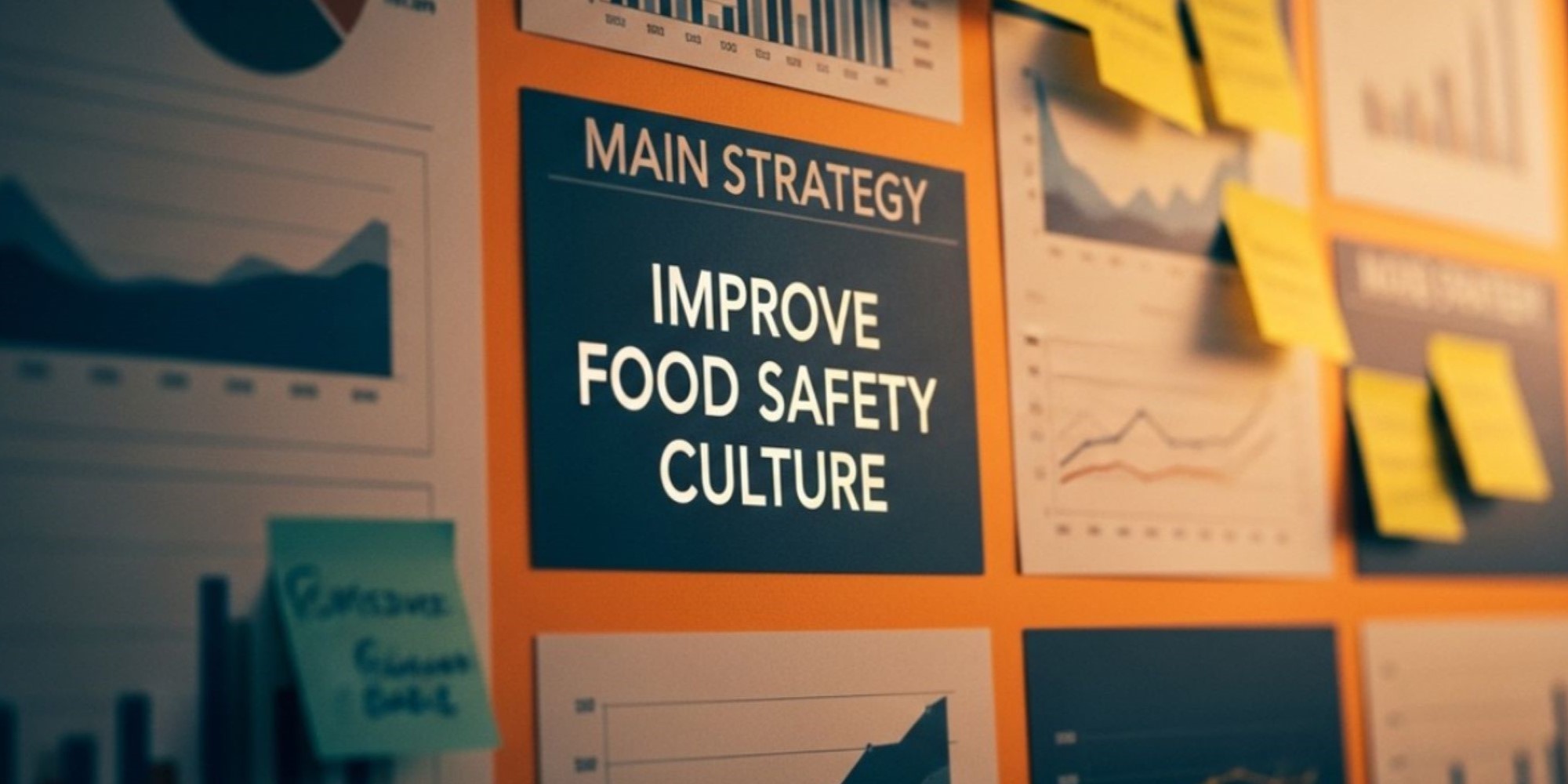
Build a strong Food Safety Culture through effective leadership.
A strong Food Safety Culture emerges when senior management provides clear direction and consistently prioritises food safety. Leadership sets the standard for behaviour, accountability and risk awareness throughout the organisation.
In practice, however, culture can be difficult to make tangible. Procedures and systems may be in place, but how do you ensure that food safety is genuinely embraced on the production floor? How do you make culture measurable and demonstrable to certification bodies? And how do you prevent food safety from remaining an operational issue rather than becoming a strategic priority?
This e-learning course provides insight into the key elements of a mature Food Safety Culture and offers practical tools for management teams to effectively steer their organisation towards sustainable, safe and responsible working practices.
Practical information:
Learning objectives
You will learn:
Who is this training for?
This training is intended for senior management members who are responsible for strategic decision-making and want to contribute to a strong, mature and future-proof Food Safety Culture.
Learning outcome
After completing this e-learning course, you will understand what a mature Food Safety Culture entails and the role senior management plays in developing it. You will be able to take concrete steps to build and maintain a Food Safety Culture, put it structurally on the agenda and demonstrate effective leadership in food safety. In short, you will strengthen risk awareness within the organisation, reduce the likelihood of incidents and ensure that food safety is sustainably embedded in everyday behaviour and decision-making.
Then you can easily add our e-learning courses to your own learning environment using SCORM connectors.
Try the free e-learning course!