Analysis of consumer cannabis
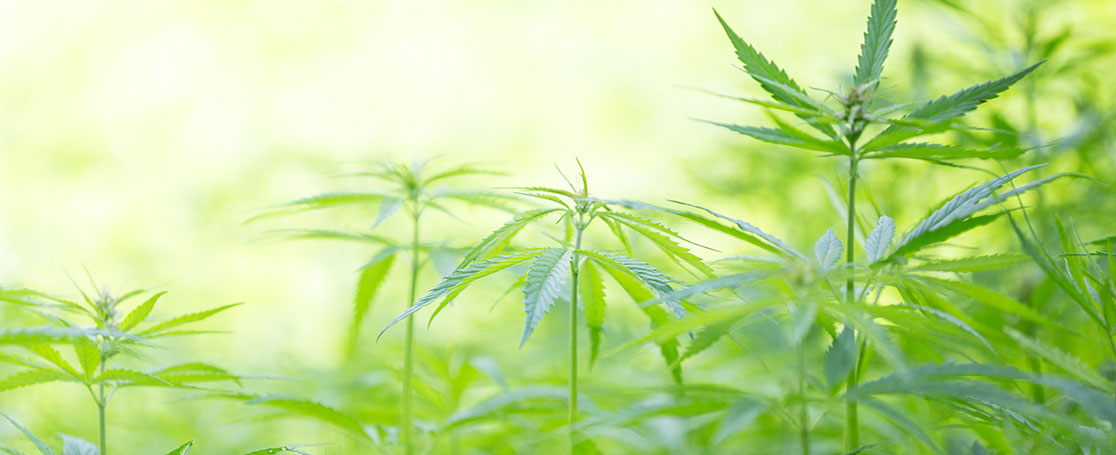
Your experts for comprehensive consumer cannabis analysis
July 2025. With the publication of the Cannabis Act in Germany, new requirements were issued for cannabis products from cannabis social clubs. In addition to the declaration of the average tetrahydrocannabinol (THC) and cannabidiol (CBD) content, it is now mandatory to test the products for pesticides, mycotoxins, heavy metals and microorganisms. Our experts at the Eurofins Food & Feed Testing laboratories in Germany will be happy to support you in all questions related to cannabis analysis.
Hemp as a crop plant
Hemp (Cannabis sativa) is one of the oldest cultivated plants. Due to the presence of the so-called cannabinoids, its preparations have been used as medicines and narcotics since ancient times. Industrially, its fibres are also used in the production of textiles. The seeds of the hemp plant are practically free of cannabinoids and are used to produce edible oils and protein powders for food production. The leaves and flowers of the hemp plant, on the other hand, contain over 100 different cannabinoids as secondary phytometabolites. Of the psychoactive cannabinoids, Δ9-tetrahydrocannabinol (Δ9-THC) is the most important component. Other cannabinoids, such as cannabidiol (CBD), are thought to have health-promoting effects.
Our analysis and service portfolio for cannabis for consumption
In addition to the analysis of Δ9-THC, Δ9-THC acid and their sum as well as the analysis of CBD, we also offer the analysis of a wide range of other cannabinoids:
- Δ9-Tetrahydrocannabinol (Δ9-THC)
- Δ9-Tetrahydrocannabinolic acid (Δ9-THCA)
- Sum Δ9-Tetrahydrocannabinol
- Cannabidiol (CBD)
- Cannabichromene (CBC)
- Cannabidiolic acid (CBDA)
- Cannabidivarin (CBDV)
- Cannabidivarinic acid (CBDVA)
- Cannabigerol (CBG)
- Cannabigerolic acid (CBG-A)
- Cannabinol (CBN)
- Tetrahydrocannabivarin (THCV)
- Δ8-Tetrahydrocannabinol (Δ8-THC)
The analysis of pesticide residues is very important for cannabis products due to their use in cultivation. The monitoring of pesticide residues is an important measure to monitor good professional practice and to be prepared for future maximum residue limits.
Analyses for mycotoxins are also advisable. Mycotoxins can be formed by moulds, e.g. during growth in the field or by improper storage.
In addition, we also support you in analysing heavy metals in your consumer cannabis products. Contamination with heavy metals is generally influenced by the local environmental conditions and the flowering and growth promoters used. Since hemp is a plant that absorbs and accumulates heavy metals very well, this analysis should not be dispensed with, especially since inhalation increases the lung-damaging effect of many metals.
We also offer microbiological analyses to check compliance with future limit values.
Core analyses at a glance
Our range of analytical services as part of the quality assurance of consumer cannabis is almost complete. The most important key points are summarised below:
Special analytics
Contents of natural ingredients, e.g.
- Δ9-Tetrahydrocannabinol (Δ9-THC)
- Cannabidiol (CBD)
- Cannabinoid profile
Residues and contaminants
- Pesticides (also available for medicinal cannabis)
- Heavy metals and elements (inorganic contaminants)
- Mycotoxins
Microbiology and hygiene
- Total bacterial count
- Yeasts and mold
- E. coli
- Salmonella
- Bacillus cereus
- Clostridium perfringens
Migration residues from packaging
- Phthalates
- Bisphenols
In addition to the analysis of consumer cannabis, we also offer you the analysis of industrial hemp and derived products to check compliance with the maximum levels of the European Contaminants Regulation (EU) 2023/915. Please also read our article Analysis of THC, CBD and other cannabinoids in food.
Legal classification
In March 2024, the German Bundestag passed the Cannabis Act (CanG), which came into force in April 2024. With this law, the narcotic status for cannabis is no longer applicable in Germany and a distinction is only made between industrial hemp (THC content < 0.3 %), consumer cannabis and medicinal cannabis. Section 1 of the CanG also explains what is defined as cannabis. Synthetic THC continues to fall under the Narcotic Drugs Act (BtMG).
Get in touch
Would you like to find out more about our testing solutions, or do you need tailored analytical support? Contact us today to get in touch with our experts.
Relevant legal bases and guidelines
[1] Bundesgesetzblatt Teil I - Gesetz zum kontrollierten Umgang mit Cannabis und zur Änderung weiterer Vorschriften - Bundesgesetzblatt (Cannabis Act (CanG)) (in German)
[2] Regulation (EU) 2015/2283 of the European Parliament and of the Council of 25 November 2015 on novel foods
Written by:
Ashok Timalsina, Sindy Böhme
Eurofins WEJ Contaminants GmbH