St. John’s wort (Hypericum perforatum) is one of the most widely used botanical ingredients in dietary supplements, valued for its naturally occurring compounds, including hypericins. As consumer demand for botanical products continues to grow, ensuring the authenticity and quality of raw materials has become increasingly important for manufacturers, retailers, and consumers alike.
The integrity of a botanical ingredient begins with accurate species identification and adherence to good manufacturing practices. However, economically motivated adulteration remains a persistent challenge within the global supply chain. In some cases, St. John’s wort extracts have been intentionally adulterated with synthetic food dyes such as brilliant blue, sunset yellow, amaranth, and tartrazine. These undeclared additives can artificially influence analytical results, making products appear richer in hypericins and helping them pass quality assessments despite not meeting authenticity requirements.
High-Performance Thin-Layer Chromatography (HPTLC) is a valuable tool for detecting these types of adulteration. Beyond confirming botanical identity, HPTLC can reveal unexpected compounds that are not associated with genuine St. John’s wort. When compared against authenticated reference materials, non-conforming samples may display additional bands or zones that indicate the presence of undeclared substances.
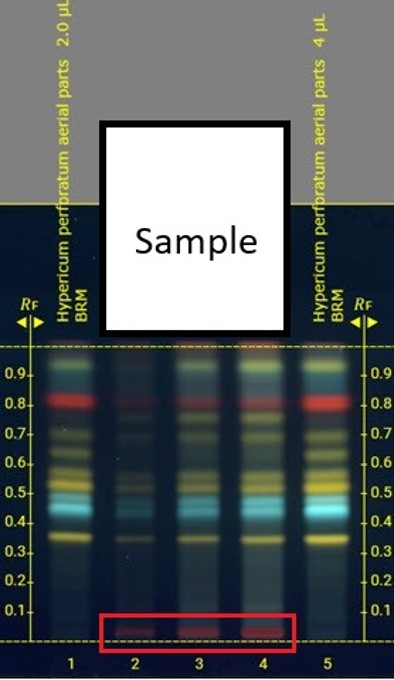
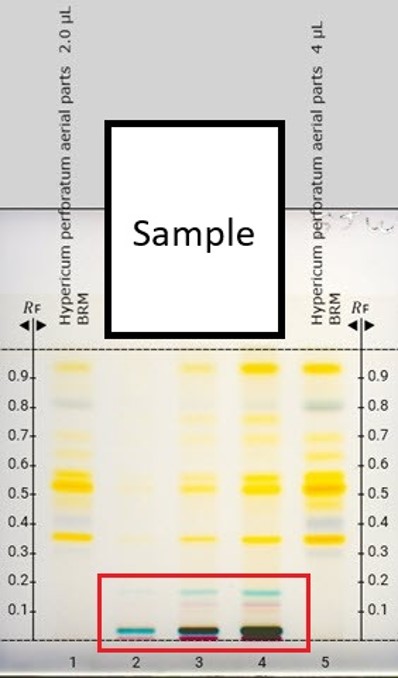
In one recent investigation, a client submitted a sample identified as Hypericum perforatum aerial parts for authenticity testing. HPTLC analysis revealed several extra zones that were not present in the authenticated botanical reference material. These zones appeared at distinct Rf values and exhibited different colors under multiple viewing conditions. Because the observed patterns could not be attributed to normal phytochemical variation, the findings suggested the presence of undeclared color additives.
Based on these results, the sample was determined to not conform to Hypericum perforatum aerial parts. This case highlights the critical role of botanical authenticity testing in protecting product quality, preserving consumer trust, and supporting regulatory compliance. As adulteration methods become more sophisticated, advanced analytical techniques such as HPTLC remain essential tools for verifying that botanical ingredients are truly what they claim to be.
In today's marketplace, "it looks right" is not good enough. Adulterated botanicals are becoming increasingly sophisticated, making traditional quality checks insufficient for protecting brands and consumers. The companies that succeed will be those willing to challenge assumptions, verify claims, and demand proof of identity from every ingredient supplier. Partner with Eurofins Botanical Testing to uncover what others miss and ensure your botanical products are supported by science, not appearances. Because when identity matters, certainty is a competitive advantage.