When a food product spoils too early, develops an unusual odor, changes color, becomes slimy or causes a package to swell, the first question is simple: What went wrong? Traditional microbiological tests are excellent at answering specific questions, such as whether a particular pathogen is present or how many bacteria are in a product. But they may not explain why one production lot performs well while another fails before the end of its expected shelf life.
What is a microbiome?
A microbiome is the complete community of microorganisms associated with a food product, ingredient, piece of equipment or processing environment. It may include bacteria, yeasts, molds and other microscopic organisms. Some are harmless, some are beneficial, and others may contribute to spoilage or food-safety concerns.
Think of traditional testing as looking for one specific person in a crowded room. Microbiome testing attempts to identify as many people in the room as possible and compare that group with another room. Instead of asking only, “Is this organism present?” the question becomes, “What microorganisms are present, which are most common and how does this sample differ from another?”
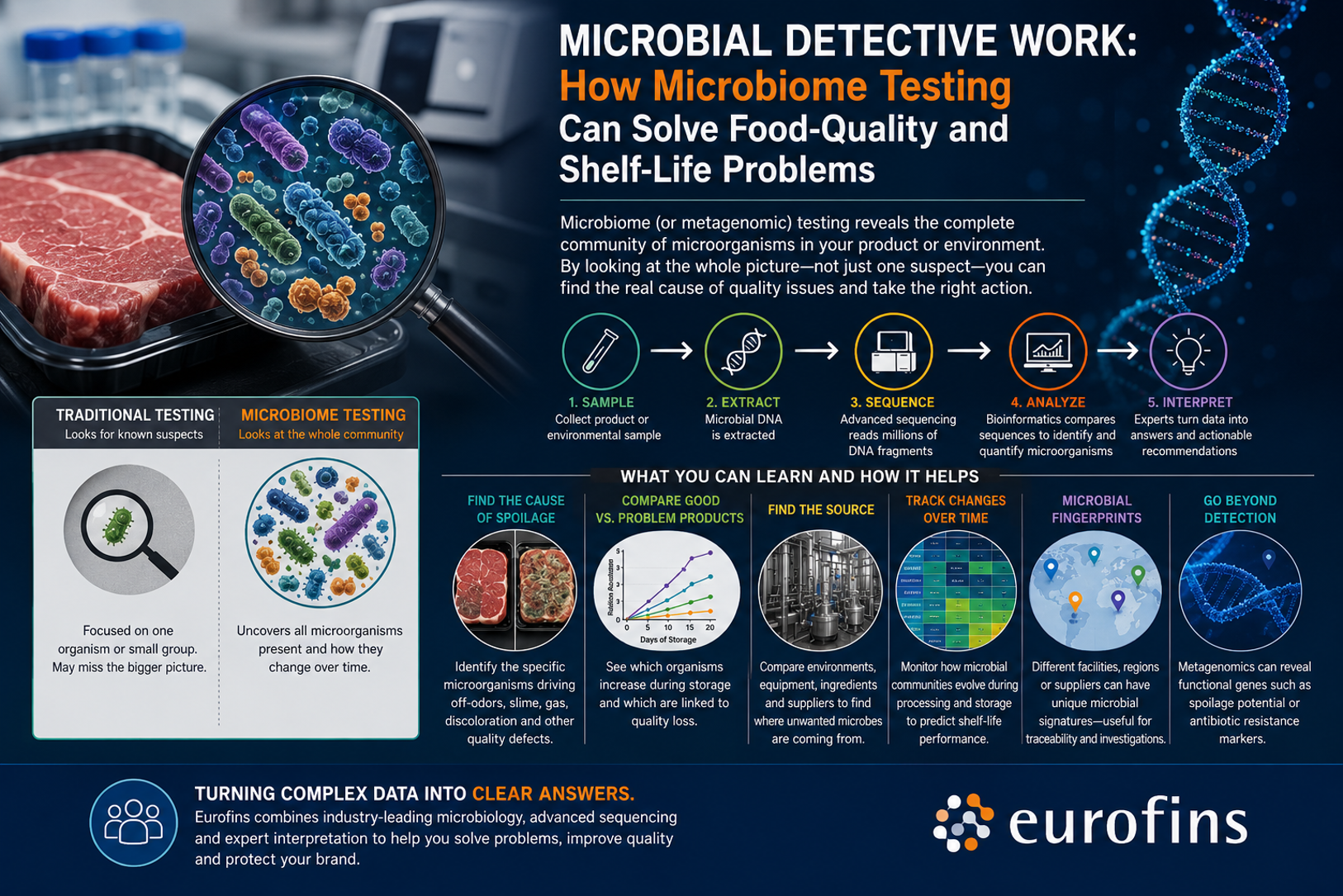
How does it work?
Every microorganism contains genetic material or DNA. During testing, DNA is extracted from a sample and analyzed using sequencing technology. The resulting DNA information is compared with scientific databases to help identify the microorganisms that may be present. A more detailed approach, called shotgun metagenomic sequencing, can examine a much broader range of DNA and provide deeper information about the organisms and genes in a sample.
The strongest investigations combine sequencing results with traditional plate counts, pathogen testing, temperature records, packaging conditions, ingredient information, sanitation records and observations such as odor, color, slime or gas formation.
Solving shelf-life and quality problems
This is where microbiome testing can become true microbial detective work. A manufacturer may find occasional swollen packages, sour odors or premature discoloration while most products remain acceptable. Routine testing may confirm that microbial growth occurred but not reveal the complete community involved.
By comparing good and defective products, fresh and end-of-shelf-life samples, different suppliers, production lines, facilities, packaging systems or storage temperatures, investigators can identify organisms that become more common as the problem develops. Additional samples from equipment, drains, conveyors, food-contact surfaces and raw materials may help point to the source. Corrective actions can then be focused on the areas the evidence supports, such as sanitation, equipment harborage points, temperature control, packaging, suppliers or formulation changes.
Beyond spoilage: Microbial fingerprints
Some of the most unusual applications resemble forensic science. Researchers have shown that facilities and geographic regions can develop distinctive microbial fingerprints. Sequencing has also been used to detect undeclared animal or fish species in highly processed foods, investigate the geographic origin of specialty foods and study organisms that are difficult to grow in a laboratory. These emerging uses suggest that microorganisms can provide clues not only about whether a problem exists, but also where a product came from, how it was handled and why it behaves differently from another product or facility.
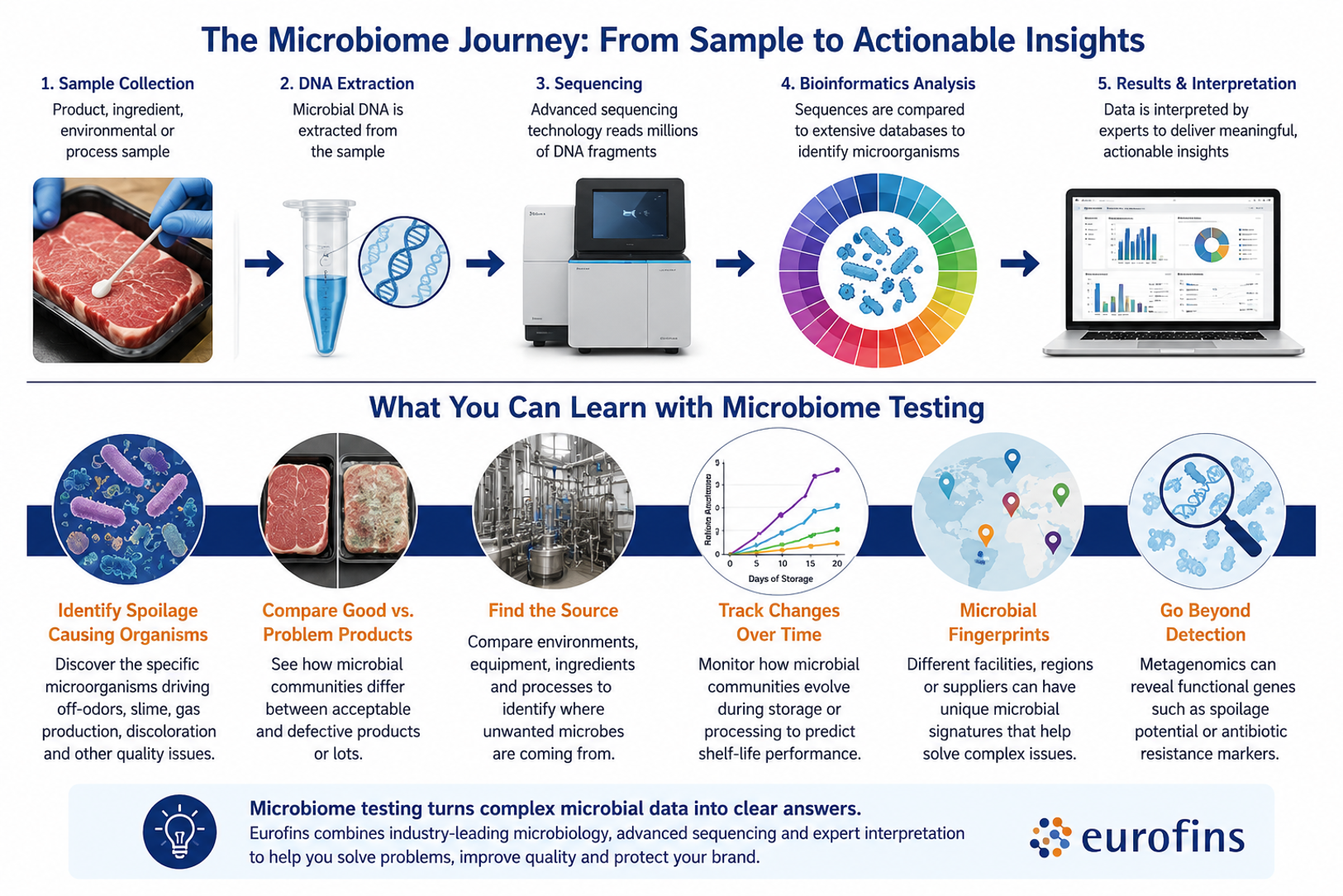
Turning data into answers
Microbiome testing does not replace validated food-safety methods or traditional microbiology. Detecting DNA does not always mean an organism is alive or actively growing, and careful sampling remains essential. Its greatest value comes from combining sequencing with a well-designed investigation and practical knowledge of the product and process.
Eurofins combines food microbiology, molecular testing, genomic sequencing and scientific expertise to help manufacturers design studies, interpret complex findings and connect the results to practical decisions. Used correctly, microbiome testing can help move a company beyond confirming that a problem exists and toward understanding why it happened, where it may have originated and how it may be prevented in the future.
Selected scientific and technical references
Eurofins BioDiagnostics, Microbial Genomics & Identification Services; Hultman et al., Applied and Environmental Microbiology (2020); Doster et al., Frontiers in Microbiology (2020); Lemos Junior et al., Frontiers in Microbiology (2024).