Stability of vitamins and minerals in fortified rice under real-life storage conditions
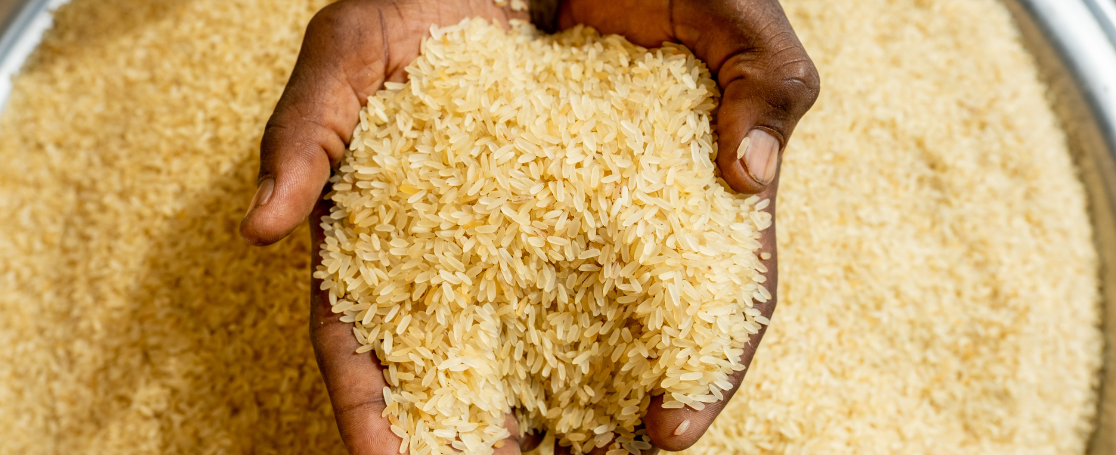
Results of a shelf‑life study of the UN World Food Programme, with testing performed by the Eurofins Food & Feed Testing laboratories, now published in Rice Science
Fortification of rice, the most consumed staple food worldwide, is an efficient approach for addressing micronutrient deficiencies, particularly among vulnerable populations with limited access to a diverse, balanced diet. The United Nations World Food Programme promotes food fortification as part of its efforts to scale up access to sustainable, affordable and healthy diets by improving the supply of, quality of, and demand for nutritious (fortified) foods among populations most at risk of inadequate micronutrient intake. Over the past 10+ years, WFP, together with partners, initiated and scaled up rice fortification in a number of countries, especially through social protection and school meal programmes.
Regulatory framework
To maximise impact, continued evidence generation, quality supply and improved regulatory frameworks are essential. In a shelf-life study led by WFP, Eurofins Food & Feed Testing laboratories tested the stability of vitamins A, B1, B3, B6, B9 and B12 and iron and zinc in fortified rice kernels (FRK) and rice fortified by blending these FRKs at 1%. The results were presented on the 7th International ANUGA Rice Conference, organised by Eurofins Food & Feed Testing in Germany in October 2024, and have now been published after thorough peer review in Rice Science, an international journal sponsored by the China National Rice Research Institute and published by the renowned scientific publishing house Elsevier BV.
Study design under real-life storage conditions
The stability of micronutrients added to staple food is of critical importance, especially when such food is stored in hot and humid storage conditions. Coated and extruded fortified rice kernels (FRK) containing vitamins A, B1, B3, B6, B9, and B12, zinc and iron, and bulk rice blended with the FRK were stored in different packaging materials over a period of 24-26 months. Blending, final packaging and storage were done under industrial conditions in Madhya Pradesh, Central India, which experiences subtropical monsoon climate conditions. The rice was stored in a food storage warehouse under hygienic conditions without temperature and humidity controls. Coated and extruded FRK were packed in paper bags with polyethylene (PE) inner liner and in laminated metallized bags, and fortified rice in 90-micron PE, woven polypropylene (PP) and USAID hybrid (perforated kraft paper laminated with biaxially orientated nylon) bags.
Micronutrient stability
Vitamin and mineral analyses were performed at the Eurofins Competence Centre for vitamin analysis in Vejen, Denmark, and based on methods the Centre had developed for WFP (Ivarsen et al., 2021). Large variations in the analytical results were observed for the fortified rice samples, mostly due to non-homogenous distribution of the FRK within the bulk rice. Consequently, to reduce analytical variation, results were correlated to the concentration of vitamin B3 as an internal standard. Vitamins B3, B6, B9, and B12, zinc and iron remained stable in both coated and extruded FRK throughout storage while vitamin B1 stability was better in coated FRK, with results consistent across packaging materials.
Vitamin A contents decreased rapidly in all packaging types with half-lives of 6.8 and 15.1 months for rice blended with coated and extruded FRK, respectively. Vitamin B1 decreased with half-lives of 20 and 34 months in extruded FRK stored in metallised paper bags and in rice blended with extruded FRK in all packaging types, respectively.
Organoleptic and moisture testing was done by the Eurofins Food & Feed Testing laboratories in Germany and revealed no significant changes due to storage.
Importance and implications of the study
As a result of this study, WFP revised its specification for Fortified Rice and Fortified Rice Kernels including the removal of vitamin A due to its low stability during storage. The study confirmed the stability of B vitamins, zinc, and iron, and highlighted the critical role of blending homogeneity, analytical control practices and quality of packaging materials.
Get in touch
Would you like to find out more about our testing solutions, or do you need tailored analytical support? Contact us today to get in touch with our experts.
Relevant Sources
[1] UN World Food Programme. Rice Fortification Factsheet
[2] 7th International Rice Conference at Anuga 2025
[3] Ivarsen E, Andersen C P, Jensen S M, et al. 2021. Quantification of retinyl palmitate, thiamine, niacin, pyridoxine, folic acid, cyanocobalamin, zinc, and iron by chromatographic methods in fortified kernels and fortified rice. Acta Chromatogr, 33(2): 145-152
[4] Nader W, Sarkar D, Adoko M, de Pee, S, Ivarsen E, Shkliar V, Jensen SM, Hein J. 2026. Stability of Vitamins and Minerals in Coated and Extruded Fortified Rice Kernels Stored under Real-Life Conditions. Rice Science, 33
Written by:
Dr Werner Nader
Eurofins Dr. Specht Express Testing & Inspection