Reassessment of bromide levels in food and animal feed
Evaluation of EFSA's public consultation on the draft of its scientific opinion
June 2025 (update). On 28 January 2025, the EFSA published a scientific opinion setting a tolerable daily intake (TDI) and an acute reference dose (ArfD) of 0.4 mg per kg body weight for bromide[1].
In August 2024, the European Food Safety Authority (EFSA) has launched a public consultation on its draft scientific opinion on the health risks posed by the presence of bromide in food and feed[2]. The aim was to assess the general toxicity of bromide, to derive toxicological reference values and to review the current maximum residue levels (MRLs) regarding the MRL exceedance.
Results of the EFSAs reassessment of bromide levels
To assess possible risks to human and animal health, the EFSA was asked by the EU Commission to reevaluate the general toxicity of bromide to humans and animals. According to this assessment, bromides taken for medical treatment in high doses (20-80 mg/kg body weight per day or up to 10-15 and 31 g per day) are associated with adverse health effects on the nervous system, skin and other organs. In female test subjects, an increase in the thyroid hormone thyroxine and thyroid-stimulating hormone (TSH) as well as changes in the nervous system were observed at a daily intake of 9 mg bromide per kg body weight. No toxicological effects were observed at a bromide intake of 4 mg per kg body weight.
Based on the available data and considering other factors (individual differences; uncertainty factor), the Scientific Committee established a tolerable daily intake (TDI) of 0.4 mg per kg body weight. The acute reference dose (ArfD) of bromide was also set at 0.4 mg per kg body weight[3].
The current maximum residue levels (MRLs) of Regulation (EC) No. 396/2005[4] were checked for exceedances using the toxicological reference values. The results show that the TDI is exceeded in 29 out of 36 modelled diets.
In addition, the EFSA findings indicate that bromide can be transferred from animal feed to animal food. However, there was not enough data available for a precise assessment of the transfer rates.
Occurrence of bromides
Bromides are salts of hydrobromic acid and organic compounds that contain bromine. They belong to the halides and can be found in various forms in nature. In their natural form, they are mainly found in seawater and certain rocks, but they can also be formed as a decomposition product of methyl bromide. Brominated compounds are also used in flame retardants, among other things.
Bromides in food and feed can originate from natural sources or human input, such as biocidal products and veterinary medicines. They can also come from the use of bromide-containing pesticides outside the EU.
Ban on methyl bromide in the European Union
In the European Union, the use of methyl bromide in agriculture as a pesticide has been banned since 2010 due to its harmful effects on the ozone layer and its potential health risks for humans and animals. However, according to Regulation (EU) 2024/590[3], the use of methyl bromide could be authorised as an exception in certain emergencies and upon application to the European Commission.
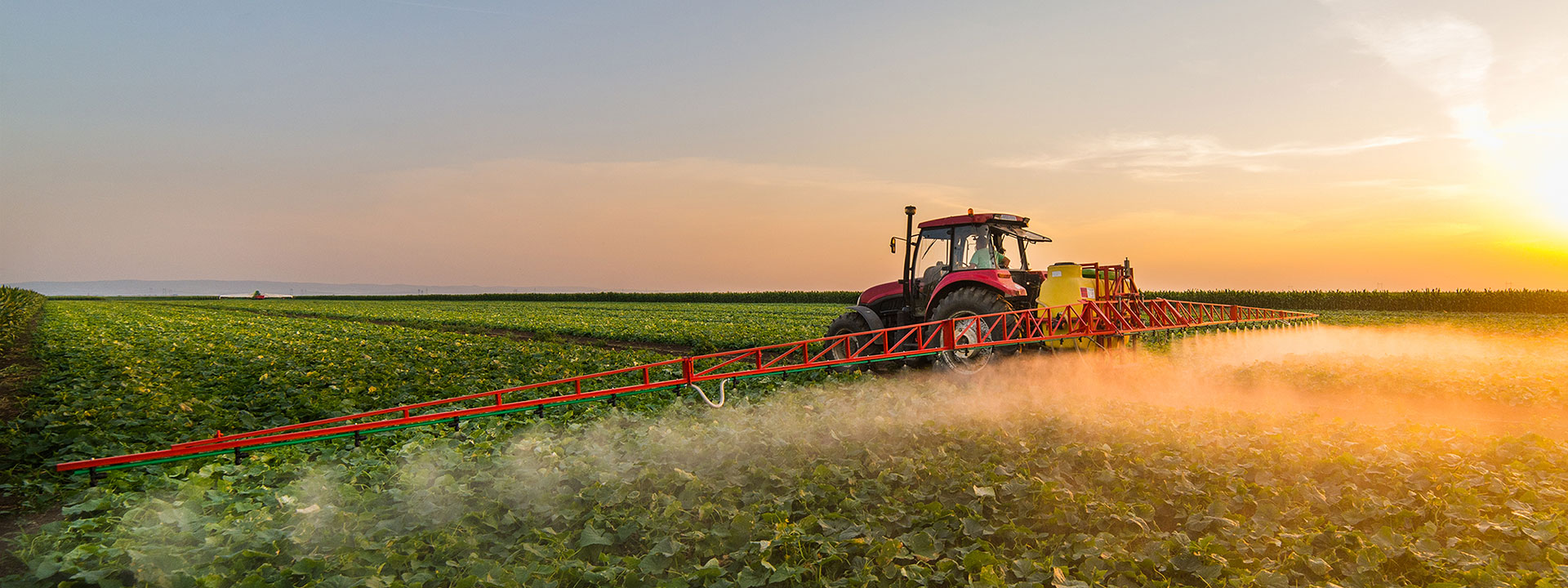
Methyl bromide has been used in agriculture as a pesticide and fumigant to control pests and weeds in various crops, especially in greenhouses and for soil treatment.
We support you in analysing bromide and methyl bromide
Monitoring bromide and methyl bromide levels in food can help to minimise health risks for consumers. For methyl bromide in particular, it is important to ensure that no harmful residues are present in food. As a highly qualified network of food & feed testing laboratories, we analyse your products on bromide and methyl bromide levels to ensure that they are within safe limits. Rely on our precise results and benefit from our professional advice.
Get in touch
Would you like to find out more about our testing solutions, or do you need tailored analytical support? Contact us today to get in touch with our experts.
Relevant sources
[1] EFSA Scientific Opinion: Risks to human and animal health from the presence of bromide in food and feed
[2] EFSA Public Consultations: Draft Scientific Opinion on the risks to human and animal health from the presence of bromide in food and feed
[3] Regulation (EU) 2024/590 on substances that deplete the ozone layer
[4] Regulation (EC) No 396/2005 on maximum residue levels of pesticides in or on food and feed of plant and animal origin
Written by:
Katrin Rentsch
Eurofins SOFIA GmbH