Per- and polyfluorinated alkyl substances (PFAS) in food for infants and young children as well as fruit and vegetables
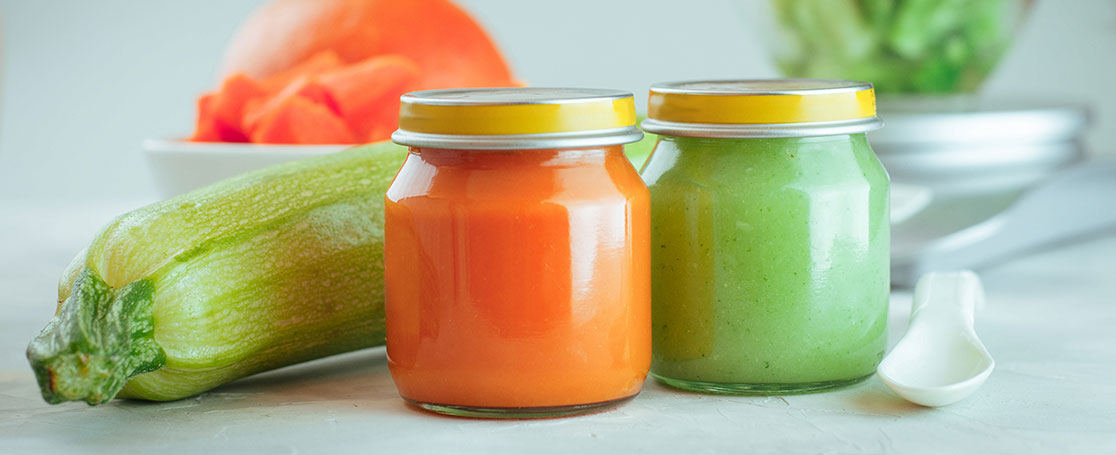
Faster and improved analysis of PFAS in food
Dec 2023. Due to the high intake of per- and polyfluorinated alkyl substances (PFAS) via food, especially among young children and infants, the EU recommends particularly low limits of quantification for the analysis of these harmful substances. This also applies to foods of plant origin such as fruits, vegetables, starchy roots and tubers.
The Competence Center for Dioxins & Persistent Organic Compounds (POPs) of Eurofins Laboratories for Food and Feed Analysis in Germany has developed an improved analytical method that allows a faster analysis of your products in accordance with the low limits of quantification of Recommendation (EU) 2022/1431.
Specific EU requirements
As a class of substances, PFAS are the subject of much public debate. The EU has set maximum levels for PFAS in food from January 2023. Particularly for the analysis in foods of plant origin (fruits, vegetables, starchy roots and tubers) and in foods for infants and young children, there are specific requirements in the EU regarding the sensitivity of the analytical methods to be used. The limits of quantification to be achieved are particularly low for these product groups.
Occurrence and intake of PFAS via food
PFAS belong to the group of persistent organic pollutants (POPs). As with many other POPs, the consumption of food contributes significantly to the human uptake. Food of animal origin plays an important role here. However, food of plant origin should also be taken into account, particularly in case of PFAS, because unlike other POPs, PFAS do not only have purely lipophilic properties and can therefore migrate from the soil into plants.
Low limits of quantification for plant-based foods
According to the recommendations of the German Nutrition Society (DGE), a healthy diet consists mainly of vegetables, fruit and cereals. In addition, milk and dairy products and, to a lesser extent, meat, fish and eggs are recommended. High consumption levels are therefore to be expected for plant-based food products, for which particularly low limits of quantification are to be achieved in the analysis for PFAS in accordance with EU requirements under Recommendation (EU) 2022/1431.
High exposure for young children and infants
The European Food Safety Authority (EFSA) has derived toxicological threshold values for tolerable intake for the PFAS pollutant class and assessed human exposure to PFAS. As a result, infants and young children have the highest exposure, making their food a particular focus. In its Recommendation (EU) 2022/1431, the EU calls for the systematic detection of PFAS in food for infants and young children, with particularly low limits of quantification.
Shorter analysis time with lowest limits of quantification possible
Eurofins GfA Lab Service GmbH in Hamburg, the competence center for POPs in the network of Eurofins laboratories for food and feed analysis in Germany, is able to perform PFAS analyses with different limits of quantification. Even the lowest limits of quantification of Recommendation (EU) 2022/1431 can be achieved if required, not only for the products mentioned in this recommendation, but for all foodstuffs.
By consistently monitoring PFAS laboratory blank values in materials such as solvents, other chemicals and utensils, PFAS-oriented hygiene management and improving the sensitivity of the measuring instruments used, the experts at Eurofins GfA Lab Service GmbH were able to significantly reduce the processing time for samples with the lowest limits of quantification. In particular, the analysis of fruit, vegetables, starchy roots and tubers and products made from them, as well as baby food for infants and young children, can now be carried out just as quickly as the existing analysis processes with higher limits of quantification.
Get in touch
Would you like to find out more about our testing solutions, or do you need tailored analytical support? Contact us today to get in touch with our experts.
Written by:
Simone Staiger
Eurofins GfA Lab Service