Analysis of furan and methylfurans
EU maximum levels in baby food published
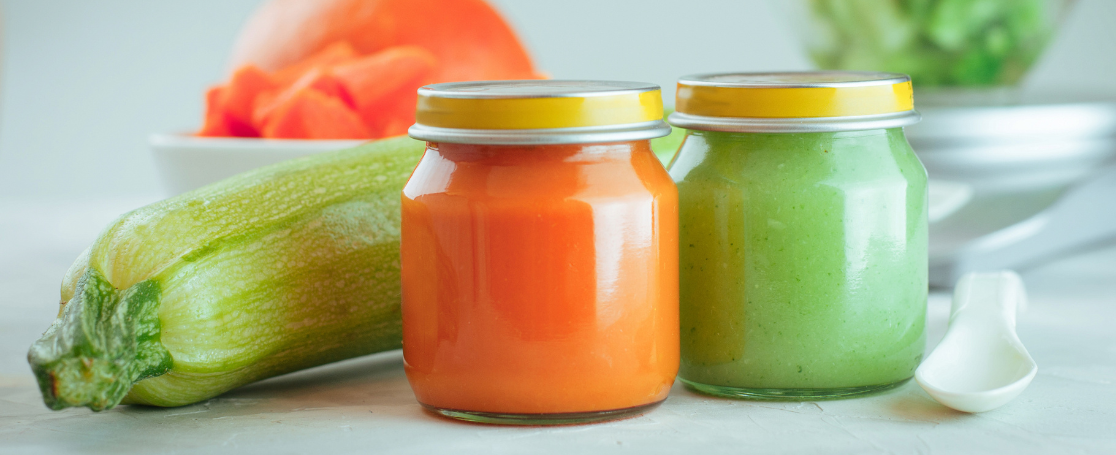
Aug 2026 (update). In 2025, the EU Commission compiled a draft for the introduction of maximum levels for the sum of furan, 2-methylfuran and 3-methylfuran in baby food. Alongside other aspects, it refers to the Scientific Opinion of the European Food Safety Authority (EFSA) from 2017[2], stating that the intake of furan and methylfurans particularly from baby food jars can pose a significant health risk for infants and young children.
Following final agreement in December 2025, the amending Regulation (EU) 2026/1890 was published on 29 July 2026. It shall apply from 1 January 2028.
Analysis recommendations for the following industries
Based on the EFSA Opinion from March 2022, the European Commission published Recommendation (EU) 2022/495[1] on monitoring the presence of furan and alkylfurans in food. It advises the analysis of furan, 2-methylfuran and 3-methylfuran and optionally other alkylfurans in food, in particular:
- coffee
- baby food in jars as well as containers, tubes and pouches
- ready-to-eat soups
- potato crisps
- fruit juices
- breakfast cereals
- biscuits, crackers and crispbread
Our Competence Centre for Organic Contaminants offers you the analysis in all relevant food matrices.
Formation and occurence of furan and alkylfurans
Similar to acrylamide, furan is a process contaminant which evolves within the production and preparation of food during thermal processing (sterilising, roasting, baking etc.). So far, reducing sugars, amino acids, ascorbic acid, unsaturated fatty acids and carotenoids have been identified as possible precursors. The formation of furan is relevant e.g. in roasted coffee, canned and jarred food including baby food, baked goods, cereals and crackers.
2- and 3-methylfuran as well as 2,5-dimethylfuran are also formed during heat treatment of food and can co-occur with furan. Other alkylfurans such as 2-pentylfuran and 2-ethylfuran have also been reported recently in the literature.
Due to the high volatility of furan and methylfurans, levels may also decrease again during processing, thus heating and processing conditions are crucial.
Toxicological evaluation of furan and alkylfurans
Based on animal studies it is concluded that consumer exposure to furan and methylfurans from food may lead to longterm liver damage. In October 2017, the European Food Safety Authority (EFSA) published a Scientific Opinion on the "Risks for public health related to the presence of furan and methylfurans in food" on behalf of the European Commission[2]. More than 17,000 analytical results on furan were used in this evaluation.
No occurrence data on methylfurans or other alkylfurans were available in this data collection. However, it is known from the literature that the ratio of furan to methylfurans depends on the food matrix and the specific methyl analogue.
While coffee is the major contributor to adults’ exposure to furan, jarred baby food plays a crucial role for infants. Cereal (products) also contribute to the exposure of different age groups to furan. However, according to EFSA more data is needed for a more comprehensive assessment.
Analysis of furan and alkylfurans
Our experts from the Competence Centre for organic contaminants within the global Eurofins laboratory network have many years of experience with the headspace GC-MS analysis of furan, 2-methylfuran and 3-methylfuran. This covers all analyses recommended by EFSA as mandatory for furan and methylfuran in the above-mentioned food matrices.
Get in touch
Would you like to find out more about our testing solutions, or do you need tailored analytical support? Contact us today to get in touch with our experts.
Written by:
Stefanie Merkmann
Eurofins WEJ Contaminants GmbH