NDT training
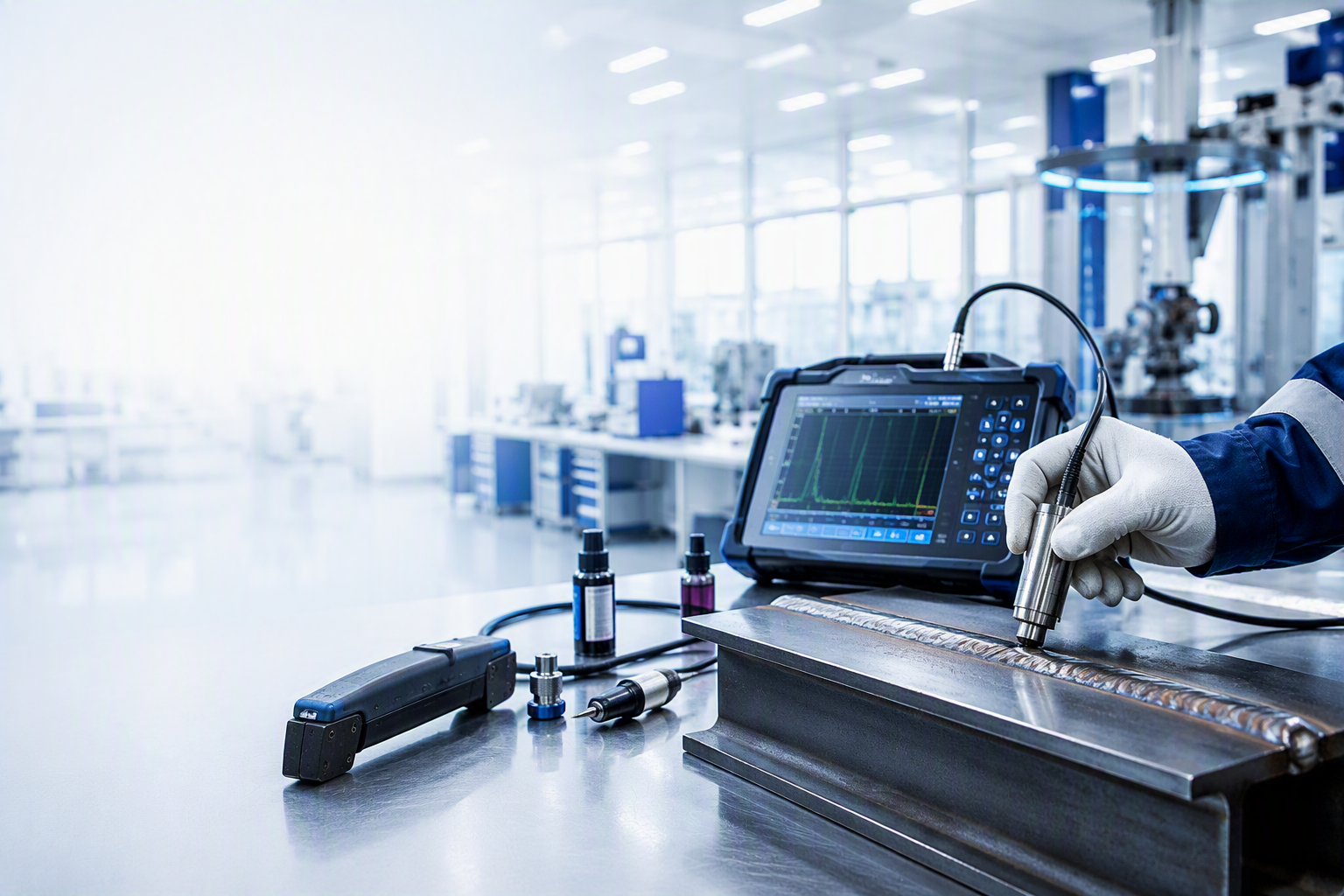
Non-destructive testing (NDT) training programme
In-situ metallography
Non-destructive testing plays a very crucial role in construction, manufacturing, quality control and residual life assessments. The area under scope for these activities is broadening perpetually and rising in the market. Eurofins Environment Testing India is always striving to emphasise the importance of radiation safety measures while conducting any NDT activity. Industrial Radiographers are exposed to radiations and thus must be well-informed on the issues related to this.
Aim
The aim of the training programme is to inculcate skills among crew members on radiation protection so that they can conduct radiographic activities safely. Each individual trainee is made vigilant about the potential impact of not fulfilling the requirements laid out in the Indian Government Act. We also educate trainees on the Atomic Energy Act.
6-day training module:
Day 1
Explanation of basic radiation physics, interaction, detection and the biological effects of radiation. The sources of industrial radiography X-ray equipment and gamma rays are explained. Photographic recording, characteristics of X-rays, film processing, radiation monitoring and its control are demonstrated.
Day 2
Radiographic quality and exposure-geometric aspects of shadow formation, SFD, IQI and exposure time are explained. The selection protocols for radiographic techniques, codes and standards, and defectology are also covered.
Day 3
Ultrasonic testing: Explaining the basics of NDT, its types, and the characteristics of waves.
Day 4
Methods of generating ultrasonic waves, covering magnetostriction and the piezoelectric effect.
Day 5
Liquid penetrating testing (LPT): General introduction to LPT, its principle, advantages, drawbacks, and materials and equipment required. The surface preparation and penetrant applications are explained.
Day 6
Magnetic particle testing: We cover, applications, criteria for successful inspection, and its advantages and limitations. Knowledge on the test methods and techniques, methods of magnetisation, sequence of operations, techniques for sensitivity check, and its evaluation and interpretation is imparted.
Minimum eligibility required: Diploma or a graduate degree in science, or currently pursuing a qualification in a related field.
Advantages of the training programme
This training course will provide valuable exposure that could help trainees to establish a career in industries working with gas and oil, civil engineering, power generation, transport, aerospace, petrochemicals, and more. They will leave feeling knowledgeable on product quality, power sources, and the radiation energy used in radiography, instilling a culture of self-compliance and safety while working with radiation.
Find a site near you!
 Clear Filters
 Reset Filters