Fire resistance and fire safety testing
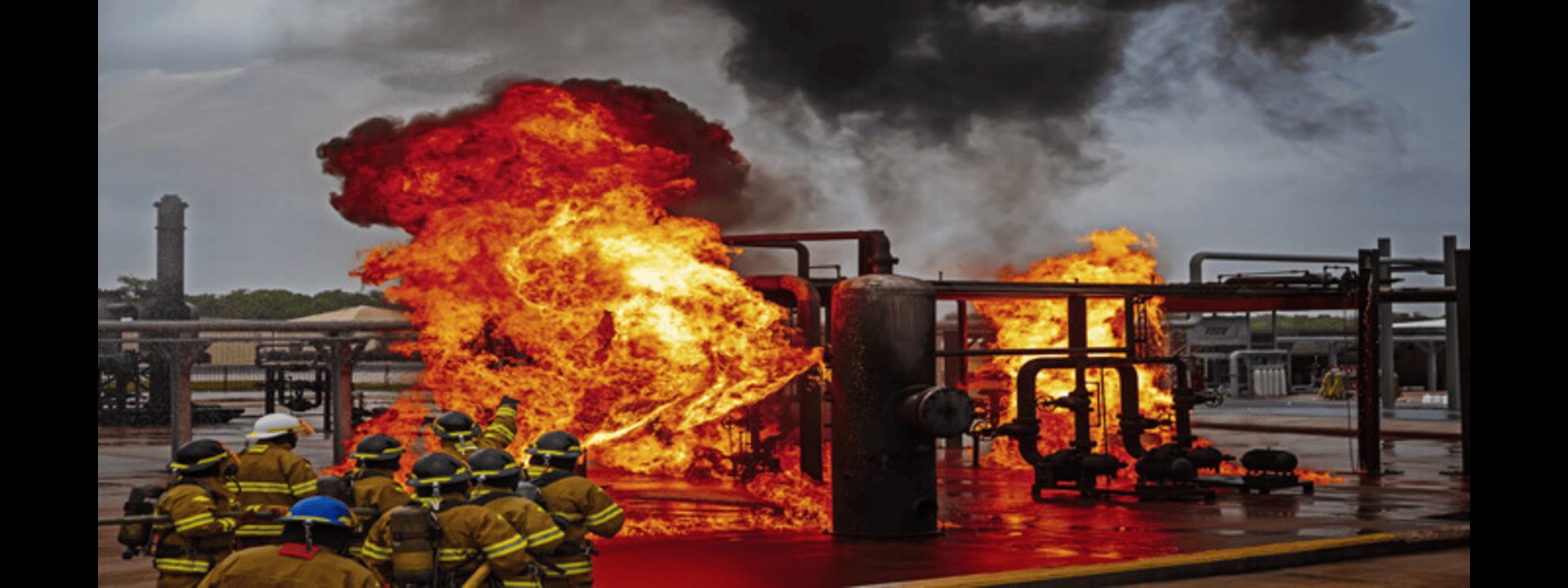
Eurofins Spectro Analytical Labs Private Limited offers national and international standards (BS 476-22, BS 476 part 20, ASTM E119, and others.) and compliant state-of-the-art fire testing services. Our laboratory is fully equipped with advanced fire testing instruments and can perform tests on a wide range of fire-prone goods such as fire extinguishers, cables, fire doors, and more.
We perform all fire safety tests under one roof with industry-leading accuracy and reliability
Objective of fire resistance testing
The objective for these new tests is to enhance structural performance so that any uncontrolled building fire results in burnout without fractional or complete breakdown. Moreover, these fire measurement technologies enable the assessment of key fire safety characteristics, including the ignition resistance of materials, fire growth, surface flammability, and the generation of toxic gases. The insights gained from these assessments can support the development of safer building materials and structures, helping to minimise the risk to life and reduce the potential for extensive fire-related damage and associated costs.
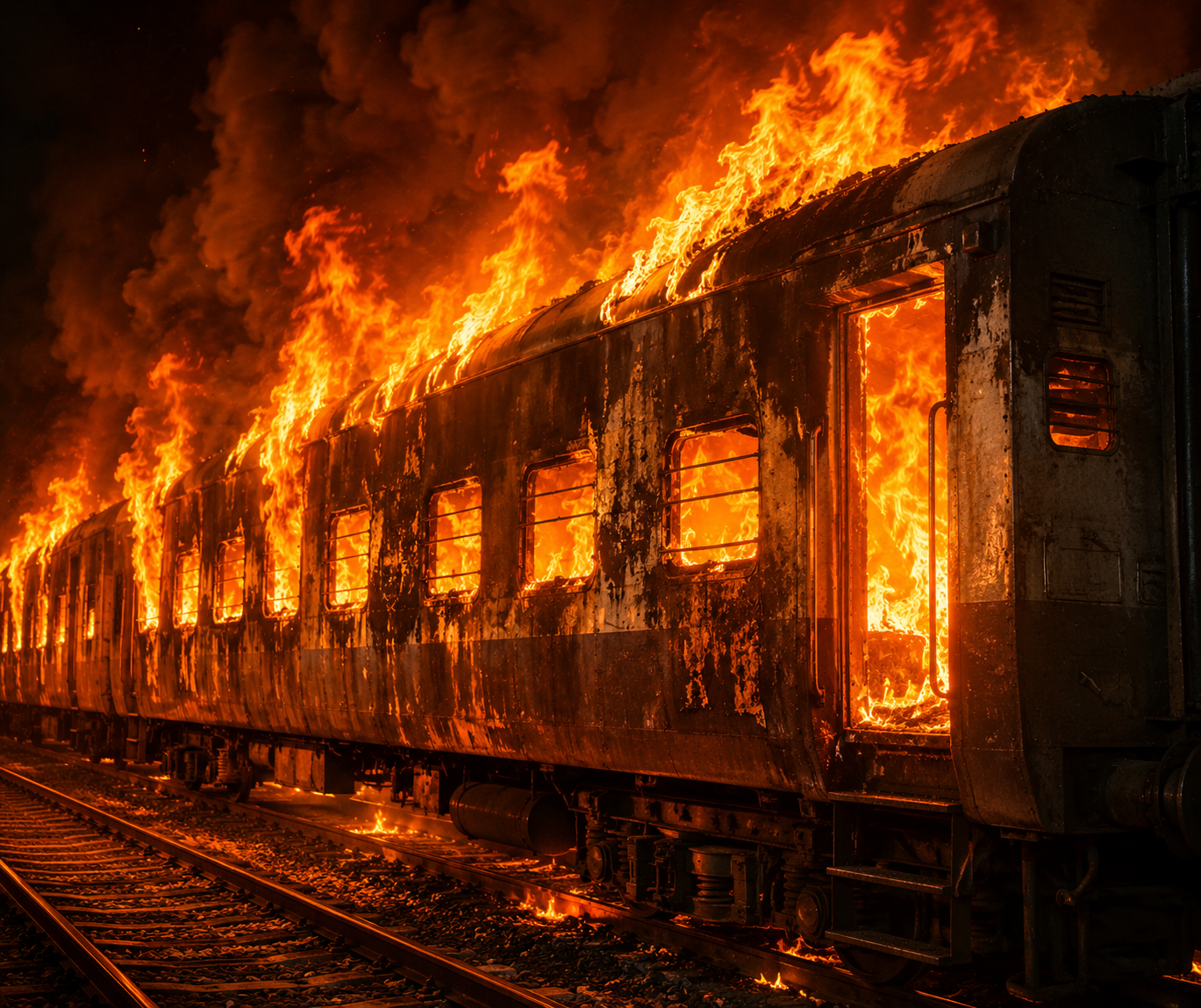
We provide a comprehensive range of fire testing services for doors and shutters in accordance with IS 3614, as well as fire testing of building construction and materials for surface burning characteristics, fire propagation index, and flame spread. Our services also cover fire testing of railway products in accordance with EN 45545-2, including heat release rate (ISO 5660), smoke density and toxicity (ISO 5659), lateral flame spread (ISO 5658), reaction to fire testing for floorings (ISO 9239), and limiting oxygen index (ISO 4589).
Special fire testing facilities
We offer a range of fire testing services, including non-combustibility testing, surface burning characteristics of building materials (ASTM E- 84 by Steiner Tunnel), fire tests of building construction and materials (ASTM E 119), fire tests on railway products (EN 45545-2), and fire tests on lift landing doors (EN 81-58, IS 17518 Part 2).
Non-combustibility testing
This test determines whether or not a material contributes to fire, by subjecting it to controlled heating and measuring certain parameters such as the initial, maximum and final temperature, the time required to increase the temperature, and the total time of combustion of the product (EN ISO 1182) EN ISO 1182, IMO FTPC Part 1, ASTM E 2652.
Surface burning characteristics of building materials (ASTM E84 – Steiner Tunnel test)
This test method applies to exposed surfaces, including ceilings and walls, provided that the material or complete assembly, in its intended form and application, is capable of supporting itself in position or being adequately supported throughout the test period.
The test evaluates the burning characteristics of a material by measuring the flame spread along the test specimen. It also assesses the amount of smoke developed during the test. Flame spread and smoke development are reported as separate measurements and should not be interpreted as having a direct relationship with one another.
Fire tests of building construction and materials (ASTM E 119)
This test is applicable to the assemblies of columns, floors, walls, composite assemblies, and the masonry units of structural materials for buildings. It also includes walls, partitions, columns, girders, beams, slabs, floors, roofs, etc. The structural units that constitute permanent integral parts of a finished building are also included. This test measures and describes the response of materials, assemblies or products to heat and flames under controlled conditions; however, it does not incorporate all the factors required for a fire hazard or fire risk assessment of materials under actual fire conditions.
Fire tests on safes (IS: 550 Part-3)
This standard (Part 3) lays down testing methods for assessing the fire resistance capacity of safes. Tests which are conducted according to these requirements are intended to demonstrate the performance of equipment during the exposure of fire, but are not intended to determine the acceptability for using after fire exposure.
Test of dry chemical for fighting class B and C fire
The dry powder is composed of basic material of eutectic chlorides, ammonium phosphate, sodium chloride, and diammonium phosphate, or a mixture of sodium chloride with ammonium phosphate along with additives to make it water repellant, free flowing and compliant with several requirements mentioned in the standard.
Why Choose Eurofins Environment Testing?
Eurofins Environment Testing brings global expertise and extensive experience in the domain of fire safety testing. Our commitment to quality, precision, and customer satisfaction sets us apart in the industry. We are accredited by the National Accreditation Board for Testing and Calibration Laboratories (NABL) and approved by the Research Designs and Standards Organisation (RDSO) for railway testing services.
Find a site near you!
 Clear Filters
 Reset Filters