Maintaining air quality is essential to protecting both public health and overall quality of life. Eurofins Environment Testing laboratories provide a comprehensive range of air testing services, specialising in EPA methods outlined in the Compendium of Methods for the Determination of Toxic Organic Compounds in Ambient Air and in EPA Air Emission Test Methods promulgated in the Federal Register and codified in the Code of Federal Regulations (CFR).
In addition to EPA protocols, Eurofins Environment Testing laboratories also apply ASTM methods tailored for a range of environmental air matrices. For projects with unique or complex requirements, Eurofins Environment Testing offers custom method development and validation upon request, leveraging advanced technologies and internationally recognised methodologies.
Highly trained teams bring expertise and experience to every project, ensuring reliable, accurate, and actionable results.
Air testing services are designed to support consultancies and safeguard health and the environment.
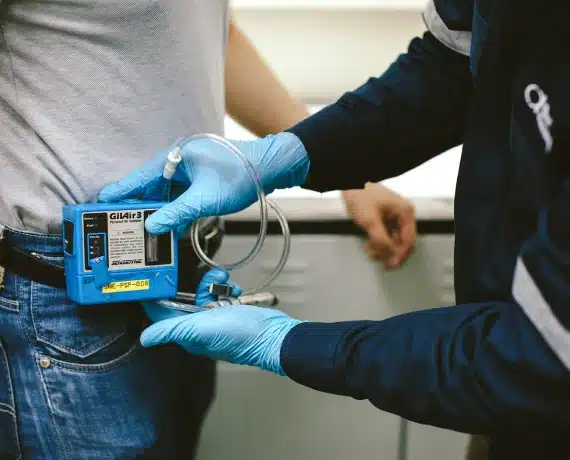
Eurofins Environment Testing delivers reliable industrial hygiene testing and monitoring services focused on exposure assessment, compliance, and risk control. Our services are conducted in SAC-SINGLAS accredited laboratories and follow globally recognised standards such as OSHA and NIOSH.
With a team of certified professionals accredited by Singapore’s Ministry of Manpower (MOM), we ensure that workplace hazards are accurately identified and managed within your operational timelines and budget.
What is workplace monitoring?
Workplace monitoring evaluates the level of employee exposure to health hazards and determines how effective your existing control measures are.
Through proper monitoring, you can:
Regulatory compliance in Singapore
In Singapore, industrial hygiene monitoring must be conducted by competent persons with relevant WSQ certifications.
Eurofins Environment Testing engages only qualified professionals, and certification documentation is available upon request.
Our testing & monitoring capabilities
We provide a wide range of industrial hygiene services, including:
Airborne hazards & particulates
Chemical exposure
Specialised contaminants
Industrial processes & materials
Biological & environmental hazards
Physical hazard monitoring
Eurofins Environment Testing provides independent indoor air quality (IAQ) monitoring and consultancy services. Our solutions include indoor air testing, environmental monitoring, sample collection, laboratory analysis, and airflow investigations to identify and resolve indoor air quality issues.
With years of professional experience, our specialists use advanced testing equipment, computer modelling, and laboratory techniques to improve workplace environments and support the health and well-being of building occupants.
IAQ assessments, air testing and monitoring conducted according to international and local standards, including BREEAM Health & Wellbeing Hea 02 – Indoor Air Quality and Singapore Standard SS554:2016.
We provide SS554:2016 surveys, air sampling, microbial analysis, and HVAC evaluation. Our experts use airflow modelling and pollutant monitoring to ensure a healthy, compliant indoor environment.
Detailed laboratory analysis for bacteria, moulds, and fungi, with identification possible up to the genus level to support accurate environmental diagnostics.
Measurement and analysis of indoor air contaminants including: Carbon dioxide (CO₂), carbon monoxide (CO), hydrogen sulphide (H₂S), formaldehyde, volatile organic compounds (VOCs), dust and pollen.
Evaluation of key indoor environmental parameters such as: Mechanical ventilation and air-conditioning (HVAC) performance, air velocity and circulation, temperature levels and relative humidity.
Airflow assessments and computer modelling to understand indoor air circulation and identify ventilation inefficiencies.
Odour concentration is measured using a dynamic olfactometer calibrated to EN13725 and ISO17025 standards.
Detailed investigations to determine the root causes of poor indoor air quality, identify the source of problems and provide practical solutions.
Boost health, comfort, and productivity while reducing absenteeism. Professional IAQ assessments are a vital investment in your workplace's long-term efficiency and employee well-being.
Industries that rely on high-performance electronics, precision engineering, and silicon-based components require extremely controlled environments to maintain product quality and reliability.
However, the presence of semi-volatile organic compounds (SVOCs), commonly referred to as Airborne Molecular Contaminants (AMCs), can negatively affect the performance of sensitive components and manufacturing processes.
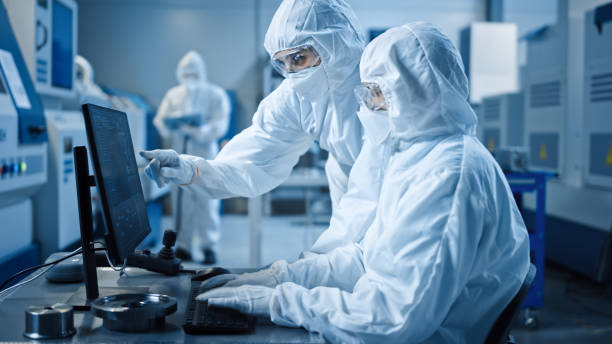
Eurofins Environment Testing laboratories provide specialised testing and monitoring services to detect and quantify airborne molecular contamination in controlled environments such as cleanrooms.
Common types of airborne molecular contaminants
AMCs can originate from a variety of chemical compounds that are released into the air during manufacturing processes or from materials used within cleanroom environments.
Common AMC compounds include:
Even at extremely low concentrations, these contaminants can affect semiconductor fabrication, electronics manufacturing, and precision component performance.
Sources of AMC in cleanroom environments
One of the primary sources of airborne molecular contamination is outgassing from materials used inside cleanrooms.
Typical sources include:
Because AMCs exist in vapor form, they can pass through most standard particulate air filters, allowing them to accumulate within cleanroom environments if not properly monitored.
Importance of AMC monitoring
For technology-driven industries, monitoring cleanroom air for SVOCs and other airborne molecular contaminants is essential to:
Monitoring programmes also help identify contamination sources and support the selection of low-emission materials and cleanroom products.
Analytical technologies used
Eurofins Environment Testing laboratories utilise advanced analytical instrumentation to measure airborne molecular contamination with high sensitivity and accuracy.
Key technologies include:
AMC and cleanroom contamination testing capabilities
Eurofins Environment Testing laboratories offer a wide range of testing services to evaluate contamination risks from materials used in cleanroom environments, including:
These services support manufacturers in identifying contamination sources and ensuring that materials and products used in controlled environments meet strict cleanliness requirements.
To monitor key areas in contamination routes, the following methods can be used to determine hygiene and environmental conditions to assess the effectiveness of cleaning, sanitation, and employee hygiene practices, especially for the manufacturing and F&B industries.
Eurofins Environment Testing Singapore offers clients a large portfolio of environmental sampling and microbiological testing for environmental monitoring programmes.
Eurofins Environment Testing Singapore carries out tests to determine sources of pathogen contamination utilising the following sampling methods:
Tests performed include:
Eurofins Environment Testing’s ambient air monitoring services measure air quality in outdoor environments. Using advanced technologies, laboratories detect and quantify pollutants to ensure compliance with environmental standards and protect public health.
Objectives of ambient air monitoring
Ambient air monitoring supports multiple environmental and public health objectives, including:
In Singapore, ambient air quality management and regulatory standards are overseen by the National Environment Agency.
Monitoring strategies and analytical methods
Ambient air monitoring can be conducted using different analytical procedures and monitoring technologies depending on the objectives of the monitoring programme.
Eurofins Environment Testing is capable of developing customised monitoring strategies that consider:
This flexible approach ensures that monitoring programmes remain both cost-effective and technically robust.
Monitoring station locations
The location of monitoring stations depends on the purpose of the monitoring programme.
Most air quality monitoring networks are designed to support human health protection, and stations are commonly located in areas where people are exposed to air pollution. These may include:
Monitoring stations may also be placed in remote or background locations to measure natural pollution levels away from urban activities.
Data quality and air quality standards
Reliable monitoring requires systems to ensure that collected data is accurate, properly recorded, securely stored, and effectively analysed.
The results are then used to evaluate compliance with ambient air quality standards and regulatory limits established in Singapore by the National Environment Agency.
These data sets play an important role in environmental policy development, pollution control, and public health protection.

Have a question about our services or need technical support?
Submit your enquiry using the form link above and our specialists will respond as soon as possible.