

















































Advancement and approach in automation

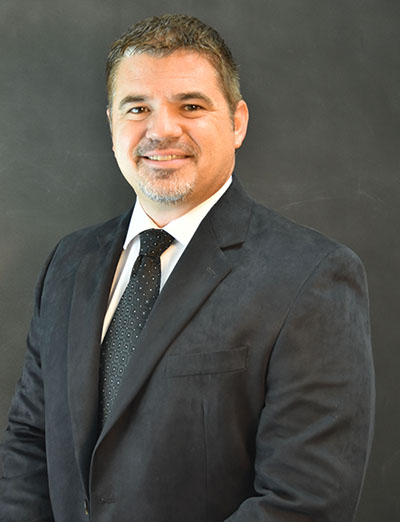 Daryl Krushinsky, Senior Director of Operations, Eurofins BioPharma Product Testing
These days, it is nearly impossible to go more than a few hours without hearing about new uses and advances in automation. These breakthroughs continue to pick up speed at a rate that can be hard to keep up with. Automation is nothing new within the Biopharma industry as automated manufacturing lines, highspeed instrumentation, and large capacity autosamplers (for example) have been in place for decades.
However, implementation on a large, “transformative” scale within most Biopharma laboratories is relatively early phase. As we fully automate transport of materials, laboratory preparations, and ultimately perform analytical testing with reduced analyst interaction, we will define and reshape the future of the industry.
This potential is exciting, but it can create a bit of uncertainty and skepticism as navigating GxP regulations and requirements can be quite challenging. Additionally, within Eurofins BioPharma Product Testing, there is added complexity that arises from the very nature of our business as a contract testing laboratory. Unlike a manufacturing facility with a standardized product line (high throughput, low mix), we perform unique and customized testing for hundreds of clients (high throughput, high mix) on a daily basis. To ensure our automation dreams become a reality and our AMRs (autonomous mobile robots) move full speed ahead, we complete extensive workflow evaluation and planning.
Like many companies, we started the automation journey by implementing several off-the shelf commercial solutions. Since custom programming isn’t required, and configurable inputs adjust to meet various method requirements, these systems offer relatively quick implementation. Automated pipetting devices and labelers improve sample preparation speed and quality by reducing errors. They also improve safety by reducing analyst repetitive motion strain. Additionally, introducing high-speed analytical instrumentation with software that automates sample result analysis is another early phase step in the automation journey. Unfortunately, implementing multiple stand-alone systems results in multiple stops and gaps in the overall sample testing workflow. The next logical step is to create a seamless end-end workflow.
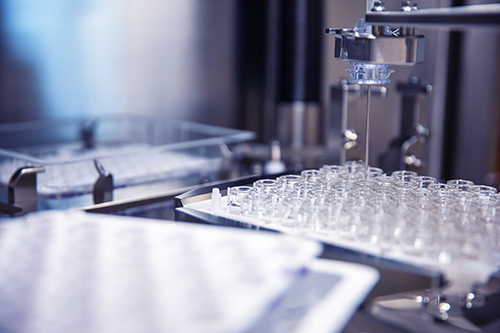 We utilize many in-house developed platform methods, and we support client developed methods. Differences in laboratory preparation steps between methods is extreme. Sample mixing alone can be accomplished via sonication, vortexing, inverting, or swirling to name a few. Standardizing client preparation methods is not possible, making it a challenge to develop an automated solution that can handle every variation. Instead, we are developing and planning to incorporate custom automation to provide transport on the bench between existing commercial solutions and instruments. This requires interface with various automated pipettors, mixers, and labelers mentioned previously. There must also be an interface developed for various analytical instruments.
Transport of materials on the bench, within the laboratory and/or between laboratories and buildings, is a significant and visible milestone that will truly transform laboratory operations. It is somewhat commonplace for cobots (collaborative robots) and humans to work side-side in manufacturing settings. However, having a robot deliver various testing materials to a work station, prepare testing components, and/or interface directly with an analyst or analytical instrument in a contract laboratory is a new frontier. While these transport interfaces are available commercially, they are often vendor/model/material specific. In the contract laboratory business, a single vendor/model/material solution won’t service all clients. Balancing the implementation of custom solutions and commercial solutions requires more space. To this end, we are actively designing and building new facilities and renovating laboratory space at multiple sites to accommodate automation efforts that are already being planned and researched. Current initiatives include automated sample intake processing lines to streamline workflow, transport AMRs for efficient material movement, and benchtop labware and solution preparation stations to enhance accuracy and throughput.
In addition to physical building upgrades and robotic enhancements, digitalization plays a crucial role in driving automation. Replacement of analog with digital devices and integration of instrumentation with internal software platforms such as ELN and LIMS contributes to real-time data ingestion/analytics, informed decisions, and improved GxP ALCOA data integrity principles. Digitalization supports and enhances automated operations beyond what physical and robotic improvements alone can achieve.
Considering the scope of analytical services that we provide and the initiatives noted above, it is evident that careful planning must occur to accomplish this. In addition to evaluating each new automated process and workflow, we must also evaluate and ensure that various implementation steps do not impact current capacity or quality compliance. We are committed to implementing automation solutions that will improve safety, quality, and efficiency. Appropriate planning and design of systems will promote growth and value for our employees AND clients. To find out more about how we can support your automation strategies, contact your Eurofins representative or: Contact-Us to submit an inquiry.