Mould testing
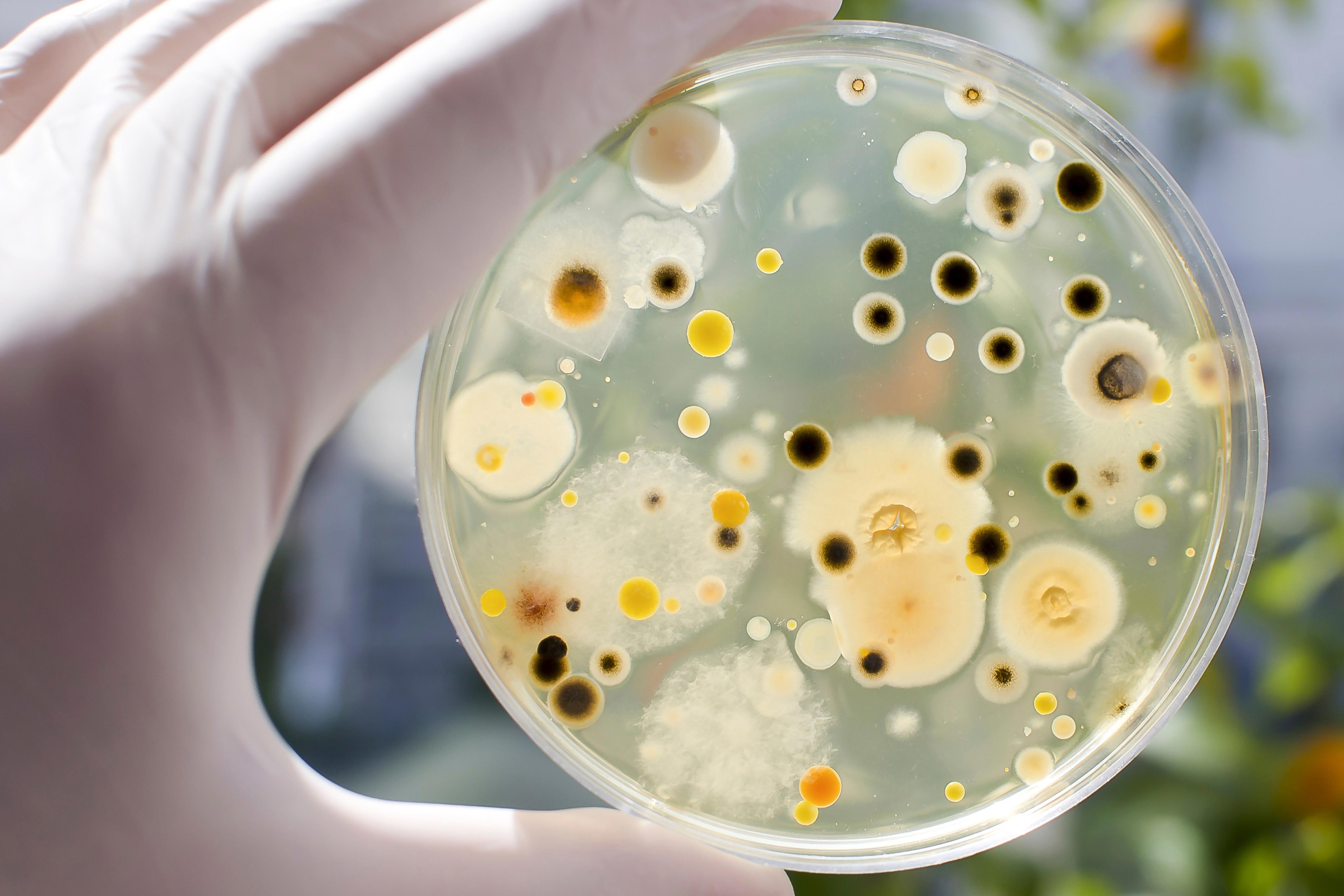
Mould testing
Mould produces spores that can cause damage to buildings and when inhaled negatively impact human health. Eurofins Environment Testing New Zealand laboratories provide world-leading mould and environmental microbiology testing to identify contamination and assess indoor air quality.
Mould can grow in all environments, generally preferring more humid conditions.
Provided there is a nutrient source and adequate water activity, such as high humidity, mould can and will proliferate and cause contamination.
Mould can be a very good indicator of water damage within a property, when determining risk of exposure for affected individuals, as well extent of damage to a property.
Our capabilities
- Airborne and surface fungi and bacterial culture
- Bio-tape, via-cell and air-o-cell analysis
Our mould laboratories provide culturing services for viable mould and total bacteria using a range of agar media to best identify a broad range of fungi.
We are also able to identify other bacterial contaminants such as coliforms and E. coli using IANZ-accredited methods such as surface swabs, heterotrophic plate counts, and thermotolerant and total membrane filtration.
Our sampling techniques
Tape lift
Tape lift sampling is an easy way to collect samples on surfaces such as building materials where there is visible mould growth or discolouration. If there are no clear Sellotape or bio tapes readily available, a piece of the material can be removed for analysis. Direct examination is then carried out for the confirmation, semi-quantification, and identification of the mould growth.
Spore trap
The collection of air samples is performed using a sampling pump calibrated to a specific flow rate per minute to take in a known volume of air. The air that is taken in through the sampling pump is then impacted onto a cassette containing a gel coated slide. Fungal spores and other particulate matter are deposited onto the gel surface.
Using direct microscopy, the sample is then analysed for the quantification and categorisation of fungal structures. Fungal structures are categorised by morphological type from the genus level (e.g. Cladosporium) to the phylum level (e.g. Basidiospores).
Accreditation
Our laboratories are IANZ accredited to ISO/IEC 17025, and conduct analysis to ASTM D7658-17 "Standard Test Method for Direct Microscopy of Fungal Structures from Tape", and ASTM D 7391-20 "Standard Test Method for Categorization and Quantification of Airborne Fungal Structures in an Inertial Impaction Samply by Optical Microscopy".
Get in touch
Would you like to find out more about our testing solutions, or do you need tailored analytical support? Contact us today to get in touch with our experts.
Find a site near you!
 Clear Filters
 Reset Filters