Asbestos testing
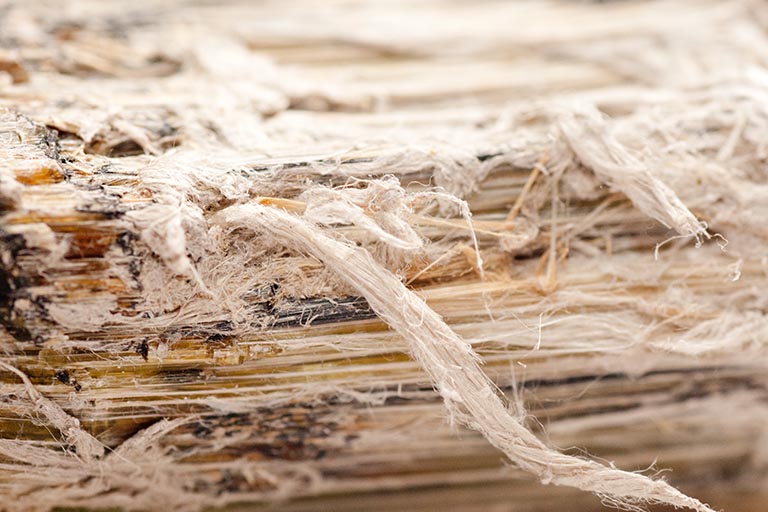
Asbestos identification & quantification services
Asbestos is the number one killer in the workplace, with around 170 people a year dying from asbestos-related diseases in New Zealand, mainly as a result of exposure to asbestos during demolition or renovation.
The physical properties of asbestos relating to its strength, durability and resistance to fire and water, meant that from the 1920s until the mid-1980s asbestos was widely used in building products and materials.
As a result, asbestos is prevalent throughout many New Zealand homes and workplaces. This presents a problem particularly during the renovation or demolition of buildings constructed during this period.
Our services
Eurofins Environment Testing New Zealand specialises in asbestos analysis for residential and commercial properties. We provide asbestos identification and asbestos fibre counting and have an asbestos mobile laboratory as required.
Asbestos identification
We provide a bulk sampling and identification service at our IANZ-accredited Auckland, Tauranga and Christchurch laboratories. Samples are undertaken in accordance with ISO/IEC17025 and AS496, and for time critical samples, we can provide information on the same day samples are received.
A bulk sample is a ‘small portion of building material suspected to contain asbestos, collected for laboratory analysis to determine the asbestos content’.
The purpose of bulk sampling is to determine the quantity and type of asbestos that may be present to assist the persons conducting a business or undertaking (PCBU) in making recommendations for any remedial actions required and creation of an asbestos management plan.
Under Health and Safety at Work (Asbestos) Regulations 2016 section 1, if a PCBU with management or control of a workplace arranges for an analysis, the PCBU must ensure that the sample is analysed by an accredited laboratory.
Asbestos fibre counting
Asbestos fibre counting refers to airborne fibre sampling that assesses exposure and the effectiveness of control measures. Air monitoring includes exposure, control and clearance monitoring. We offer an IANZ-accredited fibre counting service under the following method. NOHSC: 3003(2005) Guidance Note on the Membrane Filter Method for Estimating Airborne Asbestos Fibres. Air monitoring is required during Class A asbestos removal work.
Qualitative & semi quantitative analysis of asbestos in soil
Our qualitative and semi-quantitative analysis method for asbestos detection in soil has been formulated in accordance with the including:
- Health & Safety at Work (Asbestos Regulations: 2016)
- Resource Management (National Environmental Standard for Assessing and Managing Contaminants in Soil to Protect Human Health) Regulations 2011 (NES-CS)
- Method for the Qualitative Identification of Asbestos in Bulk Samples (AS 4964-2004)
- New Zealand Guidelines for Assessing and Managing Asbestos in Soils:2017 (BRANZ Soil Guidelines)
For semi-quantitative analysis, The BRANZ (Building Research Association of New Zealand) method of asbestos in soil analysis is a standardised approach used to detect and quantify the presence of asbestos fibres in soil samples.
Our range of test methods for determining asbestos levels in air, housing materials, road asphalt, soil, water and dust, are as follows:
- AS4964 - 2004: method for the qualitative identification of asbestos in bulk/soil samples (Standards Australia 2004): qualitative method nominal reporting limit of 0.01%
- WA Method: guidelines for the assessment, remediation and management of asbestos-contaminated sites in Western Australia (WA Department of Health, May 2009): 0.001% w/w
- New Zealand Guidelines for Assessing and Managing Asbestos in Soil: BRANZ Ltd November 2017: 0.001% w/w
Get in touch
Would you like to find out more about our testing solutions, or do you need tailored analytical support? Contact us today to get in touch with our experts.
Find a site near you!
 Clear Filters
 Reset Filters