Microplastic testing
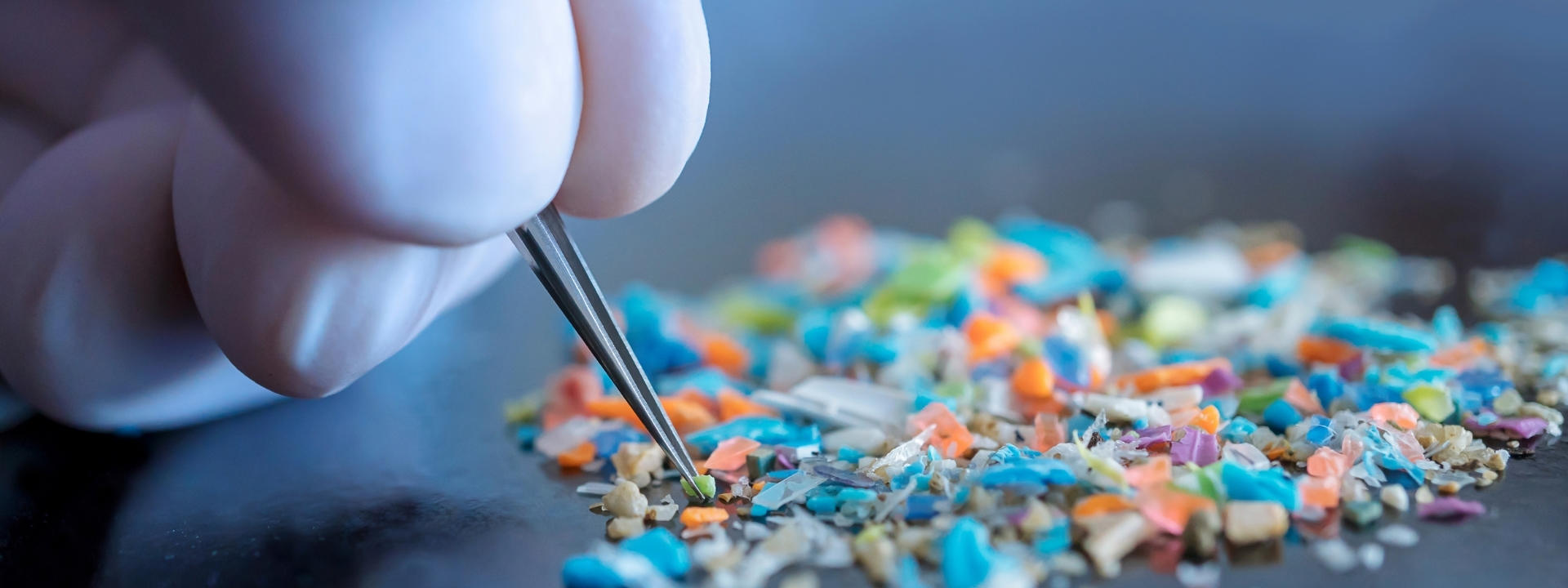
Source of plastic exposure
In 2025, Trinity College Dublin published groundbreaking research showing that microscopic plastic waste particles can cross the blood-brain barrier and may contribute to the rising incidence of Parkinson’s and Alzheimer’s disease, which has increased by 148% between 1990 and 2019.
The Eurofins network of laboratories is uniquely positioned to respond to the challenge of microplastics, operating six specialised microplastics laboratories worldwide.
Plastics have been in use for approximately 70 years, co-coinciding with an increase in the incidence of neurodegenerative diseases.
Humans are primarily exposed to microplastics via ingestion (eating and drinking), inhalation (breathing), and dermal contact (skin absorption). The main sources of exposure for humans include:
- hard food plastic containers
- plastic wrappings for food
- foam cups carrying hot liquid
- heating a plastic container for cooking
- bottled especially in hot weather
- airborne particles -carpets, upholstery, and clothing
- some personal care products
Find a local laboratory

Three Rock Road, Sandyford Industrial Estate, Dublin,D18 A4C0, Ireland