Molecular biology testing

Molecular services in Ireland
Utilising state-of-the-art technologies like Real-Time PCR and Transcription-mediated amplification (TMA), we extract DNA and RNA from various sample types to provide highly accurate, molecular-level insights that drive personalised medicine and precision healthcare. We partner with international diagnostic producers and laboratories to bring the most innovative tests to Ireland.
Haematology
Haemochromatosis
Real-time PCR
Haemachromatosis is caused by a mutation in the HFE gene, which is localised on the short arm of chromosome 6, near the locus of the HLA-A gene. This mutation causes the synthesis of an abnormal protein unable to interact with transferrin receptors, favouring the transport of iron through the intestinal mucosa. The two most frequent mutations found in the HFE gene correspond to the C282Y mutation (substitution of a cysteine with a tyrosine in position 282 of the protein) and the H63D mutation (substitution of the histidine with an aspartic acid in position 63 of the protein).
Immunology
HLA-B27
Real-time PCR
HLA-B27 is a class I surface antigen strongly associated with seronegative spondyloarthropathies such as ankylosing spondylitis.
90% of patients diagnosed with ankylosing spondylitis (AS) test positive for HLA-B27, meaning that genotyping is suitable for the differential diagnosis of AS. However, only 1-2% of those who test positive for HLA-B27 develop AS. Therefore, the test is not indicated as a screening test.
Molecular methods provide superior sensitivity and speed for the detection and typing of pathogens, which is critical for infection control and patient management.

Infectious diseases
The cobas 4800 is an automated, in vitro diagnostic system from Roche Diagnostics that extracts DNA and uses real-time Polymerase Chain Reaction (PCR) for various molecular diagnostic tests such as CT/NG and HPV.
Chlamydia Trachomatis & Neisseria Gonorrhoeae (CT/NG) DNA
The bacteria Chlamydia trachomatis (CT) is the second leading cause of sexually transmitted diseases worldwide, causing a variety of diseases in men, including urethritis, proctitis, conjunctivitis and epididymitis, and severe infection in women if left untreated, including endometriosis, salpingitis (with subsequent infertility and ectopic pregnancy, and perihepatitis). In pregnant women, the bacteria can be transmitted from a mother’s birth canal to the infant during delivery, which can cause conjunctivitis, pharyngitis, and pneumonia in newborns.
Neisseria gonorrhoeae (NG) is the causative agent of gonorrhoeae. Acute urethritis is seen in the majority of men with gonorrhoeae, and acute epididymitis is the most common complication, particularly in young men. In women, the primary site of infection is the endocervix, causing trichomonas vaginalis, bacterial vaginosis, pelvic inflammatory disease, endometriosis, tubo ovarian abscess, and pelvic peritonitis. However, many women who contract the infection remain asymptomatic.
Human Papillomavirus (HPV) DNA
Persistent infection with human papillomavirus (HPV) is the leading cause of cervical cancer and its precursor cervical intraepithelial neoplasia (CIN). The presence of HPV has been implicated in more than 99% of cervical cancers worldwide.
HPV is a small, non-enveloped, double-stranded DNA virus, with a genome of approximately 8000 nucleotides. There are more than 118 different types of HPV, and approximately 40 different HPVs that can infect the human anogenital mucosa. However, only a subset of 13 to 18 of these types is considered high-risk for the development of cervical cancer and its precursor legions. Although persistent infection with high-risk (HR) HPV is the primary cause of cervical cancer and its precursor lesions, a very small percentage of infections progress to these disease states.
Sexually transmitted infection with HPV is extremely common, with estimates of up to 75% of all women experiencing HPV at some point. However, > 90% of infected women will mount an effective immune response and clear the infection in 6 to 24 months without any long-term health consequences.
Nucleic acid (DNA) testing by PCR is a non-invasive method for determining the presence of a cervical HPV infection. The implementation of HPV DNA testing has increased the efficiency of cervical cancer screening programs by detecting high-risk lesions earlier in women 30 years and older with NILM cytology and by reducing the need for unnecessary colposcopy and treatment in patients 21 and older with ASC-US (abnormal) cytology.
Technology investment
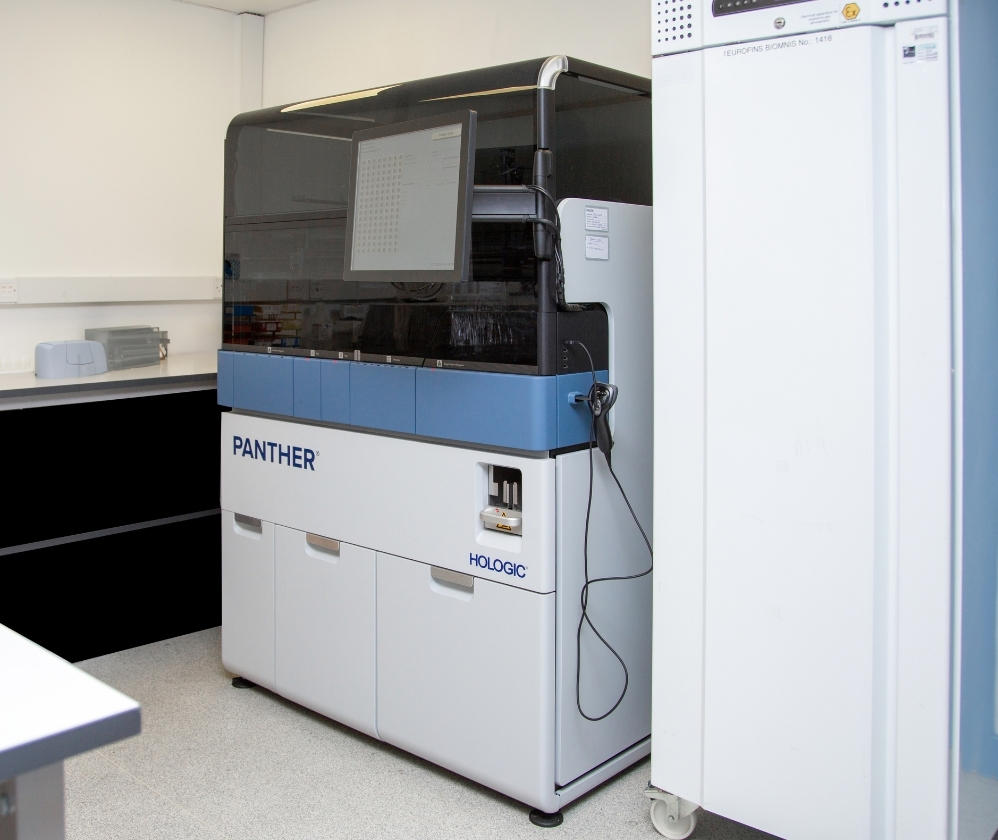
The Hologic PANTHER is a fully automated, high-throughput system for molecular diagnostic testing that allows for multiple tests to be performed on a single patient sample. The PANTHER consolidates a wide range of molecular tests, such as for STIs, women's health, viral load and respiratory infections, onto a single platform.
Transcription-mediated amplification (TMA) supports the amplification of RNA targets through an isothermal reaction involving RNA samples, specific primers, reverse transcriptase, and RNA polymerase.
Image from: Eurofins Clinical Diagnostics Ireland’s molecular laboratory
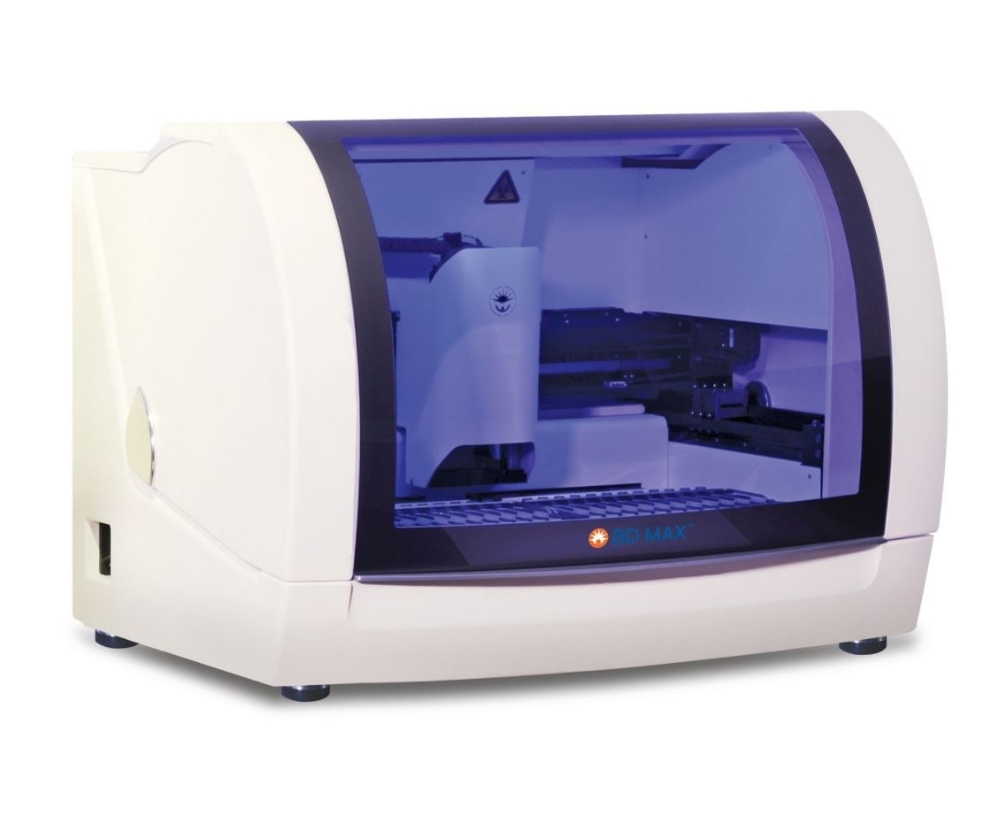
The BD MAX™ System is a fully automated molecular diagnostic platform used in clinical laboratories for in vitro diagnostic testing.
It integrates nucleic acid extraction and real-time PCR to provide rapid, accurate results for a variety of infectious diseases, such as STIs and enteric infections, helping to reduce patient wait times and improve treatment decisions.
Find a local laboratory

Three Rock Road, Sandyford Industrial Estate, Dublin,D18 A4C0, Ireland