ONCONEXT™ liquid

Comparison of traditional tumour biopsies and ONCONEXT™ Liquid
Tissue biopsy
- Invasive and expensive
- Strongly influenced by tumour position
- Representativeness limited by genomic heterogeneity
- Sampling tissue for biopsy is sometimes difficult or impossible
- Not usable if the primary tumor has been removed
- Often requires preparation
- The repetition of tissue sampling is subject to limitations
- Often requires specialised surgery area or structures
- Wait times are often long
ONCONEXT™ Liquid
- Non-invasive with a good benefit/cost ratio
- Independent from tumour position
- Good representativeness of genomic heterogeneity
- Simple and accessible sampling (blood)
- Can be used after surgery for early evaluation of residual disease or recovery
- No preparation needed
- The repetition of the blood sample is always possible
- Does not require specialised sampling point
- Rapid turnaround time and short wait times
- Useful tool for dynamic monitoring of the therapeutic response and resistance development
ONCONEXT™ Liquid offers a potential alternative to surgical tumour biopsy and histological assessment, eliminating many of the difficulties and concerns associated with traditional tests, as well as a means of augmenting imaging studies and other diagnostic methods.
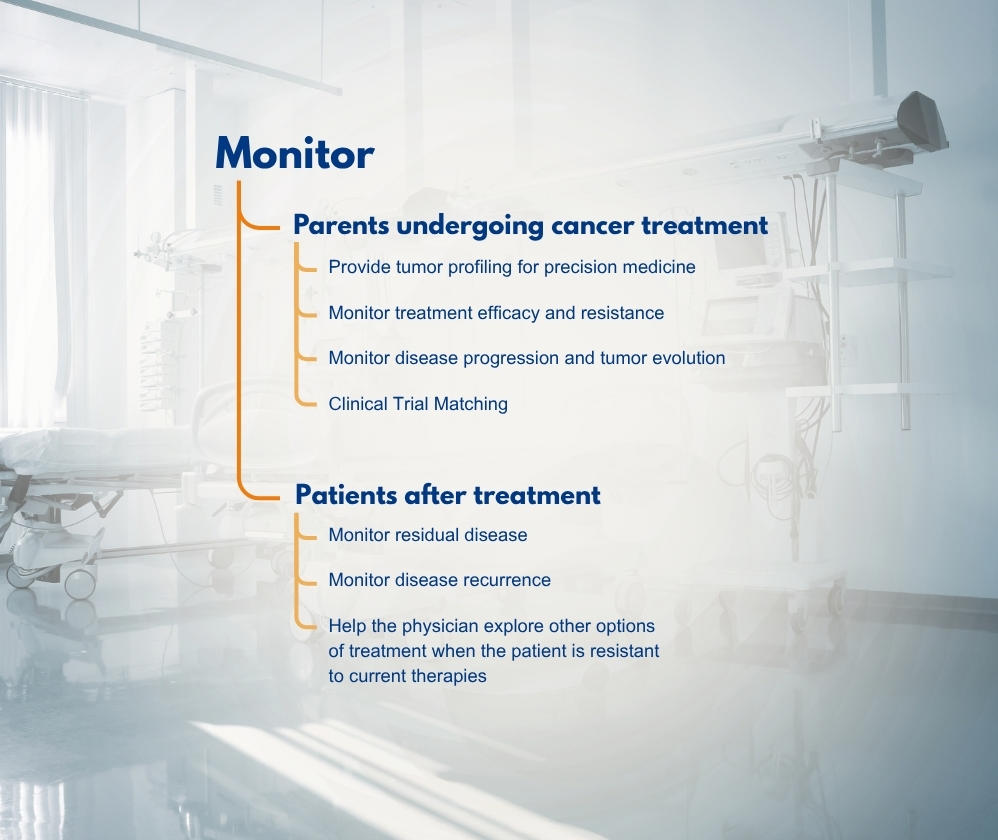
ONCONEXT™ Liquid Monitor
ONCONEXT™ Liquid Monitor is designed for patients who have been diagnosed with cancer, and provides physicians with actionable biomarker information to help guide treatment and identify ongoing clinical trials for aggressive, metastatic and refractory cancers.
A broad base of high priority target genes are used in ONCONEXT™ Liquid Monitor tests, regardless of which mutations were originally detected in the patient's tumour. This allows for the detection of arising clones that may create resistance to current therapies or reveal options for additional targeted therapies.
ONCONEXT™ Liquid analyses a panel of genes known to be somatically altered in cancer to identify genetic alterations that may be treated with targeted therapies.
Breast
The test looks at a panel of 11 genes known to be somatically altered in breast cancer: AKT1, EGFR, ERBB2, ERBB3, ESR1, SF3B1, KRAS, and PIK3CA (hotspot mutations). EGFR (CNV). FBXW7, TP53 (full gene).
Colon
The test looks at a panel of 16 genes known to be somatically altered in colorectal cancer: ALK, ROS1, RET, BRAF, KRAS, NRAS, NTRK1, and ERBB2 (hotspot mutations). EGFR, ERBB2 (CNV). BRAF, NTRK1, NTRK3, RET (fusion genes). APC, TP53 (full gene).
Lung
The test looks at a panel of 17 genes known to be somatically altered in lung cancer: ALK, BRAF, EGFR, MET, ERBB2, KRAS, NRAS, ROS1, and RET (hotspot mutations). EGFR, MET, ERBB2 (CNV). BRAF, NTRK1, NTRK3, ROS1 (fusion genes), TP53 (full gene).
ONCONEXT™ Liquid
ONCONEXT Liquid can detect variants in 52 genes that are primarily mutated in solid tumours. Specifically, it analyses hotspot mutations in 40 genes, copy number variants in 12 genes, and 12 fusion genes, as well as the entire sequence of the tumour suppressor genes APC, FBXW7, PTEN, and TP53.
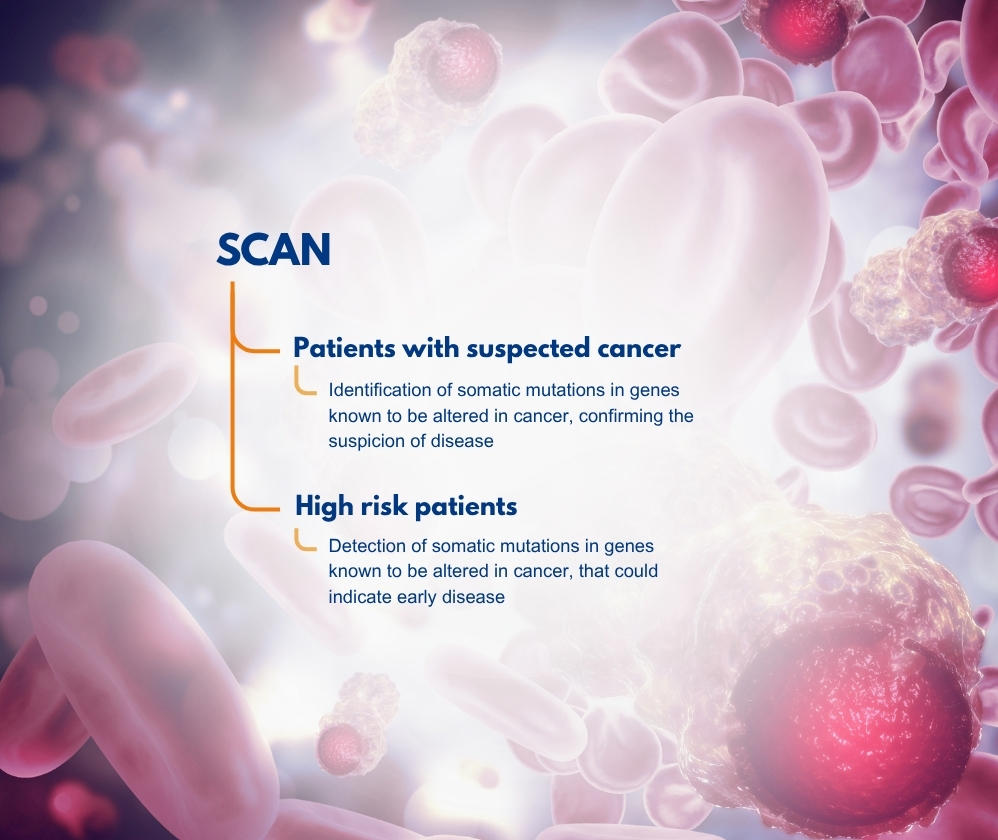
ONCONEXT™ Liquid Scan
ONCONEXT™ Liquid Scan test is meant for preventative surveillance of high risk populations.
Examples of high risk populations include, but are not limited to:
• Known genetic predisposition to specific cancer (e.g. the individual carries a BRCA1 mutation)
• Significant family history of cancer
• Personal history of smoking
• Exposure to known carcinogens (e.g. radon)
• Prolonged radiation or UV light exposure
• History of hormone use (fertility drugs, progestogen-containing hormone replacement therapy)
ONCONEXT™ Liquid Scan
ONCONEXT Liquid Scan is designed to screen for a set of cancer-driving genes for somatic mutations that could indicate early disease.
ONCONEXT™ Liquid Scan 'Option 1'
Scan 15 genes
ONCONEXT™ Liquid Scan 'Option 2'
Scan 23 genes
ONCONEXT™ Liquid Scan 'Option 3'
Scan 50 genes
Find a local laboratory

Three Rock Road, Sandyford Industrial Estate, Dublin,D18 A4C0, Ireland