Acquired cancers
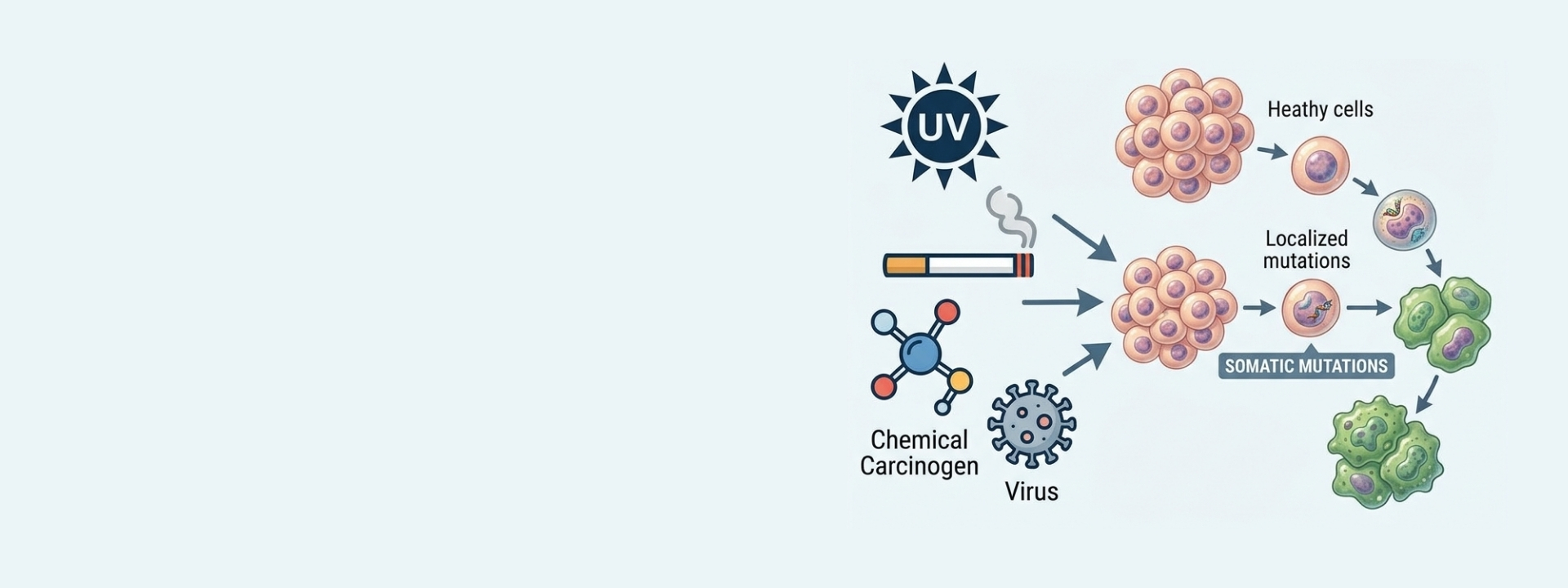
What causes acquired cancers?
Eurofins Clinical Diagnostics Ireland offers DNA-based next generation sequencing (NGS) panels and RNA-based NGS panels for specific cancers.
Acquired or sporadic cancers develop due to lifestyle and environmental factors. Genetic damage is driven by a combination of factors, including environmental and occupational exposure to carcinogens, lifestyle choices and ageing.
Clinicians working in solid-tumour oncology face many challenges, primarily driven by tumour heterogeneity, treatment resistance, and physical drug delivery barriers such as dense stroma and low oxygen levels at the tumour site and adverse patient reactions to the drugs.
High‑throughput sequencing has become a major tool in oncology, with diagnostic, theranostic and prognostic applications. DNA‑ and RNA‑based Next Generation Sequencing (NGS) analyses when combined, provide comprehensive profiling in tumours where fusion transcripts are frequent or diagnostically decisive.
DNA‑based NGS analyses: ideal for detecting point mutations, indels, and CNVs.
RNA‑based NGS (RNA‑seq): reference method for detecting fusion transcripts, essential for diagnosis and therapeutic orientation.
Medical areas; lung cancer, pancreatic cancer, thyroid cancer, sarcomas, gynaecology, digestive, cholangiocarcinomas, brain tumours, and pan‑organ applications.
Pre‑analytics: FFPE block or sections (6 unstained slides)
DNA panels (tissue biopsy) - 64 genes
Eurofins Clinical Diagnostics Ireland offers DNA panels specifically designed for the location of the tumour - thyroid cancer, cholangiocarcinoma (biliary tract), and tumours of the central nervous system. Two broader panels are available for lung and colorectal cancers.
Gene list (Updated May 2026):
|
|
|
|
RNA panels - RNA-seq for solid tumours (tissue biopsy) -66 genes
We provide panels for the identification of fusion transcripts for:
- Theranostic purposes: guiding the use of targeted therapies (e.g., ALK, ROS1, NTRK inhibitors).
- Diagnostic purposes: identifying specific fusions (e.g., SS18::SSX1/SSX2 in synovial sarcoma or FUS::DDIT3 in myxoid liposarcoma).
Gene list (Updated May 2026):
|
|
|
Find a local laboratory

Three Rock Road, Sandyford Industrial Estate, Dublin,D18 A4C0, Ireland