Asbestos - PLM, PCM, TEM, SEM, XRD
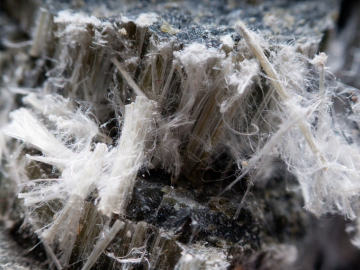
Asbestos is made up of groups of fibrous minerals naturally present on earth. Known for their strength, durability, and resistance to fire and harsh chemicals, asbestos was used commonly in various construction applications for the greater part of the 20th century. Asbestos is a thermal and acoustic insulator. It was used as an ingredient formulated in many products to make combustible materials flame retardant. Asbestos fibers are flexible and elastic, long lasting, and can be spun or woven into cloth.
Why is asbestos bad for you?
The risk of asbestos depends on the type of product in which it has been incorporated and its state of degradation. Asbestos can be hazardous to human health because microscopic particles are biopersistent, and can be inhaled. Its exposure is linked to higher rates of cancer and incurable asbestos-related illnesses.
In the form of tiny fibers, asbestos is released into the air and lodges itself in the lungs. Its near indestructible nature makes it difficult or impossible to expel. Lethal diseases, such as asbestosis, lung cancer or mesothelioma (pleural cancer) can develop. The most harmful effects of asbestos and all its symptoms on the human body sometimes do not appear for 20 years or more after exposure. Asbestos is one of the leading occupational causes of death.
Learn more about identifying asbestos and additional asbestos information on the EPA's website.
Asbestos regulation
Because of these adverse effects, asbestos should be managed to reduce exposure below legal thresholds. The U.S. government passed the Asbestos Hazard Emergency Response Act (AHERA) in 1986, which recognizes six types of asbestos (chrysotile, amosite, crocidolite, tremolite, actinolite and anthophyllite) from two general categories (amphiboles and serpentines).
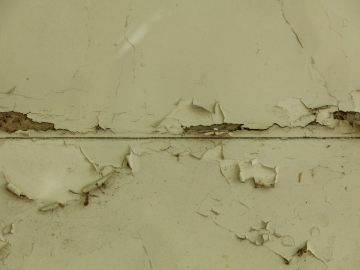
Buildings constructed prior to 1980 often have flooring, ceilings, and pipes made with asbestos. You cannot tell if a product is made with asbestos without some form of professional analysis. Demolition and renovation are the primarily ways to disturb materials made with asbestos in the home The “friable” (easily crumbled) nature of many building materials can create harmful dust when those products are handled inappropriately.
Eurofins is able to isolate, identify and quantify all types of asbestos in various types of materials such as cements, vermiculite-containing products, insulating materials, as well as slab floors and ceilings.
Sampling and analysis of asbestos
Eurofins analyzes all layers of wallboard/joint compounds, plasters, and roofing samples as required by the regulators and testing accreditation bodies such as National Voluntary Laboratory Accreditation Program (NVLAP). EPA and OSHA have specific reporting requirements. If clients do not specify testing standards, Eurofins adds a comment specifying the layer that asbestos was identified.
Methodology Used for Asbestos Testing

POLARIZED LIGHT MICROSCOPY
Polarized Light Microscopy (PLM) is the utmost accepted method by the EPA and internationally is the most accepted technique for initial analysis of bulk building materials for asbestos content. By utilizing the polarized light microscope, analysts determine the optical properties of the samples’ fibrous components and provide both the asbestos type and estimated percentages in the sample material. PLM is also employed by methods for soil, vermiculite-containing building materials, and other mineral assemblages (ex. talc in cosmetics).
POLARIZED LIGHT MICROSCOPY POINT COUNT
Polarized Light Microscopy Point Count determines the type of asbestos present and point counts quantify the percentage of asbestos. This method is primarily used to supplement the original PLM calibrated visual estimate.
POLARIZED LIGHT MICROSCOPY GRAVIMETRIC POINT COUNT
Polarized Light Microscopy Gravimetric Point Count utilizes thermal and acid treatments to create residue that allows the lab to get a percentage of asbestos in the residue based on a point count technique.
Many regulatory recognized PLM standard methods are employed by EBET including USEPA 600 R93/116, USEPA 600 R-04-004, and other jurisdictional required methods (ex. NYSDOH ELAP, ISO22262-2, CARB435, USEPA Region I Asbestos in Soils, Sludges, and Sediments).
Analytical Methods by TEM
TRANSMISSION ELECTRON MICROSCOPY (TEM) “CHATFIELD”
This procedure originated from work published by Dr. Eric Chatfield decades ago, and has adopted by the USEPA 600 R93/116 as Sections 2.3 Gravimetry and 2.5 TEM Analysis. The method includes initial macroscopic and microscopic analysis before proceeding with this technique. Here the bulk materials are gravimetrically reduced (mass measured at each step) through a series of thermal and acid treatments to create a residue that is examined by TEM. The morphological, chemical (EDS) and crystal structure (SAED) of the mineral fibers within the residue provide results as a derivative of the percentage of asbestos in the initial sub-sample. This method is approved by the EPA to confirm low-level concentrations of asbestos in non-friable organically bound and some limited friable bulk building materials. Other bulk materials such as consumer products (ex. vehicle brake assemblies, gaskets) and cosmetics that are talc-based, require a combination of standard (ex. USP 901 and 1901) and proprietary methods. In some jurisdictions related methods are required such as ELAP 198.4 or sections of ISO22262-2.
TRANSMISSION ELECTRON MICROSCOPY AIR AHERA (Asbestos Hazard Emergency Response Act)
This method is primarily utilized for the final clearance of asbestos remediation area in public schools. It was developed and published by the EPA for clearance of air samples in schools. For the results to be effective, specific sample protocol consistent with AHERA must be followed. You can find these details on the EPA website. Other methods include the NIOSH 7402 method, the optional follow-up to PCM testing using NIOSH 7400 which provides qualitative analysis and an optically visible fraction (OVF) that can be applied to the initial PCM fiber concentrations. The ISO10312 and related ISO13794 methods are mandated by many USEPA related projects. Other airborne methods include ASTM D7201 and ASTM D6281. EBET can provide customers with information to assist investigators.
TRANSMISSION ELECTRON MICROSCOPY DUST ANALYSIS
There are primary consensus standards from ASTM and the USEPA that are recognized by regulators and in legal settings. The intent of each method should be understood by investigators and building engineers before implementing sample collection. EBET can provide customers with materials and directions to assist project objectives. The methods include a micro-vacuum sample collection technique limited to surface dust particles that are easily re-entrained into the air, another method where the investigator employs a specific wipe material to collect the surface dust to understand historical deposition of suspect particles, a third method that employs destructive testing on small swatches of woven surface substrate (ex. fabric on furniture, clothes, carpets, etc.) that particles are separated and processed for TEM analysis. Results are reported in concentration of asbestos structures pert unit area of surface collected. The last method employs a statistical comparison of two environments using the methods listed here. There are various accepted method analytical sensitivity limits, ambient level concentrations that have been studied, as well as accepted clearance concentrations dependent on sample location. Methods include ASTM International’s D5755, D8480, D7390, and USEPA J-93/167.
TRANSMISSION ELECTRON MICROSCOPY WATER ANALYSIS
There are primary methods from USEPA 100.1 and 100.2 that are required throughout the US and recognized by most of the international market. The intent of each method is closely related. EBET can provide customers with guidance on understanding the methods and sample collection and shipping requirements. Often sample treatments are required by the methods to prevent biologic and organic interferences (ex. UV and Ozone). TEM results are given in Million Fibers per Liter (MFL) of asbestos, and depending on the USEPA method version, the concentrations can be delineated by fiber size populations.
TRANSMISSION ELECTRON MICROSCOPY SOIL ANALYSIS
A host of methods can be utilized for soil that all require initial macroscopic and microscopic screening by PLM. The intent of each method is not always intuitive. EBET can provide customers with guidance on understanding the methods and sample collection and shipping requirements. Often sample treatments and preparation steps vary as required by the methods to help concentrate or separate asbestos from soil matrix interferences. The ASTM D7521 method employs gross examination screening by PLM (including identifiable bulk building material in soil) and fractional size sieving to assist the investigator in identifying populations including the finest respirable fraction (<100um) by TEM. The CARB435 method requires PLM analysis of two size fractions after milling and an optional TEM analysis of any negative fine fraction particles. The USEPA R04-004 method for vermiculite requires a five-tiered process with initial PLM fractions and final TEM of the ‘sinks’ and ‘suspension’ fractions. The USEPA Region I Method for Asbestos in Soil, Sludge, and Sediment likewise requires mandatory PLM and optional TEM analysis.
Analytical Methods by PCM
PHASE CONTRAST MICROSCOPY (PCM)
Phase Contrast Microscopy (PCM) is performed on air filter samples that have been collected to monitor asbestos conditions prior to, during, and after asbestos remediation. This includes samples following NIOSH 7400 specifications for OSHA mandated personal monitoring. THE PCM analyst counts fibers that are present on the filters with fiber density and fiber concentrations available. In additional, optional results can be derived in order to give a time-weighted average of the concentration of those fibers for the volume of air sampled normalized to 8 hours. PCM results are fiber concentrations and do not distinguish between asbestos and non-asbestos fibers by NIOSH 7400. See above TEM NIOSH 7402 method for more information In some cases the use of B rules for specialized PCM samples where refractory ceramic fibers are suspected are available at select EBET locations.
Sample Analyses
Asbestos Air Sample Analysis
When Asbestos Containing Material (ACM) is disturbed, asbestos fibers are released into the air, thereby creating a potential health hazard. Air monitoring is an essential component of any asbestos abatement project, and final clearance is determined by air sampling. Eurofins Built Environment Testing analyzes air samples by Transmission Electron Microscopy (TEM) and Phase Contrast Microscopy (PCM).
Asbestos Bulk Sample Analysis
Although asbestos has traditionally been associated with insulation, Asbestos Containing Material (ACM) has also been used in other construction components, such as wall plaster, floor and ceiling tiles, and roofing materials. Accurate identification of ACMs through sampling of "bulk" materials is critical to building owners, actual or prospective, as well as lenders, contractors, and other concerned parties. Eurofins Built Environment Testing analyzes bulk samples by Transmission Electron Microscopy (TEM) and Polarized Light Microscopy (PLM).
Asbestos Water Sample Analysis
While asbestos can be a natural contaminant from water sources (lakes, rivers, reservoirs) asbestos containing concrete pipe has often been employed to transport drinking water. As these pipes age, asbestos fibers can be released and find their way into drinking water. Disposal of asbestos contaminated wastewater generated in asbestos abatement projects can also be a problem. Eurofins Built Environment Testing analyzes water samples by Transmission Electron Microscopy (TEM) to quantify the level of asbestos contamination. TEM provides detailed information on fiber morphology with elemental composition determined using an energy dispersive Energy Dispersive X-Ray Analysis (EDX) system.





Start your testing now
Contact us to discuss your project goals and learn how our testing solutions can support your data and regulatory needs.