Microplastics
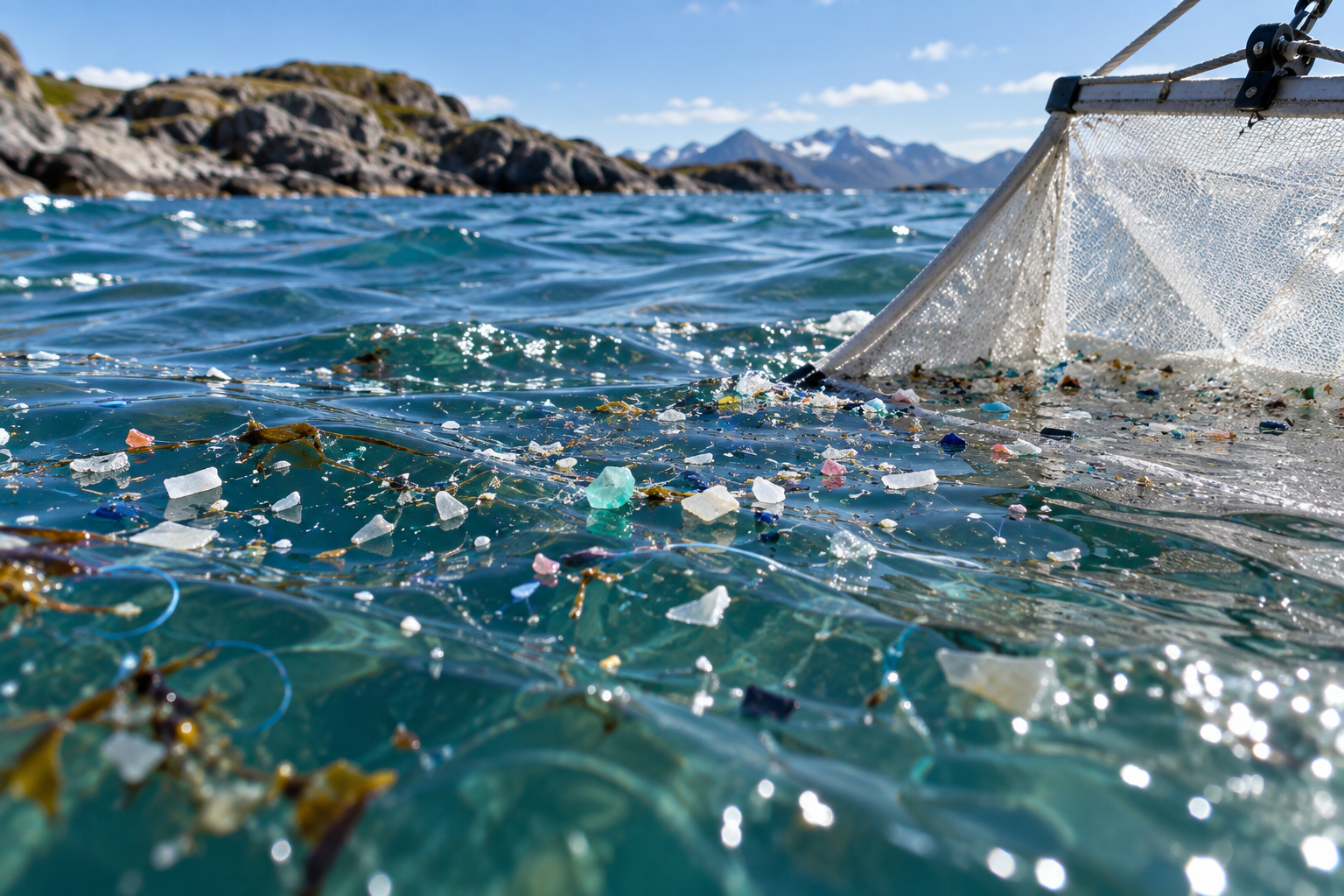
Microplastics and Rubber Particles
Understanding Microplastics
Microplastics have become an increasingly important environmental concern worldwide. Their widespread use, persistence and continuous release into the environment have resulted in their presence in aquatic, terrestrial and atmospheric ecosystems. Microplastics have been detected in rivers, lakes, oceans, soils, air, food products and drinking water.
Microplastics are generally defined as synthetic polymer particles between 1 and 1,000 µm, while larger microplastics comprise particles between 1 and 5 mm. These particles may be intentionally manufactured at small sizes or formed through the degradation and wear of larger plastic products.
Potential sources of microplastics include:
-
Road traffic and tyre wear
-
Artificial turf
-
Marine activities and boating
-
Building façades and construction materials
-
Plastic manufacturing
-
Wastewater treatment plants
-
Industrial processes
As regulatory attention and public awareness continue to increase, organisations are seeking reliable analytical methods to monitor, quantify and understand the occurrence of microplastics in the environment.
A Leading Laboratory for Microplastics Analysis
Eurofins Environment Testing Norway has been performing microplastics analyses at our laboratory in Bergen since 2018.
Over the years, the Bergen laboratory has established itself as a recognised centre of expertise for quantitative microplastics and rubber particle analysis using Pyrolysis-Gas Chromatography-Mass Spectrometry (Py-GC/MS). Today, samples are submitted to our laboratory from around the world by environmental consultants, industrial companies, research institutions, public authorities and environmental monitoring programmes.
Through a combination of specialised expertise, advanced analytical capabilities and access to the global Eurofins network, we support projects ranging from routine environmental monitoring to advanced research and development studies.
Our specialists regularly support investigations involving:
-
Environmental monitoring programmes
-
Research and development projects
-
Source identification studies
-
Tyre and road wear particles (TRWP)
-
Regulatory investigations
-
Environmental risk assessments
-
Custom analytical solutions
Why Choose Eurofins?
Eurofins combines global expertise in microplastics testing with specialised analytical capabilities at our laboratory in Bergen, Norway.
Our services include:
-
Quantitative microplastics analysis by Py-GC/MS
-
Rubber particle and tyre wear particle (TRWP) analysis
-
Environmental monitoring programmes
-
Regulatory investigations
-
Research and development projects
-
Source tracking and environmental assessments
-
Custom analytical solutions
Whether your objective is environmental monitoring, compliance assessment, source identification or scientific research, our specialists can help design an analytical approach tailored to your project.
Analytical Approaches for Microplastics
There is no single analytical technique suitable for every microplastics investigation. The optimal methodology depends on the sample matrix, particle size range and project objectives.
Across the Eurofins network, several complementary analytical technologies are available.
|
Technology |
Information Obtained |
|
Light Microscopy |
Particle count, morphology, colour and size |
|
Raman Spectroscopy |
Polymer identification of small particles |
|
FTIR Spectroscopy |
Polymer identification and characterisation |
|
LDIR |
Automated polymer identification |
|
Py-GC/MS |
Polymer identification and quantitative mass determination |
At Eurofins Environment Testing Norway, routine analyses are primarily based on Py-GC/MS, enabling robust quantitative determination of both microplastics and rubber particles in complex environmental matrices.
Analytical Method: Py-GC/MS
Pyrolysis-Gas Chromatography-Mass Spectrometry (Py-GC/MS) is a mass-based analytical technique used to identify and quantify synthetic polymers and rubber components.
During pyrolysis, the sample is heated to high temperatures, causing the polymers to break down into characteristic compounds. These compounds are subsequently separated and identified using gas chromatography and mass spectrometry.
The method enables:
-
Identification of individual polymer types
-
Quantification of microplastics as mass concentration
-
Determination of total microplastic content
-
Quantification of selected rubber components
-
Assessment of tyre and road wear particles (TRWP)
-
For samples containing significant amounts of particulate matter or organic material, additional preparation steps such as chemical digestion and density separation may be required prior to analysis.
Unlike particle-counting techniques, Py-GC/MS reports microplastics as mass concentration, making it particularly suitable for environmental monitoring, research applications and complex matrices.
Polymers and Rubber Components Analysed
Eurofins can analyse the following synthetic polymers and rubber compounds:
|
Abbreviation |
Polymer / Component |
|
PE |
Polyethylene |
|
PP |
Polypropylene |
|
PS |
Polystyrene |
|
ABS |
Acrylonitrile Butadiene Styrene |
|
PMMA |
Polymethyl Methacrylate |
|
PC |
Polycarbonate |
|
PVC |
Polyvinyl Chloride |
|
PET |
Polyethylene Terephthalate |
|
PA-6 |
Polyamide-6 / Nylon-6 |
|
PA-66 |
Polyamide-66 / Nylon-66 |
|
PU |
Polyurethane |
|
NR/PIP |
Natural Rubber / Polyisoprene |
|
BR/PBD |
Butadiene Rubber / Polybutadiene |
|
SBR |
Styrene-Butadiene Rubber |
Reporting
Results can be reported as:
-
Individual polymer concentrations (µg/L or µg/kg)
-
Total microplastics concentration
-
Rubber component concentrations (µg/L or µg/kg)
-
Qualitative rubber identification
-
Reporting options vary depending on the selected analytical package and sample matrix.
Sample Types We Analyse
Eurofins routinely analyses the following matrices:
|
Sample Type |
Examples |
|
Drinking Water |
Drinking water, tap water |
|
Clean Water |
Freshwater, seawater and process water |
|
Wastewater |
Municipal and industrial wastewater |
|
Sediment |
Marine sediments, sand and other inorganic matrices |
|
Water-Soluble Solids |
Salt, sugar and other water-soluble materials |
|
Fish Fillets |
Fish and food-related samples |
|
Polymer-Containing Materials |
Tyres, rubber and polymer products |
|
Custom Project Samples |
Other matrices upon request |
Analytical Packages
Water Samples
|
Analysis Code |
Matrix |
Fraction |
Analysis |
|
MX130 |
Drinking Water |
>0.7 µm |
Synthetic Polymers |
|
MX131 |
Clean Water |
27–1000 µm |
Synthetic Polymers |
|
MX136 |
Clean Water |
27–1000 µm |
Rubber Components |
|
PMX70 |
Clean Water |
27–1000 µm |
Synthetic Polymers + Rubber Components |
|
MX132 |
Clean Water |
10–1000 µm |
Synthetic Polymers |
|
MX141 |
Wastewater |
27–1000 µm |
Synthetic Polymers |
|
MX146 |
Wastewater |
27–1000 µm |
Rubber Components |
|
PMX72 |
Wastewater |
27–1000 µm |
Synthetic Polymers + Rubber Components |
|
MX142 |
Wastewater |
10–1000 µm |
Synthetic Polymers |
|
MX147 |
Wastewater |
10–1000 µm |
Rubber Components |
|
PMX74 |
Wastewater |
10–1000 µm |
Synthetic Polymers + Rubber Components |
|
MX145 |
Wastewater |
27–1000 µm |
Polyurethane |
Sediment and Solid Materials
|
Analysis Code |
Matrix |
Fraction |
Analysis |
|
MX541 |
Sediment |
27–1000 µm |
Synthetic Polymers |
|
MX546 |
Sediment |
27–1000 µm |
Rubber Components |
|
PMX73 |
Sediment |
27–1000 µm |
Synthetic Polymers + Rubber Components |
|
MX542 |
Sediment |
10–1000 µm |
Synthetic Polymers |
|
MX547 |
Sediment |
10–1000 µm |
Rubber Components |
|
PMX78 |
Sediment |
10–1000 µm |
Synthetic Polymers + Rubber Components |
|
MX548 |
Sediment |
10–1000 µm |
Polyurethane |
|
MX550 |
Solid Material |
- |
Polymer Screening |
|
MX561 |
Fish Fillet |
10–1000 µm |
Eight Polymers |
|
MX00F |
Additional Code |
1000–5000 µm |
Large Microplastics |
Water-Soluble Solids
| Analysis Code | Matrix | Fraction |
Analysis |
|
MX530 |
Water-Soluble Solids |
27–1000 µm |
Synthetic Polymers |
|
MX531 |
Water-Soluble Solids |
>0.7 µm |
Synthetic Polymers |
|
MX536 |
Water-Soluble Solids |
27–1000 µm |
Rubber Components |
|
PMX71 |
Water-Soluble Solids |
27–1000 µm |
Synthetic Polymers + Rubber Components |
Minimum Sample Quantities
|
Sample Type |
Recommended Quantity |
|
Liquid Samples |
2 × 1 litre |
|
Sediment |
250–500 g |
|
Water-Soluble Solids |
50–100 g |
|
Fish Fillet |
250–500 g |
|
Polymer Screening |
>1 mg |
|
Quality Control Sample |
One empty container per sample batch |
Sampling and Quality Assurance
Microplastics are present in many common materials and textiles. Appropriate sampling procedures are therefore crucial to minimise contamination risks.
We recommend:
-
Rinsing sample containers three times with sample water before collection
-
Wearing clothing made from natural fibres such as cotton
-
Avoiding synthetic fleece and similar textiles
-
Replacing bottle caps immediately after sampling
-
Considering wind direction during sampling
-
Including one empty control container for each sample batch
Samples are processed in a laboratory environment specifically designed for polymer-particle analyses. Blanks are included throughout the analytical workflow as part of our quality assurance programme.
Liquid samples, sediments and water-soluble materials generally do not require preservation or cooling prior to shipment. Fish samples should be shipped frozen.
Custom Analyses and Special Projects
Every microplastics investigation is unique. Depending on project requirements, Eurofins can support customised studies involving:
-
Alternative particle-size fractions
-
Special sample matrices
-
TRWP investigations
-
Source-tracking studies
-
Research projects
-
Environmental monitoring programmes
-
Regulatory compliance assessments
If you cannot find the analytical package or sample type you are looking for, please contact us. Our specialists will be happy to discuss a solution tailored to your project.
Contact Us
Do you need assistance selecting the right analysis, sampling strategy or reporting approach?
Contact our microplastics specialists:
E-mail: microplasticsbergen@etn.eurofins.com
Our experts can advise on sample collection, analytical package selection, project design and interpretation of results.