Virucidal efficacy testing
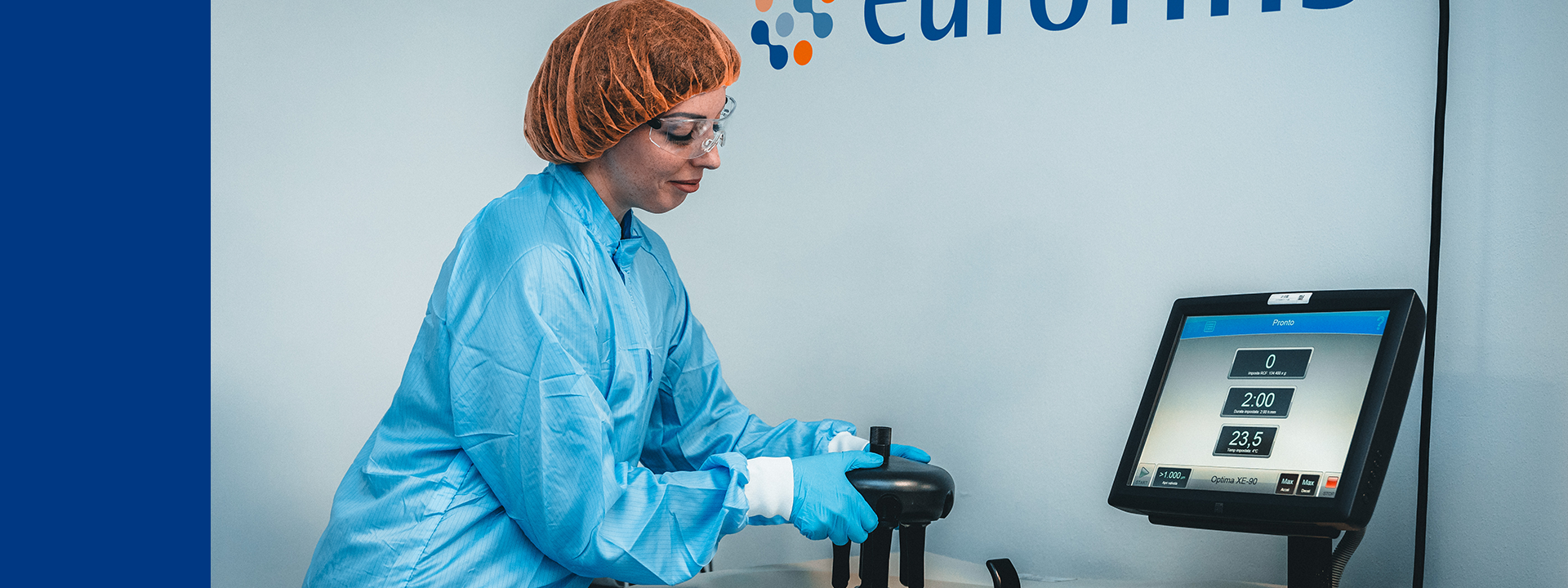
Laboratory testing excellence
Eurofins BioPharma Product Testing has established a fully dedicated laboratory that performs virucidal testing and studies on disinfectant products. Our services help clients to assess and demonstrate the general virucidal activity (against enveloped and/or non-enveloped viruses) of disinfectant products and determine efficacy levels against specific viruses, like coronavirus or influenza.
With over 25 years’ experience in assessing the efficacy of disinfectant products against microorganisms and viruses, we offer a one-stop-shop biocide solution to product formulators who need to test multiple products for efficacy versus specific viruses.
Our 450 square meters BioSafety Level 2 laboratory includes 8 biohazard virucidal workstations and cell culture manipulation testing equipment, with a monthly capacity average of 100+ studies.
Our laboratory is GLP, GMP, ISO, VAH accredited and all our virucidal testing solutions are performed according to CEN, ISO, ASTM AND OECD.

Laboratory testing excellence
Surface disinfectants are part of broader preventive strategies preventing the transmission of bacteria, fungi and viruses in medical institutions. To evaluate their virucidal efficacy, these products must be tested with appropriate model viruses with different physico-chemical properties under conditions representing practical application in hospitals. Considering that non-enveloped viruses such as noroviruses and enteroviruses are resistant to the majority of chemical disinfectants, only biocides with proven virucidal efficacy can be used.
Our biocides testing solutions
- An extended viral library to meet both EU/UK, US EPA, Health Canada and TGA requirements
- EN 14476 and ASTM E1052 standard test method for efficacy of antimicrobial agents against viruses in suspension
- EN 16777 and ASTM E1053 standard test methods for efficacy of virucidal agents intended for inanimate environmental surfaces
- Laundry testing according to EN 16616, prEN17658, ASTM E 2276/ASTM E 2406 modified to test viruses
- Virucidal efficacy tests on disinfectants applied to a room or enclosure via a fogger or misting device according to EN 17272 or EPA approved protocols
- Disinfectant qualification testing for virucidal activity for the biopharma industry on standard viruses, process isolates and GMOs
Why choose Eurofins BioPharma Product Testing?
- We have the experience to perform official and customised test methods against a huge portfolio of BL2 viruses in order to comply with regulatory requirements and also support specific marketing claims
- Our expertise allows us to support our client developing, implementing and performing customised testing depending on your specific needs
- Our accurate control level of our testing services enables us to provide scientifically sound and reliable test results
- We maintain an extensive library of viruses. If you need a testing on a virus that is not in our library we are able to obtain additional viruses from a range of sources for your testing needs.
Residual activity tests
Laboratory excellence
Recently, there has been growing interest in obtaining residual efficacy claims (i.e., claims that a product has a continuous effect against microorganisms or viruses beyond the initial time of application). Traditional efficacy surface tests aim to demonstrate the disinfectants efficacy at a specific contact time. Stakeholders and the public are interested in products that prove active and effective beyond the moment of application.
How can we assist you in your residual activity claim journey?
Eurofins BioPharma Product Testing can give support for this specific claim, performing Residual Efficacy testing to demonstrate the effectiveness of biocidal disinfectant products both with immediate and prolonged effect against a wide variety of viruses.
Test methods are quantitative surface tests for the evaluation of residual virucidal efficacy of liquid chemical disinfectants on different types of surfaces.
Tailor-made protocols on viruses are based on US EPA residual sanitising efficacy test protocol of dried chemical residues on hard and non-porous on hard and non-porous surfaces (EPA 01-1A) and UK residual antimicrobial efficacy test on hard non-porous surfaces (BS PAS 2424-2014)
We are committed to assist disinfectant manufacturers in achieving high-demand product claims for their disinfectants. Our team customises and design suitable test methods that suits manufacturer needs, product application, and antimicrobial claim of interest. Disinfectant manufacturers may submit our test protocols to the regulatory authorities for approval prior to proceeding with testing. Contact us if you would like us to get started on designing your customised test protocol.
Tests on treated surfaces
ISO 21072: determination of antiviral activity on plastic and other non-porous surface
Antibacterial-treated porous and non-porous products have been commercialised and used among general consumers related to the hygenic properties which are different from what traditional materials had in terms of material protection. These products have gained major relevance, due to the presence of harmful microorganisms in or on various items. In response to these concerns scientific evidence must be available and chemical data must be submitted in support of the public health labeling claims and patterns of use of the product.
ISO 21702 is one of the most commonly requested antiviral surface test methods for evaluating the antimicrobial activity of antiviral-treated products such as plastics, coating materials, ceramics, natural and artificial leathers, stainless, rubber etc., and other non-porous surfaces. Due to the individual sensitivities, the results of one test virus might not be applicable for other viruses.
Eurofins BioPharma Product Testing performs antiviral activity testing of surfaces that include plastics and other non-porous surfaces against viruses according to ISO 21702. We can quantify the antiviral activity of surfaces or paints, sprays, or additives. We can test plastics, coating materials, ceramics, natural and artificial leathers, rubbers and other non-porous surfaces.
Why choose Eurofins BioPharma Product Testing?
- We have the experience to perform official and customised test methods against a huge portfolio of BL2 and BL3 viruses in order to comply with regulatory requirements and also support specific marketing claims
- Our expertise allows us to support our client developing, implementing and performing customised testing on different types of plastics and other non-porous surfaces
- We maintains an extensive library of viruses. If you need a testing on a virus that is not in our library we are able to obtain additional viruses from a range of sources for your testing needs
Tests on UVC devices
Surface virucidal efficacy testing of UVC products
In the last decade several different devices adapting ultraviolet-C (UV-C)-based technology for sanitisation or disinfection purposes were placed to market with the scope of irreversibly inactivating viruses on PPE (e.g. re-usable goggles and facemasks), re-usable medical devices, pre-cleaned food and biopharma manufacturing surfaces, food packaging and more. In the context of the COVID-19 pandemic, several UVC devices employed to sanitise consumer products, have rapidly entered the market.
It is imperative that these devices have proven efficacy so it's therefore necessary to establish reproducible and reliable virucidal tests to challenge the efficacy of such devices.
The British standardisation committee (BSI) recently published a standard (BS 8628:2022) in order to test UVC-based technology in a standardised manner. This is now the industry standard.
Eurofins BioPharma Product Testing within its dedicated virucidal laboratory can perform the standard BS 8628 (according to EN 17272) and also can perform tailor-made tests in order to validate the surface virucidal efficacy of open and closed UVC products with different sized and complex designs, both for marketing claims and for regulatory purposes.
Our testing services help companies to ensure that the system employed at their facilities is both suitable for use and effective against viruses.
Air treatment unit tests
Airborne viral contamination has been a major concern during the current COVID-19 pandemics as Coronavirus infection spreads mainly via air droplets, especially indoors. Besides, other respiratory viruses have a similar infection pattern.
It is therefore important to develop and validate robust air of air filters sanitisation systems which may mitigate the risk of airborne infectivity.
Eurofins BioPharma Product Testing has developed a panel of tests to challenge claims of airborne virus reduction of infectivity in pilot air ducts in order to verify the effectiveness of sanitising systems connected to air ducts and air filters.
Tests are performed following the prescriptions, as applicable, of technical norms related to efficacy testing of airborne microorganisms, such as ISO 15714: 2019. These tests are tailor-made to test viruses and different industrial flowrates and duct sizes.
Each test is performed only after a robust client’s suite setup and validation is carried out in order to make sure reliable data are issues. Such tests are applicable for example to UV-C systems, treated filters.
Tests on volunteers
Efficacy testing against viruses according to EN 17430:2024
Handwashing and handrubbing are emphasised as the most important measure to prevent cross transmission of viruses and microorganisms and thus to prevent diseases and infections from spreading.
The new EN 17430 standard, that entered into force on April 2024, represents a turning point with regards to evaluating the effectiveness of hand disinfectants.
This standard specifies a test method simulating practical conditions for establishing whether a product for hygienic handrub reduces the release of virus contamination on hands when rubbed onto the artificially contaminated hands of volunteers.
This document is applicable to products for hygienic handrub for use in areas and situations where disinfection is medically indicated. Such indications occur in patient care, for example:
- in hospitals, in community medical facilities and in dental institutions;
- in clinics of schools, of kindergartens and of nursing homes;
- and can occur in the workplace and in the home.
It can also include services such as laundries and kitchens supplying products directly for the patient.
Many products on the market now have to be tested in accordance with the standard. Eurofins BioPharma Product Testing dedicated laboratory is already aligned with this standard.
Method to evaluate the antimicrobial efficacy of handrub, handwash agents and surgical handscrub formulation
Every new formulation for hand antisepsis should be tested for its antimicrobial efficacy to demonstrate that it has superior efficacy over normal soap or it meets an agreed performance standard. The formulation with all its ingredients should be evaluated to ensure that chemical components added to ensure better skin tolerance do not in any way compromise its antimicrobial action.
Many test methods are currently available for this purpose, but some are more useful and relevant than others. For example, determination of the minimum inhibitory concentration (MIC) of such formulations against bacteria has no direct bearing on the “killing effect” expected of such products in the field.
Conditions in suspension and in vitro or ex vivo testing do not reflect those on human skin. This reinforces the utility of laboratory-based tests on volunteers to provide sufficient data to assess a given formulation’s potential benefits under field use.
Why choose Eurofins BioPharma Product Testing?
- With over 20 years’ experience in assessing the efficacy of disinfectant products, we offer a one-stop-shop solution to evaluate the virucidal and antimicrobial efficacy of handrub, handwash agents and surgical handscrub formulation.
- The breadth of our knowledge allows us to assist clients with new product development, R&D projects and marketing claims by providing proven efficacy to the end user.
We are constantly conducting controlled laboratory tests by simulating practical conditions on hands of volunteers to determine the effectiveness of hand wash, handrub and surgical hand disinfectants - Our accurate control level of our testing services enables us to provide scientifically sound and reliable test results supporting clients to bring safe and effective products to market.
- Tests are performed following international validated standards and guidance (CEN, FDA and ASTM).
Complete range of testing services
- Hygienic handrub virucidal (phase2/step2) according to EN 17430:2024
- Bactericidal activity surgical handrub (phase2/step2) according to EN 12791:2016 + A1:2017/UNI EN 12791:2018
- Bactericidal activity surgical handrub (phase2/step2) according to EN 12791:2016 + A1:2017
- Bactericidal activity for handrub (phase2/step2) according to EN 1500:2013 / UNI EN 1500:2013 + EC1-2013
- Bactericidal activity for handrub (phase2/step2) according to EN 1500:2013 / UNI EN 1500:2013 + EC1-2013 - Customised protocol
- Bactericidal handwash activity (phase2/step2) according to EN 1499:2013 / UNI EN 1499:2013
- ASTM E 1874
- ASTM E 2752
- ASTM E 2011
- ASM E 1838
- ASTM E 1174
- ASTM E 2613
- ASTM E 1115
- ASTM E 2755
- ASTM E2276
- ASTM E 1327
- ASTM E 2784
- ASTM E2946
- ASTM 1173
Viral library
The most extensive viral library as a resources for your biocides testing needs
The fight against viruses requires intricate knowledge of their viral mechanisms of action. To ensure the virucidal efficacy of biocidal products, access to specific virus strains is promptly needed.
Eurofins BioPharma Product Testing maintains an extensive library of viruses which can be used for high-quality testing. This allows product formulators to test multiple products for efficacy against specific viruses.
We are continuously expanding it to deal more effectively with the threat of viral infections.
If the virus you need to test is not available in the list below please contact us.
Any other virus up to Biosafety Level 2 can be integrated accordingly upon specific request.
CEN viruses
- Adenovirus type 5
- Bovine enterovirus type 1, strain ECBO
- Modified vaccinia virus strain Ankara (MVA)
- Murine norovirus S99
- Murine parvovirus/ Rodent Protoparvovirus 1 (Minute virus of mice) (MVM)
- Poliovirus type 1 Lsc2ab strain Sabin
- Porcine parvovirus strain NADL-2 (PPV)
Specific claim viruses
- Betacoronavirus 1 (Bovine Corona Virus) strain S379 Riems
- Canine parvovirus (CPV)
- Cytomegalovirus (CMV, Human herpesvirus 5)
- Echovirus 11 strain Gregory
- Echovirus 2 strain Cornelis
- Feline Calicivirus (FCV)
- Hepatitis A (HAV)
- Human Coronavirus 229E
- Human coxsackievirus B5
- Human herpesvirus (Herpes simplex Type1; HSV-1)
- Human herpesvirus 2 (Herpes simplex Type2; HSV-2)
- Human Parainfluenza Virus 3 (HPIV-3)
- Human Respiratory Syncytial Virus (RSV)
- Human rhinovirus Type 37 (HR-37)
- Infectious Hematopoietic Necrosis Virus (IHNV) 1
- Infectious pancreatic necrosis virus (IPNV)
- Influenza A (human) virus, TC adapted (H1N1)
- Influenza A (human)virus, TC adapted (H3N2)
- Murine Leukemia Virus (XMuLV) 1
- Pestivirus A (Bovine viral diarrhea virus 1, BVDV 1a)
- Pseudorabies virus (PRV) / Suid Herpesvirus 1 (SuHV-1) 1
- Reovirus type 3
- Rotavirus A (Human G8P10) strain 69M
- Simian virus 40 - strain 777 (SV40) (Macaca Mulatta polyomavirus 1)
- Vesicular stomatitis virus - strain Indiana (VSIV) 1
- Viral Haemorrhagic Septiicaemia Virus (VHSV)
R&D viruses
- Encephalomyocarditis cardiovirus 1
- Feline Corona Virus strain München
- Newcastle Disease Virus (NDV)
- Reovirus 1 (MRV-1)
R&D
Emerging viral pathogens and R&D
During SARS-Cov-2 pandemic, disinfectants producers and users started to wonder if a formulation can be effective against SARS-Cov2 specifically. The same trend has been observed in 2009, after a novel influenza A (H1N1) virus emerged in the US and quickly spread all over the world.
The US Environmental Protection Agency (EPA) has provided the possibility to enable test and register a previously EPA-registered disinfectants against emerging viral pathogens, not identified on the product label.
In response to market requests and Clients’ necessity, our virus testing laboratory is able to set-up and develop propagation of specific viruses and customised methods, for specific claim.
In such cases, firstly, a literature review on the best propagation method of the virus is performed. Meanwhile virus and host cell line are purchased from certified supplier.
Then, the R&D activity aims to achieve a good propagation of the cell line, determining the optimal splitting ratio and the optimal incubation conditions (appropriate culture medium and incubation time and temperature).
Once the cell line is effectively growing, the virus infection can be performed. Usually this phase includes screening of different M.O.Is. (multiplicity of infection). So different ratios of viral particles-cells are evaluate, performing viral titration at multiple incubation times (after 24 hour, 48 hours, etc…).
Once the higher viral titer has been obtained, based on the specific test method and requirements, a further concentration of the viral titer could be evaluated.
Generally, for this scope, a ultracentrifuge is used: different ultracentrifugation speeds and times could be evaluated in order to get the optimal yield in terms of viral titer.
This approach is adopted in order to increase our viral library, both in response to direct request from Customers willing to add specific product claim, both for viral clearance studies, that requires specific model viruses to be included and challenged in the validation process.
Our virus laboratory testing can manipulate and propagate up to Biosafety Level 2 viruses and is authorised for MGMO.
Viral clearance biopharmaceutical biologics
Viral clearance studies for biopharmaceutical biologics products
Any biotherapeutic needs to maintain a high standard of purity. Viral contaminants can potentially alter the biological activity of the product, leading to reduced efficacy or adverse effects, and pose risks to patients health.
Viral contamination can occur at various stages of the manufacturing process, from raw materials to final product packaging. Furthermore, detecting viral contamination is more complex than identifying other types of microbial contaminants, making effective viral clearance studies particularly challenging and intricate.
Regulatory requirements
Regulatory agencies, such as the FDA and EMA, require thorough viral clearance validation as part of the approval process.
Given the vital role of viral clearance studies, a strategic process design and a tight collaboration with an experienced testing laboratory is a paramount to achieve adequate viral clearance and meet stringent safety standards.
Why choose Eurofins BioPharma Product Testing?
- With a a dedicated 450 sqm BioSafety Level 2 laboratory we can implement a well-designed viral clearance strategy that identifies and mitigates risks early in the development process.
- With 25+ years of experience in virology, we provide customised solutions tailored to address all the challenges of your product and manufacturing process.
- Customised Solutions: Each biopharmaceutical and biologic product is unique, and a standard approach doesn’t work for viral clearance. We provide customised solutions offering a strategic process design tailored to address the particular challenges of your product and manufacturing process.
- Comprehensive Reporting: Our detailed reports provide clear and comprehensive documentation of all aspects of the study. This includes methodology, results, risk assessments, and recommendations, ensuring all the information needed for regulatory submissions.
Comprehensive services
We can help you:
- Identify the steps in your manufacturing process that inactivate or remove viral contaminants
- Select test viruses relevant for your product
- Design the down-scale of your process and validate it at lab-scale
- Implement a thorough document including all aspects of the study and the results of the clearance validation necessary for regulatory submission
- Meet your deadlines: A dedicated project manager will be assigned to each validation to assure coordination and timelines
By choosing to work with us, you’re partnering with a team dedicated to ensuring the safety and efficacy of your biopharmaceutical and biologics products. Our background of successful viral project studies and satisfied clients attests our reliability and effectiveness.
Virucidal efficacy testing laboratory