Circular fertilizers for greenhouse horticulture
Circular fertilisers for greenhouse horticulture
In the horticultural sector, there is a continuous search for effective, sustainable, and affordable fertilisation solutions. At the same time, a significant amount of valuable nutrients is still lost through waste and process water. This presents opportunities for improvement. The KNAP project therefore focuses on reusing nutrients from these streams, aiming to achieve a sustainable and circular approach to fertilisation in horticulture.
KNAP stands for Nutrient Recovery from Wastewater and Process Water and is a broad collaborative effort involving no fewer than 46 partners. These partners—including greenhouse horticulture companies, water boards, knowledge institutions, technology providers, and government bodies—join forces to tackle a common challenge: making the fertiliser supply chain more sustainable by recovering valuable nutrients from residual streams. This includes household wastewater as well as process water from the food processing industry.
The goal of the KNAP project is to develop new, safe, and high-quality fertilisers from these residual streams that are practically applicable in agriculture and horticulture. “For the greenhouse horticulture sector, this represents a step toward a circular cultivation system where fertilisers are locally sourced instead of imported. These circular products are not only effective for crop nutrition but also help reduce environmental pressure, close nutrient cycles, and achieve climate and sustainability goals,” says Kimo van Dijk, coordinator of the KNAP project affiliated with Wageningen University & Research.
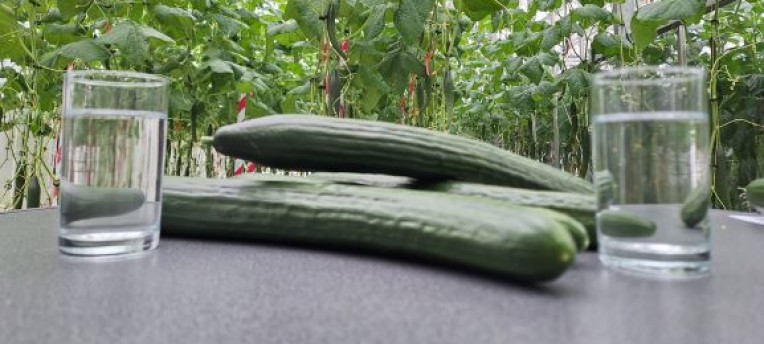
A first: cucumbers grown with nutrients from sewage
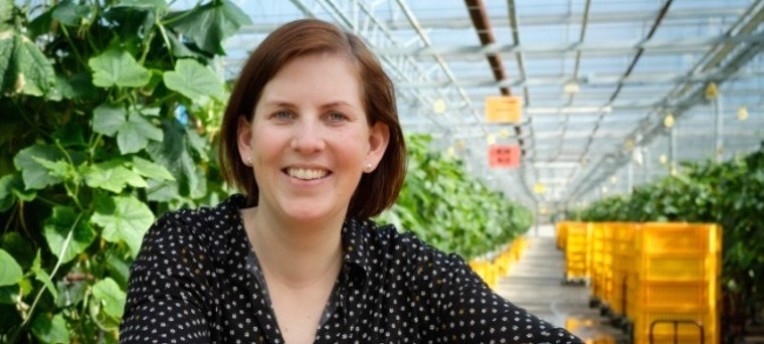
An example of KNAP innovation in practice is a recent experiment with cucumbers grown in greenhouses. For the first time, these cucumbers were cultivated using nitrogen and phosphorus fully recovered from circular sources—directly from our own sewage system. Van Dijk explains why this is special: “The nitrogen and phosphorus used to grow these cucumbers were recovered by partners within the KNAP project from waste and process water. These nutrients have been made suitable for use in greenhouse horticulture through innovative techniques. The trial has now been running for about two months. The drain water from the cultivation system is recirculated, largely closing the water cycle as well. These cucumbers are therefore the product of a 100% circular process.”
Why this matters for the sector
For greenhouse growers and other horticultural entrepreneurs who lead in sustainability and innovation, this opens new doors. Circular fertilisers can reduce dependence on fossil resources, save costs, and better meet the demands of customers and certification schemes. According to Van Dijk, these recycled fertilisers are particularly well-suited for horticulture. “In a sector where nutrient control is crucial, they offer a valuable alternative. Moreover, if it turns out that their performance equals or even surpasses conventional fertilisation methods, the benefits are both ecological and economic.”
Working together on acceptance and scaling
However, challenges remain: residual streams must be clean enough, legislation must evolve, and societal acceptance remains a focus. But just as electric driving was once unfamiliar, circular fertilizers will find their place. And thanks to reliable data—for example, from Eurofins Agro—entrepreneurs can make well-informed decisions.
Related
Dutch Dairy Update
Differences in microbiome may be the cause of pepper plant wilting
Customer speaks: Smart reuse of substrate and water starts with proper analyses

Gaining more insight by linking analysis data