As a trusted partner to clinicians, Eurofins Clinical Diagnostics laboratories strive to deliver a superior all-around customer experience that exceeds your expectations while enabling you to provide the best possible care for your patients.
We extend a wide range of clinical tests to our clinician clients across various market segments in Singapore. We know the landscape of laboratory medicine is always changing and we are constantly looking to expand our test menu. We strive to periodically offer you new tests to meet your growing needs.
We understand that prompt response and service is important in terms of patient management and hence, each customer is assigned a dedicated Clinical Sales Specialist (CSS) to manage your operational needs and to ensure your queries are attended to expeditiously.
Proper specimen collection, handling and processing are key to the pre-analytic phase of clinical laboratory testing. The vast majority of erroneous results are caused by errors made during sample collection and transport. For this reason, it is essential that correct procedures are followed for patient preparation, sample preparation, sample collection and transport.
For clarification on the correct methods of collecting all types of patient specimen, please see the details below which can also be found in our Services Guide.
General specimen preparation
For general sample preparation, please follow the instructions stated in the respective profiles and single tests listing in our Services Guide. Also refer to Table 1a and 1b as a reference to ensure proper use of collection containers.
Patient identification
Provide two identifiers for every patient for each sample tube. A minimum of two of the the following are required: surname and given name, plus one of the following: date of birth, NRIC/Passport No., etc. The samples cannot be processed if this information is not present.
Sample collection: Blood/Serum/Plasma
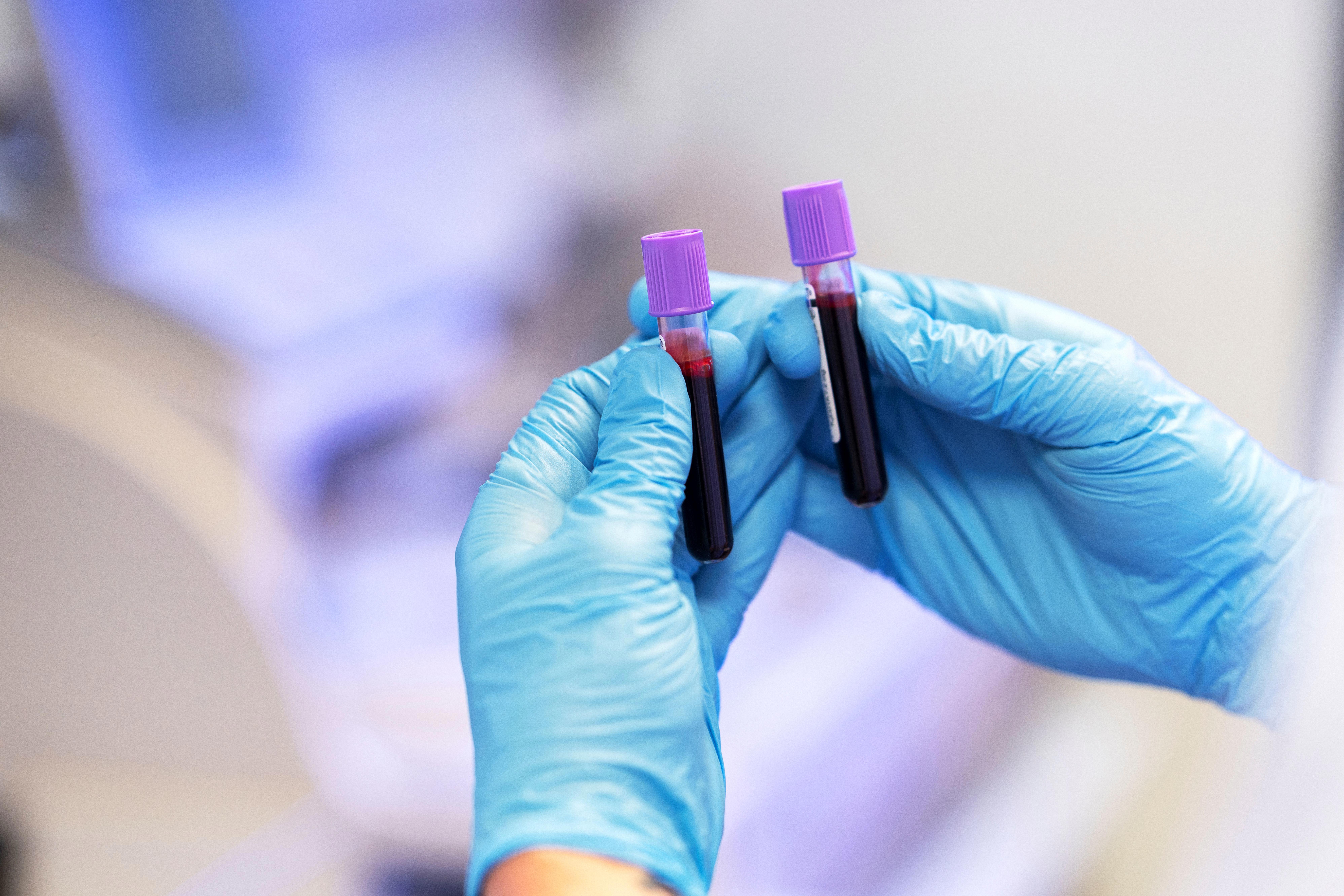
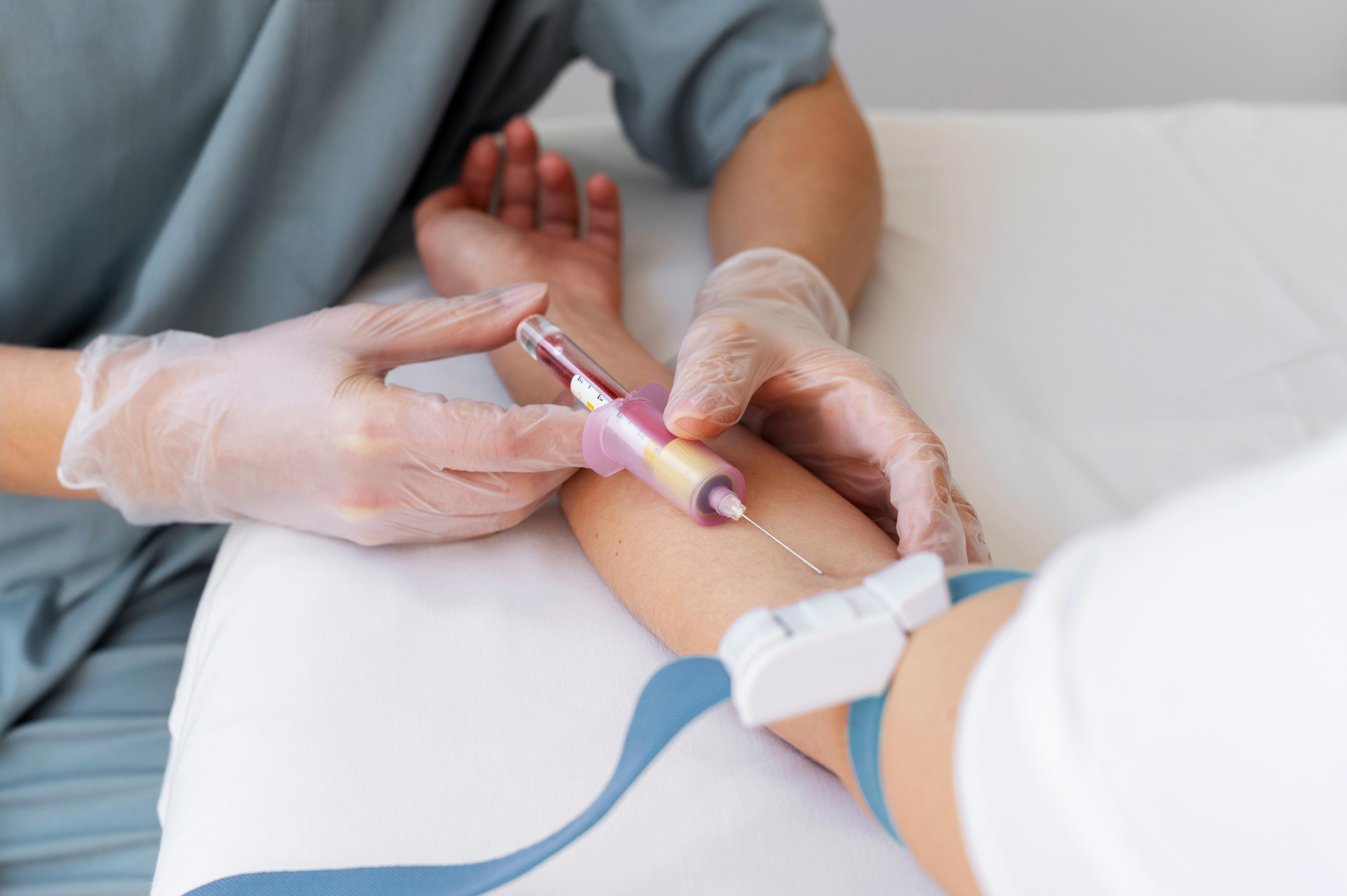
Blood for analysis may be obtained from veins, arteries or capillaries. Venous blood is the specimen of choice for the vast majority of tests performed by Eurofins Clinical Diagnostics laboratories.
For the benefit of patient safety, specimens that meet the below criteria will be rejected.
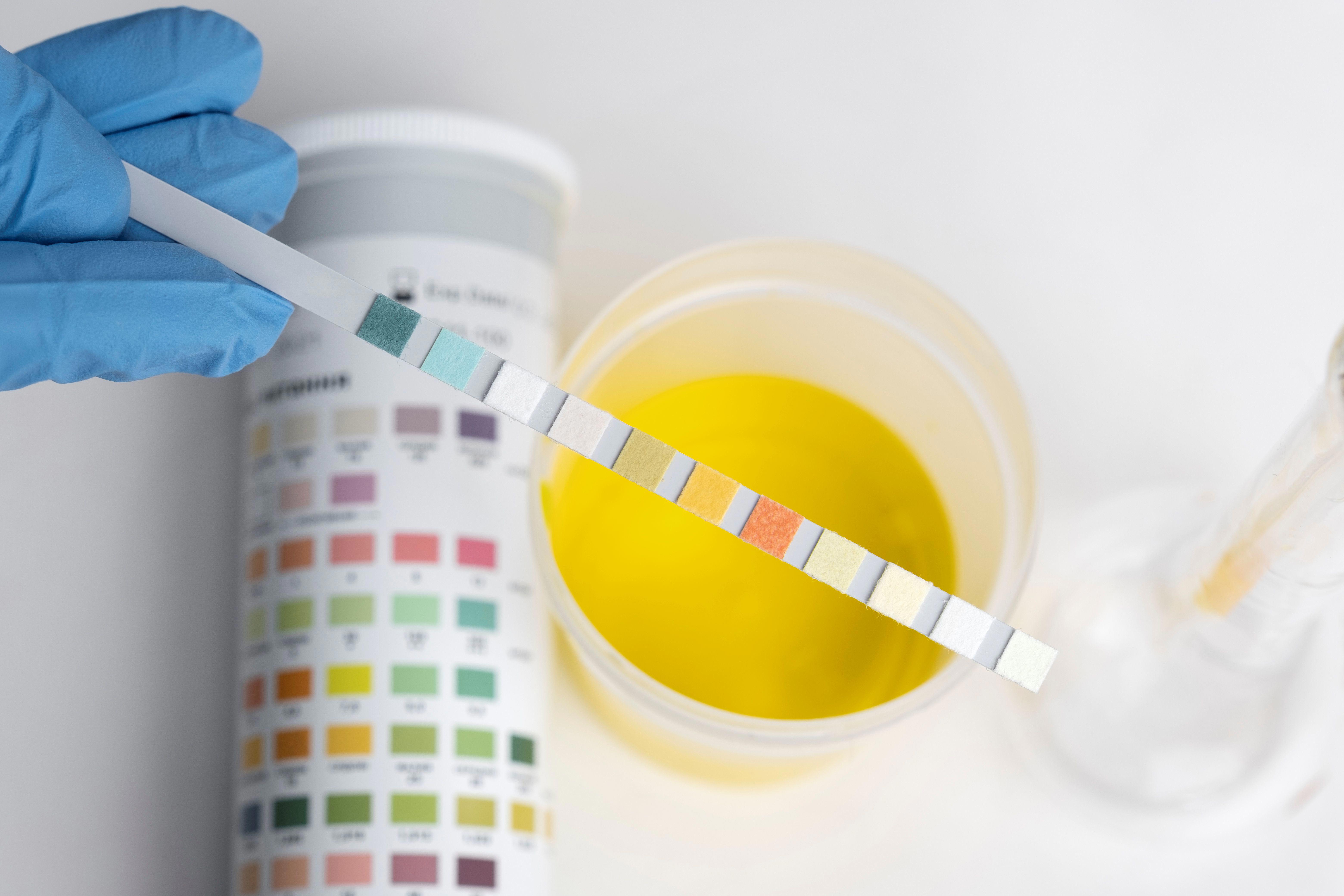
Random, untimed urine collections are usually taken for microbiological testing (C&S).
For most biochemical tests, timed samples (eg. 24-hour) are required. Mark the start and end time on the label of your sample.
Random samples for microbiology should be collected in a sterile container. Hands must be thoroughly washed and dried before the sample is collected.
Collect a mid-stream sample and care should be taken that no part of the body touches the rim or interior of the container before, during or after collection. The lid should be securely fastened after collection.
Timed samples (24-hr urine collection):
It is essential for interpretation of the results that urine collection is accurately timed. A timed sample is to be collected as follows:
The sample requirements, including abstinence of certain foods and medications, vary from test to test. VMA testing has dietary restrictions eg. abstaining from vanilla, chocolate, coffee, bananas, citrus fruit, salt, aspirin and hypertensive drugs. As some preservatives can be harmful (particularly acids), patients should first void into a separate clean container and then immediately transfer the urine into the timed collection container.
24 hour/Overnight urine samples are not suitable for culture. If delay of delivery is expected, refrigerate sample before sending to laboratory.
Microbiology samples
Liquid based cytology test
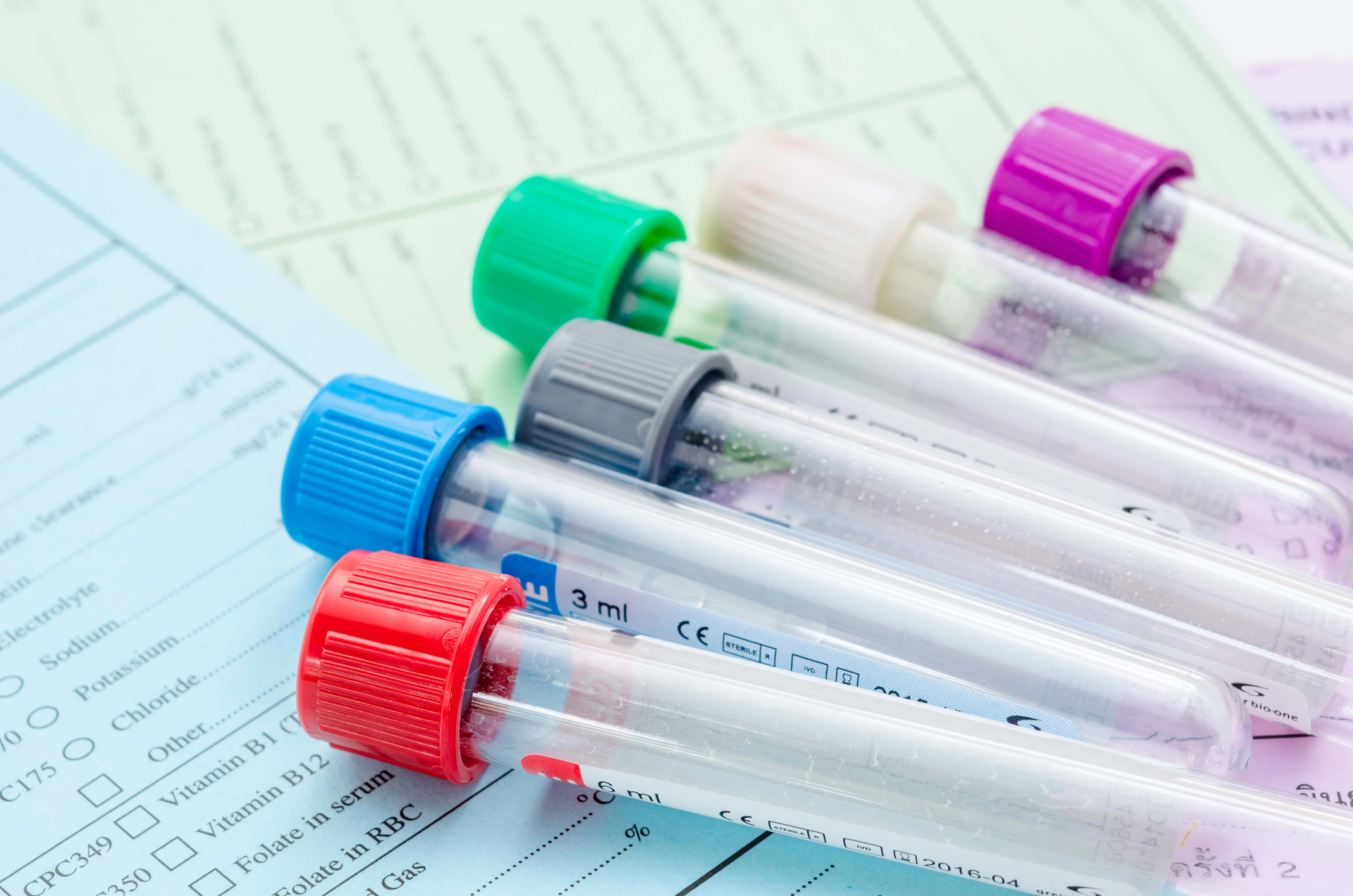
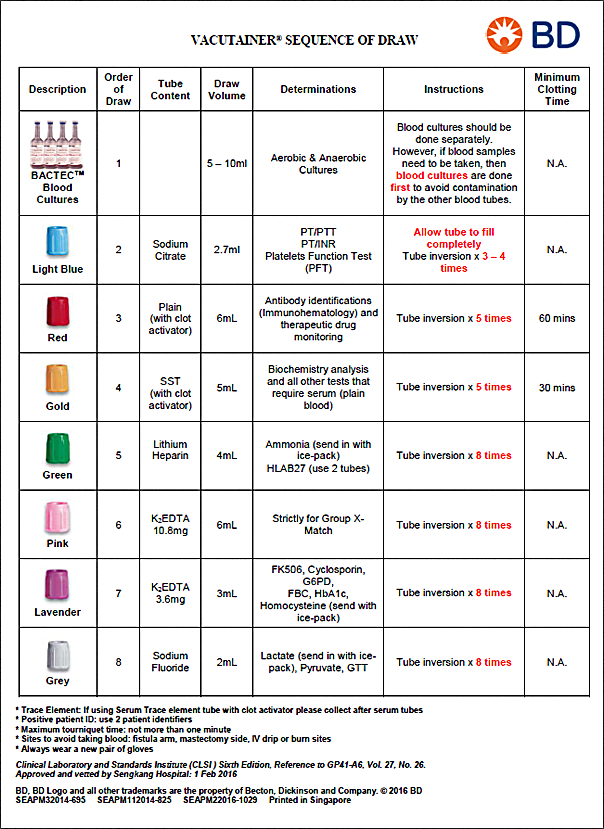
For clinicians who conduct the drawing of blood for their patients, please refer to the table and chart below on sample draw requirements.
| Order of draw | Cap colour | Containers | Laboratory Application | Bottle / tube inversion |
| 1 | Green & orange | Blood culture bottles (a set of two) |
Bacteriology tests (aerobic & anaerobic culture) |
8 |
| 2 | Light blue | Sodium citrate (fill blood sample to the mark) |
Coagulation studies | 4 |
| 3 | Streck (cell free DNA) | Streck, 10ml | Cell free plasma DNA | 10 |
| 4 | Red | Clot activator plain, 6ml | Most chemistry, immunological and serological tests using serum e.g. lipids, U/E, virology, antibody identification, tumour markers, hormones |
5 |
| Gold | Clot activator SST II, plain (gel), 8ml / 8.5ml |
|||
| 5 | Royal blue plain | Trace element serum, 6ml | Trace elements e.g. aluminium, copper, zinc |
8 |
| 6 | Green | Lithium heparin, 4ml | STAT biochemistry tests e.g. electrolytes |
8 |
| 7 | Royal blue (K2 EDTA) | Trace element K2 EDTA, 6ml |
Trace elements e.g. arsenic, lead, mercury |
8 |
| Lavender | K2 EDTA, 3ml | Haematological tests e.g. full blood count, Hb electrophoresis, HbA1C |
||
| 8 | Grey | Sodium fluoride, 3ml | Chemistry - glucose | 8 |
Sequence of draw

Source: BD Order of Draw Chart
Whenever test results are registered outside the critical limits, we will inform the clinicians concerned. This enables the provision of expeditious and optimal patient care.
Please refer below for the critical values for some of the most common laboratory tests that we perform.
List of critical values of laboratory tests
| CLINICAL BIOCHEMISTRY | CRITICALLY LOW LIMIT | CRITICALLY HIGH LIMIT | ||
| Conventional unit (mg/dL) | SI unit (mmol/L) | Conventional unit (mg/dL) | SI unit (mmol/L) | |
| Bicarbonate | - | 10 | - | 40 |
| Calcium | 6.5 | 1.63 | 13 | 3.25 |
| Glucose | 45 | 2.5 | 450.5 | 25 |
| Phosphate | 1 | 0.32 | - | - |
| Potassium | - | 2.5 | - | 6 |
| Sodium | - | 120 | - | 160 |
| Troponin-I | - | Male: 34.2 pg/ml Female: 15.6 pg/ml |
||
| HAEMATOLOGY | CRITICALLY LOW LIMIT | CRITICALLY HIGH LIMIT | ||
| Prothrombin time | - | 50 sec | ||
| Activated partial thromboplastin time | - | 90 sec | ||
| INR | - | 4.5 | ||
| Haemoglobin | 6.0 g/dL | 20.0 g/dL | ||
| White blood cell | 2.0 x 10⁹ /L | 25.0 x 10⁹ /L | ||
| Platelets | 50.0 x 10⁹ /L | 800 x 109 /L | ||
| Reticulocyte | None | 20% | ||
| Peripheral blood film | Presence of blast cells | |||
| Malarial parasite | Positive | |||
| Microfilaria | Positive | |||
| SEROLOGY / MICROBIOLOGY | Results | |||
| Dengue IgM / IgG | Positive | |||
| Dengue NS1 | Positive | |||
| Blood culture | Positive | |||
| CSF culture | Positive | |||
| CSF & body fluids gram stain | Positive | |||
| AFB smears | Positive | |||
Most of our tests are conducted daily, while a select few are scheduled on specific days throughout the week. Please refer to the table below for the schedule of these tests.
Scheduled test guide (updated March 2026)
| No. | Test | Test code | Mon | Tue | Wed | Thur | Fri | Sat |
| 1 | ANA | ANA | √ | √ | √ | |||
| 2 | dsDNA | DNA | √ | √ | √ | |||
| 3 | Allergy | ALG59 | √ | √ | ||||
| 4 | Measles lgG | MEG | √ | √ | √ | |||
| 5 | HB Electrophoresis | HBEL | √ | √ | √ | |||
| 6 | Anti-Mullerian Hormone | AMH | Test to be performed when samples received | |||||
| 7 | Insulin Growth Factor 1 | IGF1 | ||||||
| 8 | Cytomegalovirus IgG Antibodies | CMVG | ||||||
| 9 | Cytomegalovirus IgM Antibodies | CMVM | ||||||
Have a question about our services or need technical support?
Submit your enquiry using the form link above and our specialists will respond as soon as possible.