Direct peptide reactivity assay (DPRA)

In chemico assessment of skin sensitisation potential
Peptide reactivity assessment according to OECD 442C
The in chemico direct peptide reactivity assay (DPRA) addresses the first molecular key event of the adverse outcome pathway (AOP) of skin sensitisation.1 The UN GHS (United Nations Globally Harmonized System of Classification and Labelling of Chemicals) defines a skin sensitiser as a substance that will cause an allergic response after skin contact.2
The DPRA is validated by the EURL ECVAM (European Union Reference Laboratory for Alternatives to Animal Testing) and is performed in accordance with the OECD guidance OECD 442C at the Eurofins Human Safety Testing laboratory 1, 3 with chemicals, cosmetics or personal care products and pharmaceuticals.
The DPRA is one of three test methods (KeratinoSensTM and h-CLAT) for the assessment of skin sensitisation potential.
Assessment of skin sensitisation potential with the DPRA
- The molecular initiating event of skin sensitisation addresses epidermal protein binding and reactivity towards proteins, by mimicking the reaction with artificial peptides.
- A cysteine and a lysine containing peptide are mixed with the test substance and after 24 hours the sample is analysed by high-performance liquid chromatography (HPLC) with UV detection at 220 nm.
- If a depletion or a diminishment of the peptides is detected it can be used for classification of reactivity of chemicals and to discriminate between sensitisers and non-sensitisers.
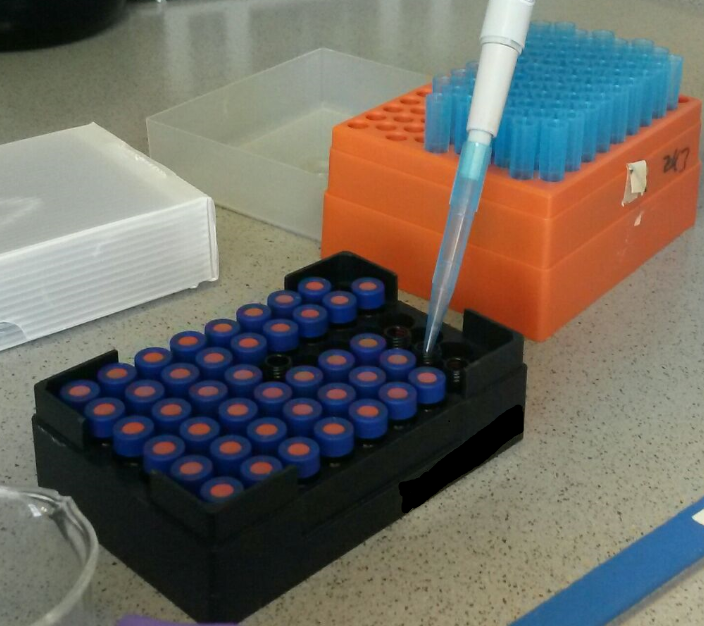
The molecular initiating event is the covalent binding of electrophilic substances to nucleophilic centers in skin proteins. The ability of a chemical to react with skin proteins is thought to play a key role in the development of skin sensitisation1, 4. The test items are incubated with a cysteine and a lysine peptide and their content is determined via HPLC.
Procedure: Principle of the DPRA
Protocol |
|
Peptides |
|
Analysis |
Quantification of cysteine and lysine peptide concentration by high-performance liquid chromatography (HPLC) using UV detection at 220 nm |
Concentrations |
|
Exposure time |
24 h |
Quality controls |
|
Solvents of test chemical |
Acetonitrile, water, acetonitrile / water 1:1, isopropanol, methanol, ethanol, 1,4-butandiol, N,N-dimethyl formamide, tert. butanol |
Data delivery |
|
Positive prediction |
|
Based on the peptide depletion of cysteine and lysine, chemicals can be classified with the DPRA into four reactivity categories and can be discriminated between sensitisers and non-sensitisers.
| Mean of cysteine and lysine depletion (%) | Reactivity class | Prediction |
| mean % depletion between 0 and 6.38 | no or minimal reactivity | negative |
| mean % depletion between 6.39 and 22.62 | low reactivity | positive |
| mean % depletion between 22.63 and 42.47 | moderate reactivity | positive |
| mean % depletion between 42.48 and 100 | high reactivity | positive |
Table 1: Classification of reactivity and prediction of sensitising potential dependent on cysteine and lysine peptide depletion (cysteine 1:10 / lysine 1:50 prediction model).2
If lysine has a co-elution or it cannot be evaluated and it is negative, we can use the cysteine for evaluation on its own:
| Mean of cysteine depletion (%) | Reactivity class | Prediction |
| mean % depletion between 0 and 13.89 | no or minimal reactivity | negative |
| mean % depletion between 13.90 and 23.09 | low reactivity | positive |
| mean % depletion between 23.10 and 98.24 | moderate reactivity | positive |
| mean % depletion between 98.25 and 100 | high reactivity | positive |
Table 2: Classification of reactivity and prediction of sensitising potential dependent on cysteine peptide depletion (cysteine 1:10 prediction model).2
If cysteine has a co-elution or it cannot be evaluated and it is negative, then the result remains inconclusive. A positive result can still be used.
Eurofins data for demonstrating technical proficiency of the DPRA
| Chemical | Cysteine PPD (OECD) | Lysine PPD (OECD) | Prediction (OECD) | Cysteine PPD (EF) | Lysine PPD (EF) | Prediction (EF) |
| Non-sensitising chemicals | ||||||
| 1-Butanol | 0-7 | 0-5.5 | Negative | 0.00 | 0.72 | Negative |
| 6-Methylcoumarin | 0-7 | 0-5.5 | Negative | 0.00 | 0.25 | Negative |
| Lactic Acid | 0-7 | 0-5.5 | Negative | 0.05 | 0.25 | Negative |
| 4-Methoxyacetophenone | 0-7 | 0-5.5 | Negative | 1.60 | 1.43 | Negative |
| Sensitising chemicals | ||||||
| 2,4-Dinitrochlorbenzene | 90-100 | 15-45 | Positive | 100.00 | 40.18 | Positive |
| Oxazolone | 60-80 | 10-55 | Positive | 72.24 | 36.85 | Positive |
| Formaldehyde | 30-60 | 0-24 | Positive | 49.91 | 2.42 | Positive |
| Benzylidene acetone | 80-100 | 0-7 | Positive | 92.75 | 3.10 | Positive |
| Farnesal | 15-55 | 0-25 | Positive | 35.78 | 8.93 | Positive |
| 2,3-Butandione | 60-100 | 10-45 | Positive | 71.87 | 19.58 | Positive |
PPD: Percent peptide depletion EF = Eurofins Human Safety Testing
Table 3: Eurofins Human Safety Testing data of the DPRA – ten tested proficiency chemicals compared to the data of the OECD guideline.1
In Table 3 the obtained data from the DPRA of four non-sensitising and six sensitising chemicals are shown. The prediction of all tested chemicals was correct in comparison to the classification of the OECD guideline.
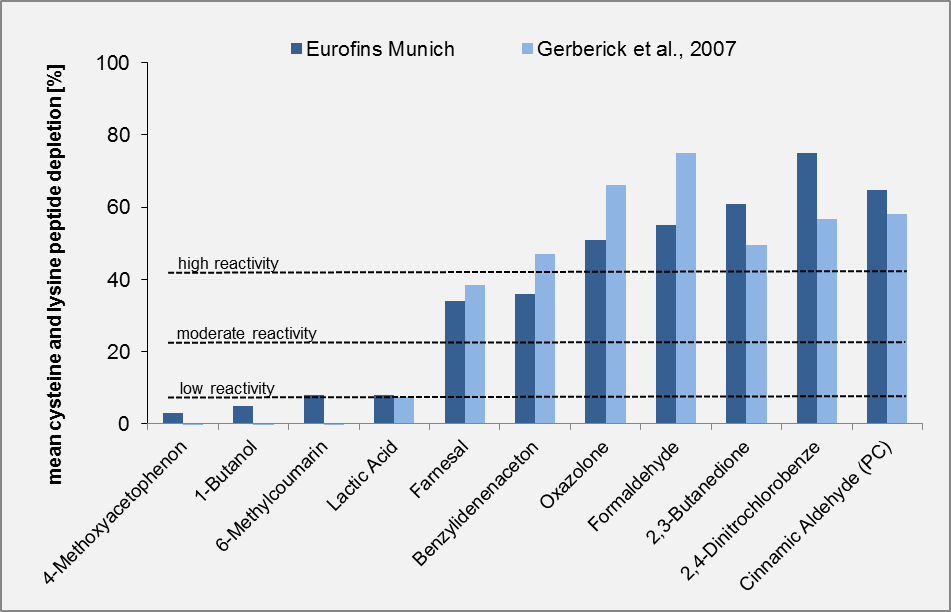
Figure 1: Eurofins Human Safety Testing DPRA data of the mean peptide depletion of cysteine and lysine compared with literature data 5.
The graph shows the data from the DPRA of 10 tested proficiency chemicals and cinnamic aldehyde in comparison to the data of Gerberick et al., (2007). The generated Eurofins Human Safety Testing data is quite comparable to the literature data.
References
- OECD Guidelines for Testing of Chemicals, number 442C “In Chemico Skin Sensitisation: Direct Peptide Reactivity Assay (DPRA)” (adopted: February 04, 2015).
- UN (2015), United Nations Globally Harmonized System of Classification and Labelling of Chemicals (GHS), Sixth revised edition, UN New York and Geneva.
- EC EURL-ECVAM (2013). Recommendation on the Direct Peptide Reactivity Assay (DPRA) for skin sensitisation testing.
- Troutman JA et al., (2011) The incorporation of lysine into the peroxidase peptide reactivity assay for skin sensitization assessment Toxicol Sci 122(2); 422-436.