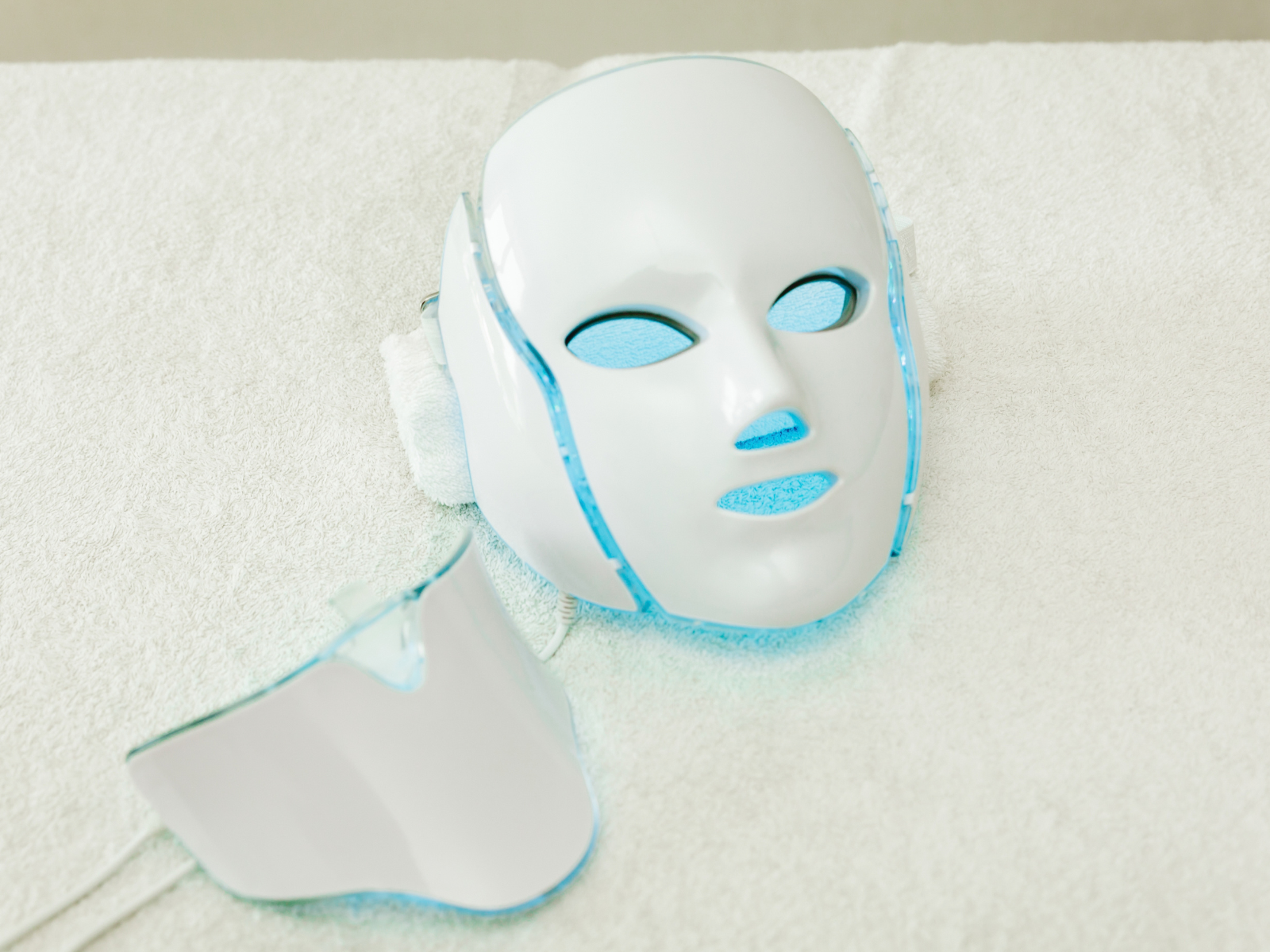
LED face masks: building the right safety and clinical strategy
LED face masks using red, blue, or near-infrared light are becoming increasingly sophisticated. Beyond efficacy, their development raises important questions about photobiological safety, material safety, skin tolerance, and clinical performance.
Whether positioned as a beauty device or a medical device, the testing strategy should reflect the intended use, claims, technical characteristics, and conditions of use.
Looking beyond the device
LED masks are often used as part of a wider skincare routine, sometimes in combination with a serum or cream. Understanding the interaction between the device and the cosmetic formulation can therefore be relevant when building the overall safety strategy.
Depending on the product and its use conditions, analytical characterisation techniques such as GC-MS, HS-GC-MS, LC-MS or ICP-MS can help investigate the chemical profile of formulations after LED mask exposure. Analytical results can then be considered as part of a broader toxicological risk assessment, ensuring the safety of the cosmetic formulation after LED exposure.
Assessing device safety
For medical device programmes, the safety strategy may include chemical and material characterisation, extractables and leachables, biocompatibility, and biological evaluation within the ISO 10993 framework.
Photobiological safety is another key consideration for LED technologies. Assessment against IEC 62471 can be used to evaluate potential photobiological hazards associated with light emitted by lamps and lamp systems.
Together, these approaches help build a comprehensive understanding of both device-related and user-related safety.
From safety to clinical evidence
Clinical evaluation completes the picture by assessing the device under controlled conditions of use.
Eurofins Cosmetics & Personal Care can support dermatological tolerance, in-use testing, clinical efficacy and claims substantiation, including protocols evaluating an LED mask alone or in combination with a cosmetic product. Existing Eurofins Cosmetics & Personal Care work includes LED mask protocols evaluating efficacy and tolerability on facial photodamage.
Depending on the claims, studies can integrate objective instrumental endpoints such as wrinkle and skin texture assessment, profilometry, and full-face imaging.
For medical device positioning, clinical programmes can also extend to clinical investigations and pre- and post-market studies, with approaches aligned with EU MDR 2017/745 and ISO 14155:2020.
One technology, one integrated approach
From analytical and material characterisation to toxicological risk assessment, photobiological safety, tolerance and clinical performance, Eurofins Cosmetics & Personal Care can support brands in developing a testing strategy adapted to their LED technology and intended positioning.
The objective: identify potential risks early and generate robust safety and performance evidence to support product development and claims.
Developing an LED mask or another energy-based beauty device? Talk to our Eurofins Cosmetics & Personal Care experts about the testing strategy best suited to your technology.