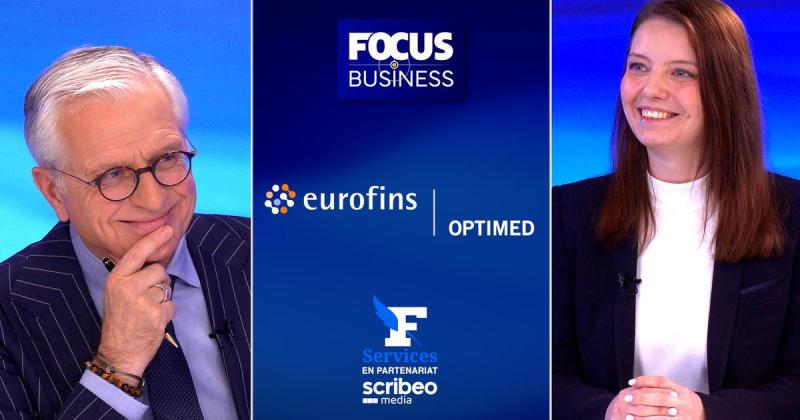
Specialising in early phase clinical trials for more than 30 years, Eurofins Optimed is recognised for its strong medical expertise, integrated approach and first-in-human experience, making it a trusted partner for the pharmaceutical industry. In this interview, Dr Lila Krebs-Drouot, Medical Director, shares insights into the company's expertise and vision for clinical research.
Eurofins Optimed: 30 Years of Excellence in Early Clinical Development
Dr. Lila KREBS-DROUOT, Eurofins Optimed Clinical Research
Eurofins Optimed has defined itself as a specialist in early phase clinical trials for more than thirty years. In practical terms, what distinguishes your positioning from that of a generalist CRO?
Our difference can be summed up in one word: specialisation. For more than thirty years, we have focused exclusively on early phase studies, including first-in-human administration, tolerability studies, pharmacokinetic studies, drug interaction studies and bioequivalence studies. While a generalist CRO covers the entire development cycle, we have chosen to develop in-depth expertise in this segment, which is both the most scientifically demanding and the most medically sensitive.
Eurofins Optimed was founded by physicians, and this medical governance is still evident today. We have a dedicated Phase I unit, a medical team, a long-established healthy volunteer database, and processes specifically designed for the unique requirements of these studies. As an investigator physician, I can testify that this focus shapes an entire culture, both for internal and external studies: our teams recognise subtle signals, anticipate safety concerns and approach every protocol with a genuine first-in-human mindset.
Your offering covers early clinical research, regulatory affairs and the management of investigational medicinal products. Is this level of integration unusual in the market, and how does it benefit your clients?
Optimed is, above all, an early clinical research organisation. We do not manufacture investigational medicinal products ourselves; this requires specific CMC expertise and is entrusted to partners selected together with the sponsor.
What we provide is complete control of the study pathway. This is based on three pillars: in-house regulatory expertise aligned with operational requirements; a clinical pharmacy responsible for receiving, preparing and dispensing study treatments; and a highly equipped pre-analytical laboratory capable of performing complex preparations such as PBMCs and coordinating kits and transportation to international analytical platforms.
This traceability is essential: months of clinical work may ultimately depend on a handful of samples. This integrated approach becomes particularly valuable in translational research. A Phase I study almost always involves dose escalation, meaning formulation considerations must be addressed from the outset. If the estimated active dose is 400 mg, it is not feasible to begin with a 1 mg tablet; however, formulating immediately at 400 mg would prevent any gradual dose escalation. Our role is to anticipate these constraints from the study design stage, working closely with the sponsor and its CMC partner.
What types of clients work with Eurofins Optimed?
Our client portfolio is highly diverse. We support major pharmaceutical companies on strategic development programmes, but also, and this is a growing part of our business, emerging biotech companies and SMEs, for whom we often act as a true development partner. In these cases, the relationship is established before the end of the preclinical phase.
This diversity is also reflected in the products we work with: small molecules, an increasing number of biologics, as well as bioequivalence studies for generics, food supplements and medical devices. We conduct studies in both healthy volunteers and patients.
We have worked across virtually all therapeutic areas and have developed recognised expertise in neurology, notably thanks to our ability to perform lumbar punctures within our facility, a rare capability that is particularly valuable for pharmacokinetic analyses in cerebrospinal fluid. For multicentre projects, we rely on a European network of investigator sites and maintain strong engagement through close collaboration and support.
Accelerating early phase clinical trials is a major focus for the pharmaceutical industry in 2026. What are the main drivers that enable Eurofins Optimed to remain responsive and efficient?
Three key drivers.
First, people: a stable, experienced and integrated team consisting of physicians, pharmacists, clinical research associates, regulatory specialists, project managers and quality professionals working under one roof. It is not unusual for a project manager to observe a lumbar puncture procedure in order to discuss it more effectively with a sponsor afterwards. This proximity eliminates weeks of remote coordination.
Second, recruitment, which is often the main bottleneck in early phase studies. We rely on a healthy volunteer database built over decades, as well as highly engaged French patient networks.
Finally, anticipation. We work in parallel rather than sequentially. Preparing the clinical site while the regulatory dossier is still under review can save weeks and sometimes months. The recently announced fast-track regulatory pathway in France is a positive step towards enhancing the competitiveness of the ecosystem.
Compliance is often perceived as a barrier to speed. How do you reconcile the need for regulatory compliance with the increasing demand for accelerated project timelines?
This is a false opposition. In early clinical research, compliance is the very foundation of scientific quality and participant safety. A well-designed project moves faster, not slower.
Our approach is based on Quality by Design: our regulatory teams become involved at a very early stage in order to anticipate questions from regulatory authorities.
We are also investing in digitalisation on two levels. Over the past year, we have significantly advanced the digitalisation of our processes through industry-standard tools such as eTMF, eISF and CTMS platforms, which provide sponsors with real-time visibility, alongside electronic signatures and remote monitoring where appropriate.
At the same time, we have developed our own internal tools, including Optilab, which ensures complete sample traceability from labelling through to shipment while incorporating centrifugation and freezing timelines, and OptimedTimes, which schedules protocol procedures down to the minute.
At Optimed, every minute matters. In Phase I studies, a sample collected just five minutes late may compromise the integrity of the data. Digital technology should support rigour, not replace it.
What do you see as the next major topics for the industry?
There are three topics that are particularly important to me.
First, France's position in clinical research. We benefit from outstanding physicians, high-quality clinical centres and highly committed patient networks. However, this excellence cannot be taken for granted. It must be nurtured and requires the entire ecosystem, regulators, industry, CROs and hospitals, to continue working towards shared objectives. Maintaining France among the leading countries in clinical research is both a matter of healthcare sovereignty and patient access to innovation.
Second, digitalisation. We are experiencing a transformation comparable to the introduction of information technology into operating theatres. It must be embraced without losing sight of the objective: technology serving patient care and study participants.
Finally, the human dimension. We are welcoming increasing numbers of small patient cohorts alongside healthy volunteers. Every participant contributes to advancing medicine for future generations.
Working in clinical research has strengthened my confidence in people: sponsors who invest heavily, volunteers who generously give their time, and our teams who act as guardians of that trust throughout the process. That is what gives true meaning to this profession.