
Consumer safety assessment focus on evaluating dietary exposure and ensuring residue levels in food do not pose health risks

Key components include:

  • Residue studies (field trials, rotational crops, food processing, post-harvest trials) to characterise residue behaviour across crop systems;
  • Metabolism studies in plants and animals to determine residue definitions for risk assessment and MRLs setting;
  • Dietary risk assessments, combining residue data, food consumption patterns, and toxicological reference values to confirm consumer safety;
  • Establishment and refinement of Maximum Residue Levels (MRLs) and import tolerances, supporting global product registrations.
4by3_a-farmer-in-protective-suit-and-spray-mask-tending-to-crops_-8064-x-5376-px

Residue studies

Eurofins Agroscience Services (EAS) conducts the full range of GLP‑compliant crop residue trials in both greenhouse and field environments. These studies are performed exclusively by our experienced in‑house teams across Europe, North America, LATAM, Australia & New Zealand, Asia, and Africa, and are coordinated by a dedicated Study Management team for multi‑site programmes.


Expand_img

All of our field stations hold GLP certification and undergo regular audits by the relevant national authorities. Application techniques are designed to reflect the Good Agricultural Practice (GAP) of each country and intended use. All evaluations—covering experimental, developmental, and registered products—are carried out in accordance with international regulatory requirements.

We offer the following Residue Studies according to guidelines (OECD, EPA, SANTE, SANCO):

  • Field and glasshouse trials including a wide range of product application techniques (spraying, fumigation, drip, drench, seed dressing, in furrow…)
  • Post-harvest trials
  • Food processing studies
  • Import tolerance/MRLs studies
  • Rotational crop studies
  • Drift/volatility
  • Groundwater monitoring studies
  • Residue sample preparation/harmonisation
  • 14C plant/soil metabolism
4by3_red-and-white-wine-with-bunches-of-grapes_2417x2034px

Food processing

At our dedicated facility, our expert team delivers fully coordinated food processing studies, from field preparation and application to sampling, processing, taint testing, analytical work, logistics, and reporting. We ensure every step meets GLP or GEP standards to support high‑quality, regulatory‑ready results.

Expand_img

We offer processing studies on a wide variety of crops including: 

  • Apples, citrus, grapes, olives and tomatoes, as well as apricots, almonds, cherries, cocoa, lemons, peaches, pears, plums, oranges, strawberries and small fruits
  • Potatoes, cabbages as well as beans, gherkins, onions, peas, spinach, courgettes
  • Wheat and barley, as well as oat, maize, and rice
  • Oilseeds such as rapeseed, soybean, and sunflower
  • Sugarbeet 

This list is not exhaustive, we can offer processing studies on most crops and continuously expand our portfolio in order to meet your needs.

  • Juice, jam, marmalade, puree, dry fruits, canned fruits
  • Boiled and canned vegetables, pickles, sauerkraut
  • Flours, bread, flakes, malt, germs, starch, gluten
  • Potato crisps, fries, puree, flakes, baked, starch, pulp, protein
  • Beer, wine, cider, alcohol
  • Oil
  • Sugar
  • Cocoa
  • Silage 

Technical capabilities include:

  • Pasteurisation and sterilisation (automatic autoclave)
  • Hydraulic press, rotary sieves, juicer, etc.
  • Cooking
  • Mechanical peeling machine
  • Drying oven
  • Mechanical press for oil extraction, centrifugation, solvent extraction, refinement
  • Abrasion of cereals, Bühler mill, grinder, kneading machine, baking oven
  • Malting, brewing (braumeister)
  • Fermentation, filtration and vacuum filtration
4by3_dr-specht-7912

Residue analytics

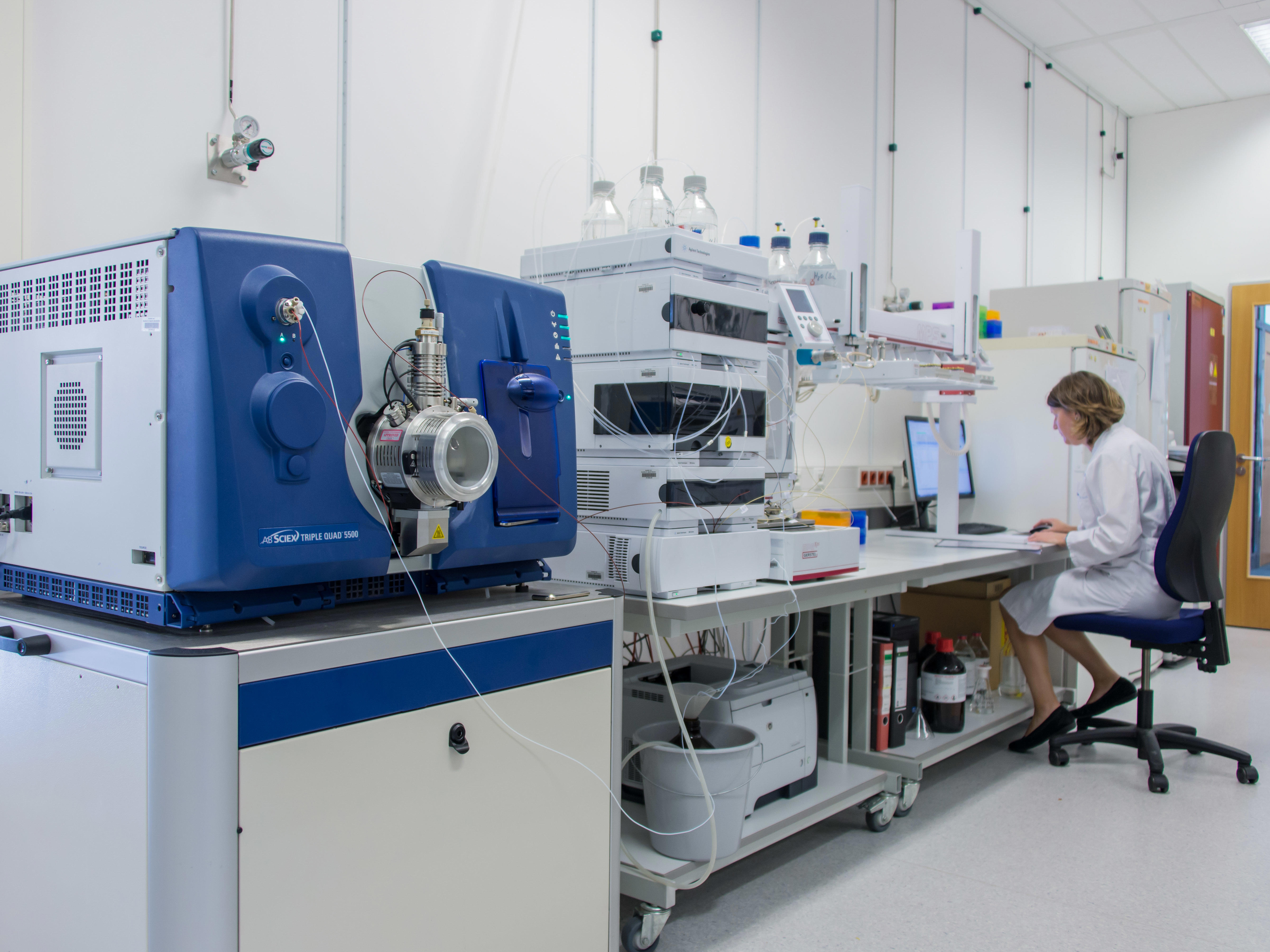
Eurofins Agroscience Services (EAS) offers bespoke and routine GLP residue testing of a wide variety of sample types including all types of plant and environmental matrices and their major metabolites. With our global network of analytical laboratories and highly skilled staff, we deliver reliable, timely support for all your programmes.

Expand_img

The development of robust analytic methods and their validation is one of our core expertise.

By integrating our field operations with our analytical expertise –covering everything from secure sample logistics to preparation –we deliver a streamlined study process. Every study is performed to international standards (OECD, SANCO, EPA), and in full compliance with GLP.

We offer the following to GLP:

  • Method development and validation (ILV)
  • Sample preparation
  • Field residue sample analysis
  • Analysis of processed fractions including breakdown/reaction products
  • Variability factor determination


4by3_208172273_xl

Livestock and crop metabolism

With the ability to cultivate virtually all key commercial crops and a team of skilled agronomists securing reliable year‑round production, we deliver high‑quality metabolism studies under both greenhouse and field conditions worldwide - including Europe, Asia, and North America. Our advanced and highly-skilled spectroscopy specialists excel in identifying and structurally characterising unknown metabolites, ensuring robust and insightful study outcomes.

Expand_img

We provide: 

  • Plant metabolism: OECD 501;
  • Rotational crops: OECD 502;
  • Metabolism in livestock ruminant and poultry: OECD 503.