Top tips for nutrient management planning
25 March 2025
International tariffs and import costs are likely to push fertiliser prices up, following a period where prices had been reducing from the 2022 peak. For farms looking to guard against spending unnecessarily, a well-researched nutrient management plan to make best use of slurry is essential.
Here we offer advice to farmers looking to save by making better use of existing nutrients.
Tip 1: Soil testing, prior to slurry application, can establish the total microbial biomass, fungi, bacteria and protozoa present, and this represents the baseline from which to work. Once the pH and biological health of the soil has been established, an accurate assessment of what needs to be added to improve soil health can be made.
Whether using natural or artificial fertilisers, it is important to first understand what the soil needs to support the crop.
Tip 2: Good chemical and physical soil health are crucial to stimulating grass growth. Once a soil test has been taken, a Eurofins Fertilisation Manager test can highlight the plant available nutrients, soil stock nutrients and supply capacity of the soil in relation to the crop.
If growing conventional grass mixtures including fast growing rye varieties, a pH of at least 5 is considered a suitable benchmark. This can be higher, 5.5, if clovers or legumes are included.
Tip 3: It is possible to monitor grass during the season using Soil Crop Monitor. This test measures the nutrients in the crop and compares it to what is left in the soil to offer advice on what level of additional fertiliser would be beneficial throughout the growing season. This is especially important for farms in a multi-cut system looking to make best use of slurry before the winter.
Making best use of slurry can both improve grass quality and reduce farm costs.
Tip 4: Testing slurry to accurately measure its nutrient value to the soil and the crop is essential. Equally important is the use of a separator to make a more homogeneous slurry that can be applied more evenly and accurately. This also prevents dry matter being left on top the grass. Using a slurry meter will enable operators to apply the right volume of slurry based on calculations made using soil and slurry test data.
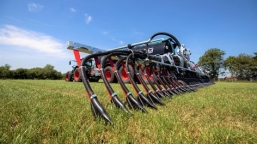
To balance speed and accuracy of application; a trailing shoe is the best option for grassland.
Tip 5: Trailing shoe applicators separate the crop and prevent slurry from contaminating the leaves, which also enables more nutrients to be absorbed by the soil and reach the roots. This provides a measured approach to slurry application that enables slurry to be applied as a natural fertilizer rather than a waste product.
Want to know more?