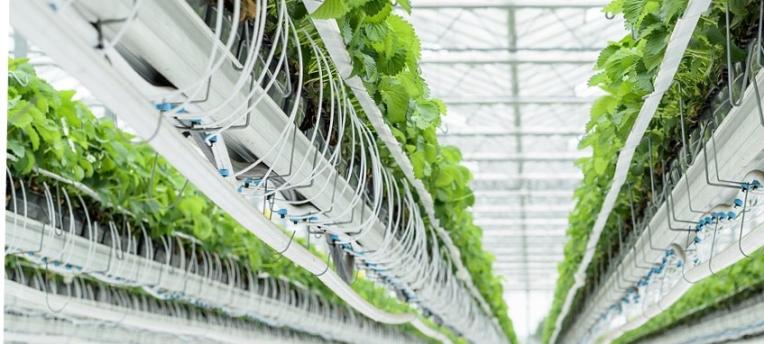
Prevent clogged drippers during cultivation
3 June 2024
Consistently watering your plants is key. Unfortunately, the dripping system can become clogged with mineral or bacterial deposits. For accurate water supply and sufficient oxygen in the water, drippers and drip lines must be kept clean. If you have any doubts about the quality of the water in the watering system, get a sample analysed. Prevention is better than cure!
Eurofins can analyse precipitation in drippers. Analysis of the composition of dripper blockages often reveals that the precipitation consists of a combination of organic and inorganic components. Organic matter, iron, calcium, and phosphate are often the main components that can cause clogging.
An analysis of the precipitation provides insight into the nature of the blockage. These tests take up to six working days and provide insight into the cause of the blockage and what can be done about it.
How do blockages occur?
During cultivation, salts can precipitate due to a reaction between different elements. This involves various elements from fertilisers reacting with each other, such as calcium and sulphate. Clay particles can also precipitate in drippers and drip lines.
Additionally, various types of yeasts, bacteria, and moulds can form a biofilm. They survive in the drippers and drip lines due to the presence of methane, H2S, Fe, NH4, carbon, and chelates. Substances with organic carbon, such as formic acid and acetic acid, also increase the risk of bacterial and fungal growth.
This can pose problems, especially when recirculating the water. Analyses of the microbiological composition of blockages have shown that Trichoderma is often found in the precipitation, due in part to methane in the water. Methane is often present in spring water and osmosis water.
How to keep drippers and drip lines clean?
Prevent calcium precipitation during cultivation by keeping the pH in the nutrient solution below 6.2. Add a portion of the phosphate in the nutrient solution in the form of polyphosphate.
Remember that some types of drippers are more prone to blockage than another. Labyrinth drippers are less prone to clogging than capillaries, for example.
Use low concentrations of hydrogen peroxide during cultivation. Dose this separately and not in combination with (iron) chelate, as hydrogen peroxide damages the chelate.
Clean the drippers and drip lines with stronger agents during crop rotation or at the end of the cultivation period. Nitric acid essentially bites away the inorganic components and kills algae, bacteria, and fungi. Chlorine bleach removes organic components. If both nitric acid and chlorine bleach are used, rinse with clean water in between to prevent a reaction between acid and bleach. Nitric acid and chlorine bleach cannot be used in self-closing drip systems with rubber membranes.
Note that membranes can be affected, impacting water delivery. The use of stronger agents can roughen the inside of the drip system, making it more susceptible to renewed blockages.
When to remove iron, manganese, and methane from well water?
Filtering the well water removes mineral particles, iron, manganese, and silicon. Iron levels up to 100 micromol/l can be worked with reasonably well. When using drip irrigation, the drip system is easily polluted by iron flocculation. Ideally, the iron content should be 0 and certainly less than 10 micromol/l.
If there is relatively high organic matter in the water, levels of 10-20 micromol/l are still acceptable. Iron then flocculates less easily. If high demands are placed on the irrigation water regarding leaf pollution (potted plants, ornamental shrubs), the iron content may be a maximum of 50 micromol/l. Manganese easily precipitates at high pH and less easily at low pH. For substrate cultivation, the manganese content should be a maximum of 10 micromol/l.
Methane is difficult to detect in basin, spring, and drain water because it is highly volatile. Water samples for methane determination should therefore be supplied in specially designed sample bottles, with a screw cap or septum. Methane research takes up to six working days.
Methane can be removed by aerating spring water and drain water. Various blowers and (basin) aerators are available for this purpose. During aeration, carbon is converted to CO2 and escapes. H2S and NH4 concentrations are also reduced, and iron precipitates. In the fertiliser tank, the methane concentration should not exceed 0.11 g/l; in the drip solution, no higher than 0.08 g/l.
Request a water sample analysis if you have any doubt about the quality of the source water in order to potentially prevent any problems with uneven water delivery.