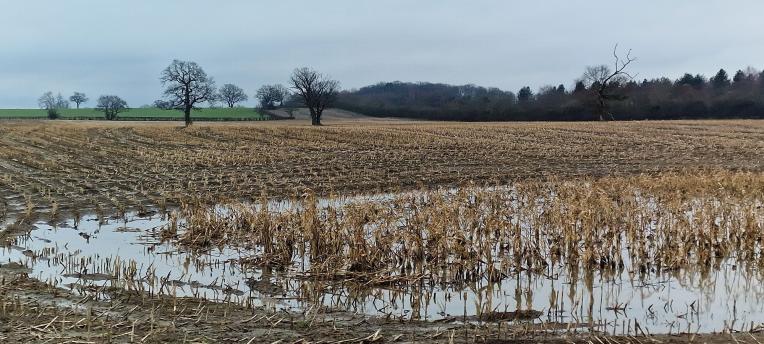
Flooded fields: what is the effect on soil?
Prolonged and intense rainfall, along with the additional impact of Storm Henk in January, has led to widespread saturation of the soil and posed significant challenges for crops across Europe this winter.
According to Eurofins Agro, crops that are waterlogged or have been under water for more than 15 days will almost certainly be lost. However, the longer-term damage to soil health can only be determined by regular testing once the flood waters have receded.
To gauge the impact, soil testing becomes crucial. It measures, among others, the levels of bacteria, fungi, and protozoa in the soil. Eurofins' Soil Life Monitor test not only identifies these levels but also provides recommendations on replenishing the soil. This valuable information enhances the efficiency of fertilizer utilization and aids in informed decision-making for cultivation practices.
Flooded plants undergo a shift in nutrient uptake, with roots ceasing to absorb nutrients and the soil generating methane instead of carbon dioxide. Additionally, the accumulation of ethylene in plant roots can adversely affect the germination of new seeds.
In the event of abandoning a winter crop for a spring crop, a crucial step is conducting a soil test to comprehend the necessary treatment for the new crop. Flooding leads to a decline in microbial populations, replacing aerobic bacteria with anaerobic bacteria that produce gases like methane and nitrous oxide. This shift reduces soil oxygen, impacting earthworm numbers as they either move away or perish.
The erosion caused by flooding strips away the enriched topsoil that farmers have invested time and resources in improving. Topsoil contains vital elements like phosphorus, nitrogen, and carbon crucial for nurturing a new crop. Without it, farmers must gauge the required input levels to facilitate soil recovery.
Soil compaction is an escalating concern, especially when subjected to heavy rain. Compacted soil lacks sufficient air space to absorb water, resulting in rain runoff carrying away topsoil and nutrients. While deeper soil can absorb more rain, many regions in the EU suffer from years of compaction, lacking the necessary depth to withstand the intense winter rainfall. To optimize compacted soil, testing becomes imperative for informed cultivation decisions, such as determining the suitability of ploughing when minimum tillage options are not viable.
Want to know more?
Related
Rapid soil tests for assessing soil health
Introduction on-farm nutritional analysis with handheld spectrometer

Silver Sponsor of the International Silage Conference