Mold & Fungi
Eurofins Built Environment Testing is the industry leader for mold testing and other indoor air quality (IAQ) services. Our laboratories are AIHA LAP, LLC accredited for microbiology including a wide range of mold tests. We do not only offer comprehensive services with exceptional quality and customer service but also offers a number of innovative tools for mold data interpretations to support our clients.
Although mold is a common term used to describe fungi growing on spoiled food, plants, or damp building materials, it is not a formal scientific classification. In indoor environments, mold growth is typically the result of excess moisture or water intrusion and can be a sign of underlying moisture problems.
Research has linked damp and moldy indoor environments to a range of health concerns, including increased childhood wheezing and coughing, respiratory infections, asthma, allergic bronchopulmonary mycosis (ABPM), allergic fungal sinusitis (AFS), and hypersensitivity pneumonitis (HP). While the presence of mold does not always indicate a health risk, visible growth, musty odors, water damage, and persistent dampness are all strong indicators that further investigation may be warranted.
A thorough mold inspection considers these visible and environmental indicators alongside laboratory testing to help identify mold growth, assess the extent of contamination, and provide the information needed to support remediation and indoor environmental quality decisions.
Check out our Mold Glossary!
Non-viable mold
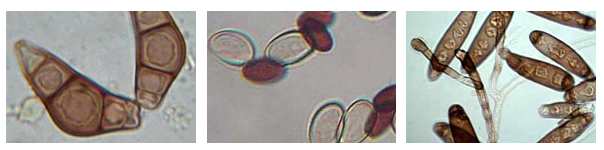 Non-viable analysis by direct microscopy is the most widely used method to identify mold spores because it is convenient and cost effective. The disadvantage of non-viable testing is that mold spores can be more difficult to identify to the genus level.
| Surface | Tape List, Bulk, Swab | Direct Microscopy |
| Airborne | Sporetrap (Air-O-Cell, Allergenco-D, etc.) | Direct Microscopy |
Viable mold
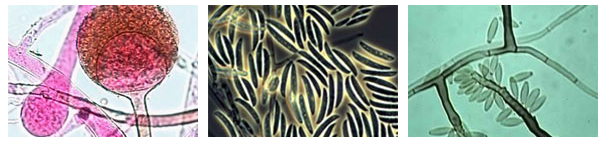
Viable analysis using standard mycology practices provides a more accurate identification of mold spores because the cultured samples are more easily identifiable to the genus level. The disadvantage of viable testing is that it takes 7 to 14 days to culture samples and often not all the mold spore types proliferate.
| Bulk | Bulk, Dust | Standard Mycology |
| Airborne | Andersen Sampler, Impactor | Standard Mycology |
| Surface | Swab | Standard Mycology |
Indoor Air Quality (IAQ)
IAQ analysis can be performed for dust characterization, allergens, and a number of other IAQ contaminants. Microscopy techniques vary depending on the sample type.
| Dust | Characterization | Direct Microscopy |
| Allergens | Mite and Animal | Advanced Biotechnology |
| Bacteria | Sewer and Various | Standard Bacteriology |
References
1 Institute of Medicine (US) Committee on Damp Indoor Spaces and Health. Damp Indoor Spaces and Health. Washington (DC): National Academies Press (US); 2004.
Start your testing now
Contact us to discuss your project goals and learn how our testing solutions can support your data and regulatory needs.