With the lives of patients often depending on the reliability of your device, there is no room for uncertainty. Bacterial endotoxins, the most common pyrogens found in medical devices, pose a serious threat if not accurately detected. Failure to test thoroughly can lead to life-threatening complications such as hemorrhagic shock, fever, meningitis, and other severe reactions. Still, knowing when and how to test, and what standards to meet, can be overwhelming, especially when time, budget, and regulatory scrutiny are exerting their own pressures.
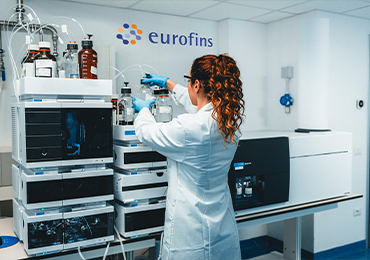
Enabling you to meet critical safety standards and regulatory expectations, the Eurofins Medical Device Services network of laboratories offers world-class bacterial endotoxin testing (BET), including the industry-standard Limulus Amebocyte Lysate (LAL) test.
Whether your device comes into direct or indirect contact with cerebrospinal fluid, blood vessels, lymphatics, or ocular systems, we’ll ensure your device is tested with scientific precision, following stringent protocols defined in:
- ANSI/AAMI ST72
- ISO 11737-3
- JP <4.01>
- Ph. Eur. 2.6.14, Method D
- USP/NF Chapters <85> and <161>
We will support you with regulatory knowledge aligned with USP <85>, <161>, ANSI/AAMI ST72, ISO 11737-3, JP <4.01> and Ph. Eur. 2.6.14, a choice of sensitive and robust assay formats, and testing tailored to your sample specifications and risk profile.
Endotoxins can originate not only from the device but also from associated materials, packaging, or even your water supply. Eurofins Medical Device Services will identify those risks so nothing compromises your patient’s safety or your device’s approval timeline.
Get expert support to avoid delays.