Eye irritancy
Bovine corneal opacity and permeability test (BCOP; OECD 437)
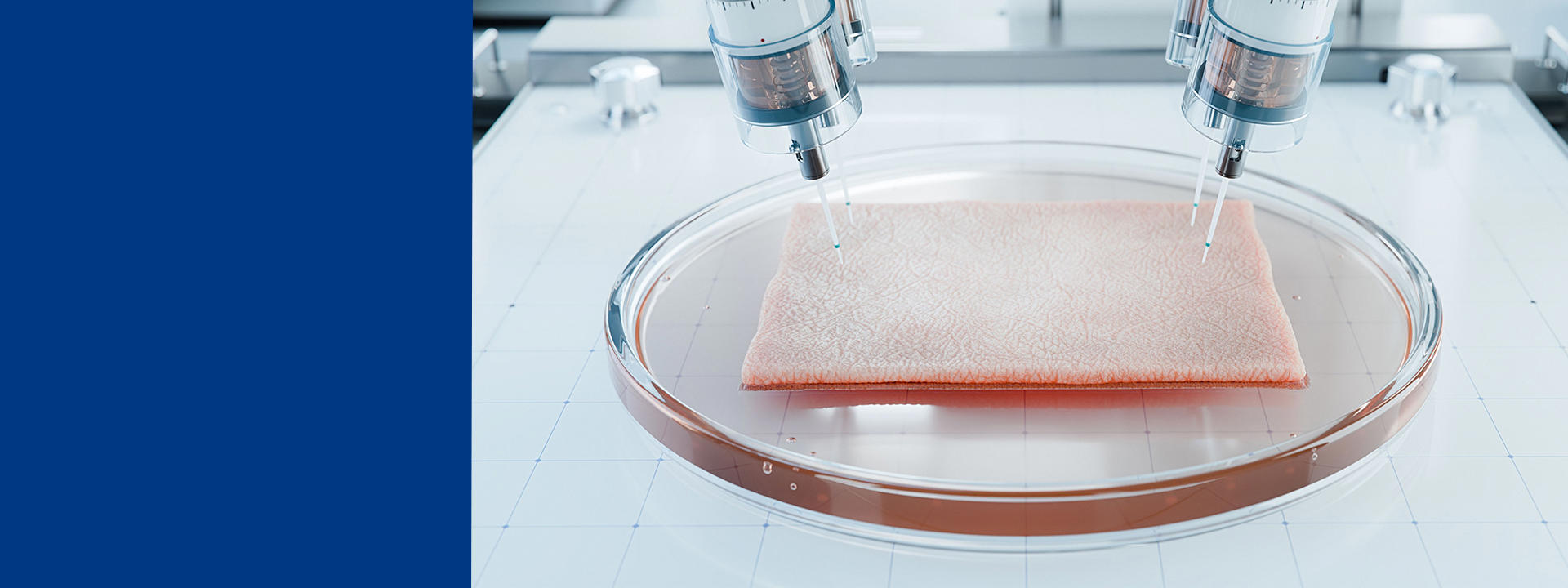
Lack of internal toxicologists, uncertainty about when and how to test, and the costs of in vivo methods, especially when animal use and veterinary oversight are involved, can delay approval and inflate budgets. That’s why more organizations are turning to in vitro alternatives. Validated, reproducible, and reliable, these methods often offer improved predictability for human response. They also support faster decision-making, clearer regulatory pathways, and a more ethical approach to product development.
Within the Eurofins Medical Device Services network of laboratories, our in vitro biocompatibility testing services are fully aligned with ISO 10993-1. You will have access to a team of scientific experts and toxicologists committed to evaluating safety efficiently, ethically, and accurately. We are committed to the 3Rs principles of Replacement, Reduction, and Refinement in animal testing, by offering robust alternatives that meet global regulatory expectations.
Our testing spans:
Our compliant in vitro laboratory in Italy houses some of the most advanced technology in the industry. We support both standardized testing and custom assay development, partnering with clients to select the most suitable method for their materials and applications. We also collaborate closely with regulatory agencies, ensuring all studies meet the latest requirements.
Bovine corneal opacity and permeability test (BCOP; OECD 437)
Structure activity relationship by computerized models (Multiple softwares available)
Oral mucosal irritation using human reconstructed oral epithelium
Vaginal epithelial irritation using human reconstructed vaginal epithelium
Bladder epithelial irritation using human reconstructed bladder epithelium
Osteoblast Cell Line Proliferation Test
Fribroblast Cell Line Proliferation Test
Barrier efficacy test (human skin model)
Lenitive efficacy test (human skin model)
Wound healing efficacy (human skin model)
Whitening efficacy (human skin model)
Reconstructed human epidermis model (OECD 439, ISO 10993-23)
In vitro: KeratinoSens (OECD 442 D)
In vitro: Activity of dendritic cells – h-Clat
Methods addressing key event 1 of the AOP according to OECD TG 442 C
Methods addressing key event 2 of the AOP according to OECD TG 442 D
Methods addressing key event 3 of the AOP according to OECD TG 442 E