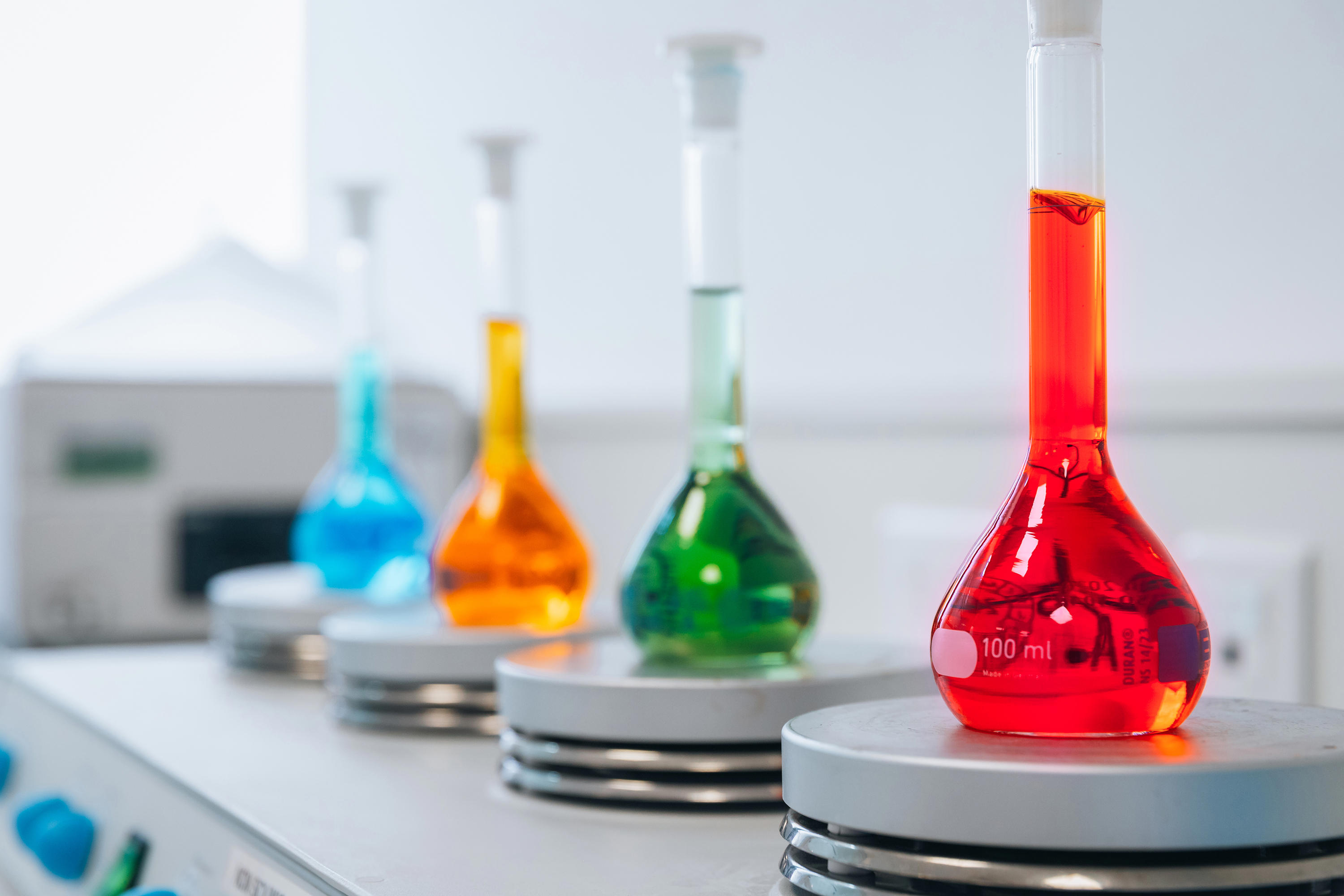
Advanced testing for excipients, bulkware & APIs
Ensuring raw material compliance with global standards
Each raw material in your drug product, whether it be an excipient, active ingredient or bulk compound, must meet the highest quality standards to ensure the safety, efficacy, and consistency of the finished product. But verifying that every material is what it claims to be, and is suitable for pharmaceutical use, can be a significant challenge, especially when multiple suppliers, methods, and global regulations are involved.
The Eurofins BioPharma Product Testing (BPT) network of laboratories provides robust testing solutions for raw materials, excipients, and APIs. From identification and purity assessment to impurity profiling and method validation, our services will help you minimize risk and meet your compliance obligations.
Our nuclear magnetic resonance (NMR) capabilities enable advanced techniques such as qNMR for API assay, 3D structure characterization, impurity and metabolite identification, and high-throughput QC of compound libraries. These methods are invaluable for confirming structural integrity and ensuring that no unknowns compromise your formulation.
Eurofins BPT supports you in streamlining the validation process for new or custom materials. Whether you are introducing a new supplier or working with novel raw inputs, our team can assist with the development, qualification, and validation of new analytical methods to meet regulatory expectations.
Each of our services is delivered in accordance with rigorous quality systems and by highly trained scientific teams, helping you reduce the risk of manufacturing delays, costly production problems, regulatory setbacks, and product failures.
Choose Eurofins BPT as your partner in ensuring that every component of your pharmaceutical product is safe, compliant, and primed for manufacturing success.
Our testing solutions

ACS
BP
ChP
FCC
IP
JP
Ph. Eur.
USP

Non-compendial testing

Solid-state characterization/ polymorphism assessment:
Crystal polymorphism
Impurity identification
Limit test
Solid-state process development

Nuclear magnetic resonance (NMR) - NMR of APIs / qNMR assay of API
Identification of unknown compounds (impurity or metabolite identification)
qNMR to qualify reference compounds
NMR identity testing for release of raw material references standards
High throughput quality control (QC) of compound library
Compound library chemical shift encoding and protein ligand NMR binding assays
3D-NMR structure characterization
Instrumentation
- Atomic Absorption Spectroscopy (AAS)
- Amino Acid Analyzer
- Atomic Absorption (AA), Graphite Furnace Atomic Absorption (GFAA)
- Autotitration
- CHN Analysis
- Conductivity
- Differential Scanning Calorimetry (DSC)/TGA/Melting Point
- Fourier Transform-Infrared Spectroscopy
- Gas Chromatography (GC)
- Gel Permeation Chromatography (GPC)
- HPLC-IC/PAD/ELS/RI/MS/UV/DAD
- ICP/MS, ICP
- LC-QTOF
- Loss On Drying (LOD)/Gravimetric Analyses
- Near Infrared Spectroscopy (NIR)
- Nuclear Magnetic Resonance Spectroscopy (NMR)
- Osmometry
- Polarimetry
- Residue on Ignition (ROI)
- Size Exclusion Chromatography (SEC)
- Supercritical Fluid Chromatography (SFC)
- Thin Layer Chromatography (TLC)
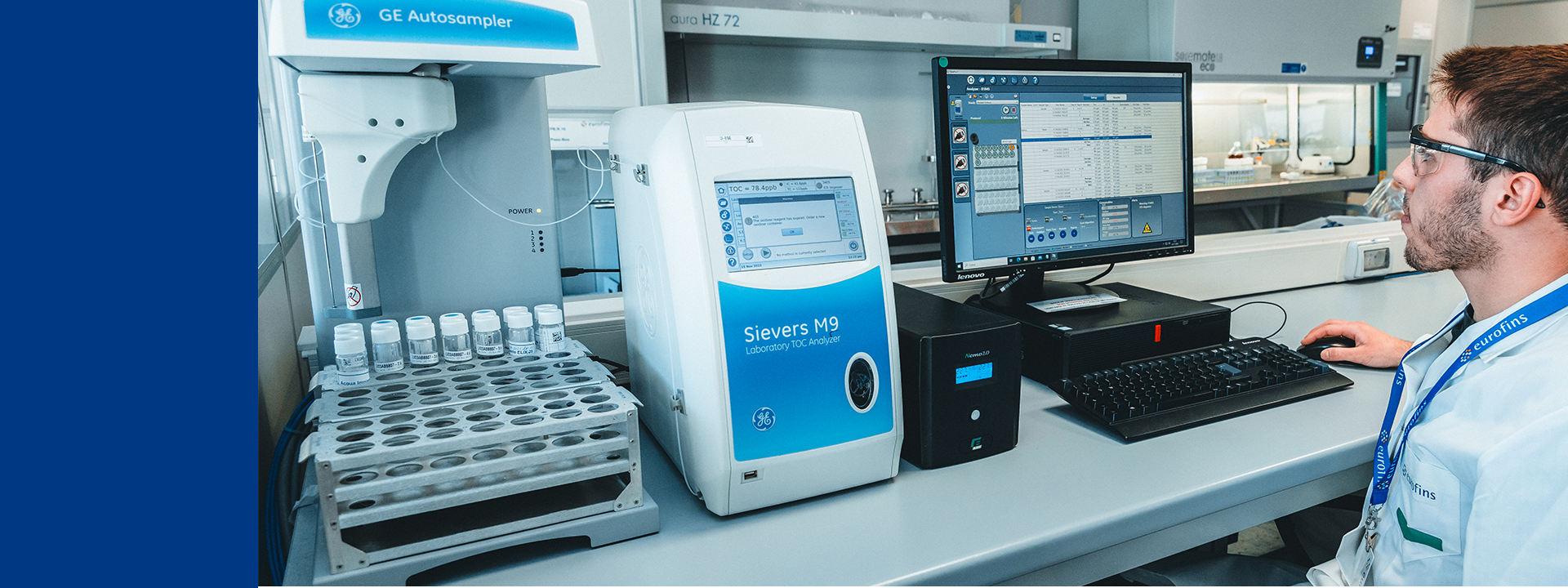
- Total Organic Carbon (TOC)
- Turbidity
- UV Spectroscopy
- Viscosity
- Water Determination by Karl Fischer (Volumetric & Coulometric)
- X-Ray Diffraction (XRD)
- Microscopy
- Nitrogen content by Kjeldahl