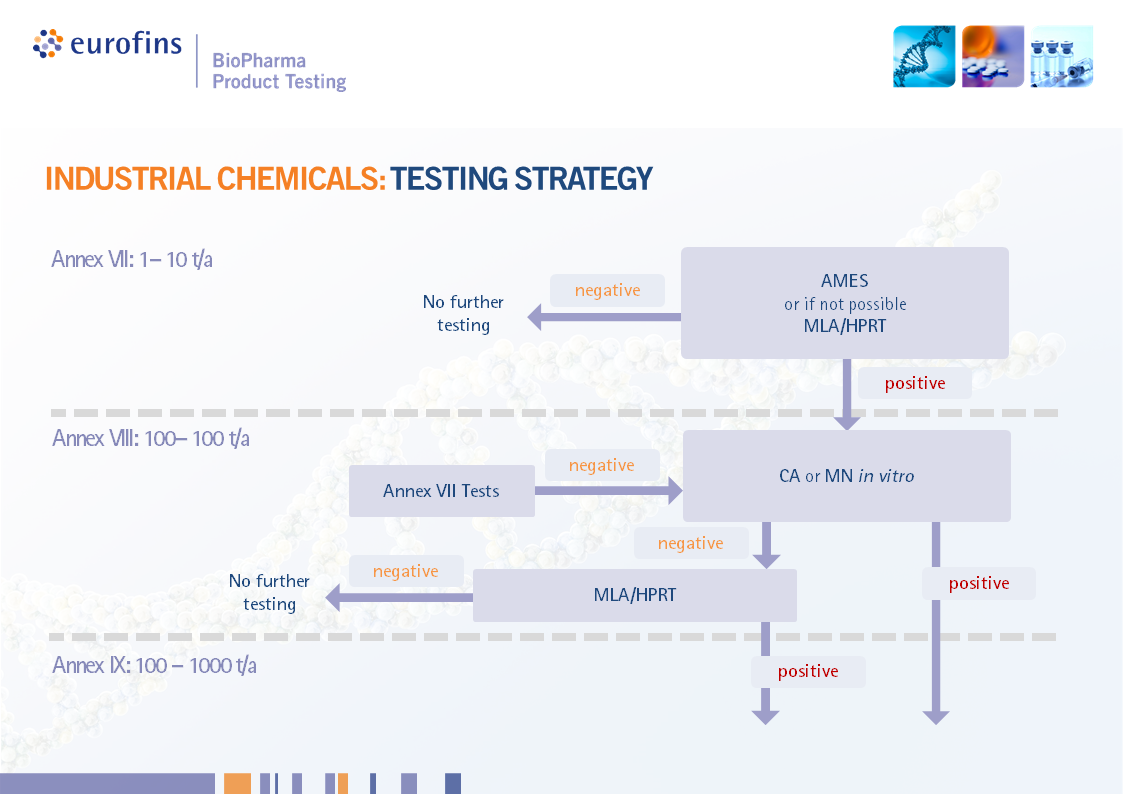
Genotoxicity testing strategy

Comprehensive assessment of genotoxic potential
In vitro and in vivo assays for genetic toxicity evaluation
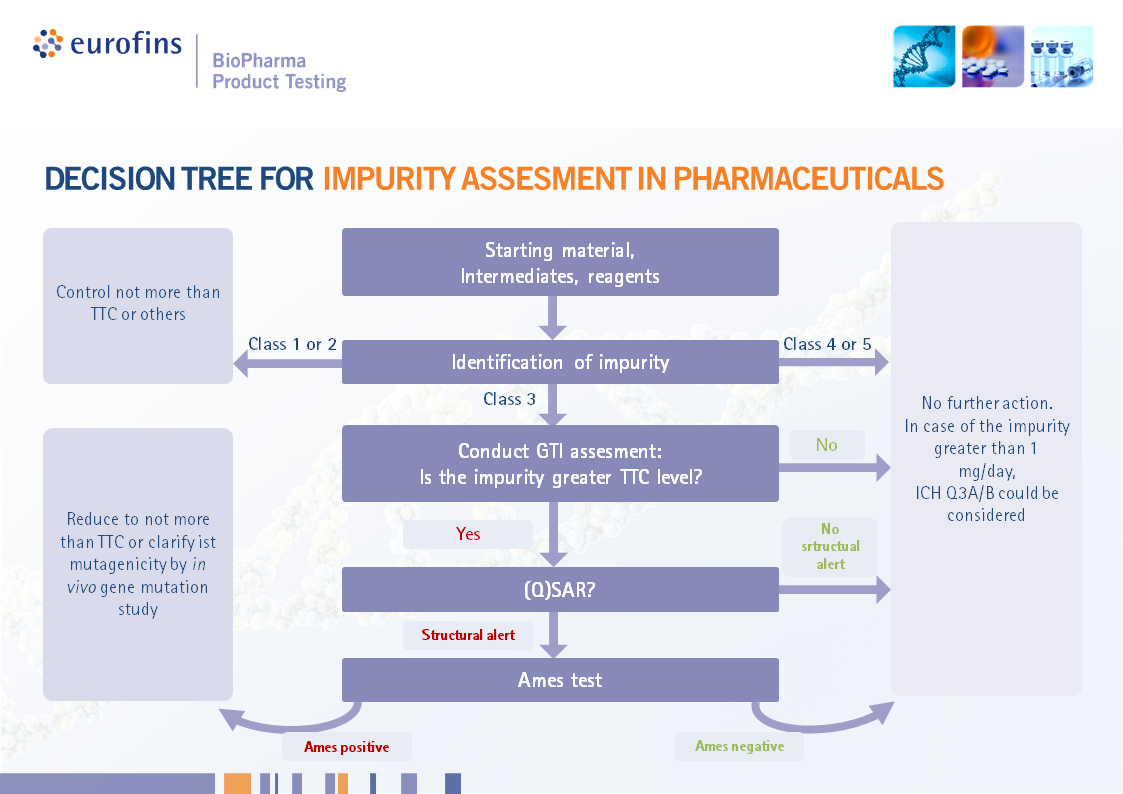
Genotoxicity testing is a critical part of toxicological risk assessment, helping to identify substances that may cause genetic damage and potentially lead to mutations, chromosomal alterations, or cancer. An effective testing strategy combines validated in vitro and in vivo approaches to evaluate genotoxic potential, support regulatory compliance, and provide a scientifically sound basis for product safety assessments.
The testing strategy for genotoxicity covers three main areas:
- Gene mutations
- Chromosome aberration or breakage (clastogenicity)
- Chromosome loss or gain (aneuploidy)
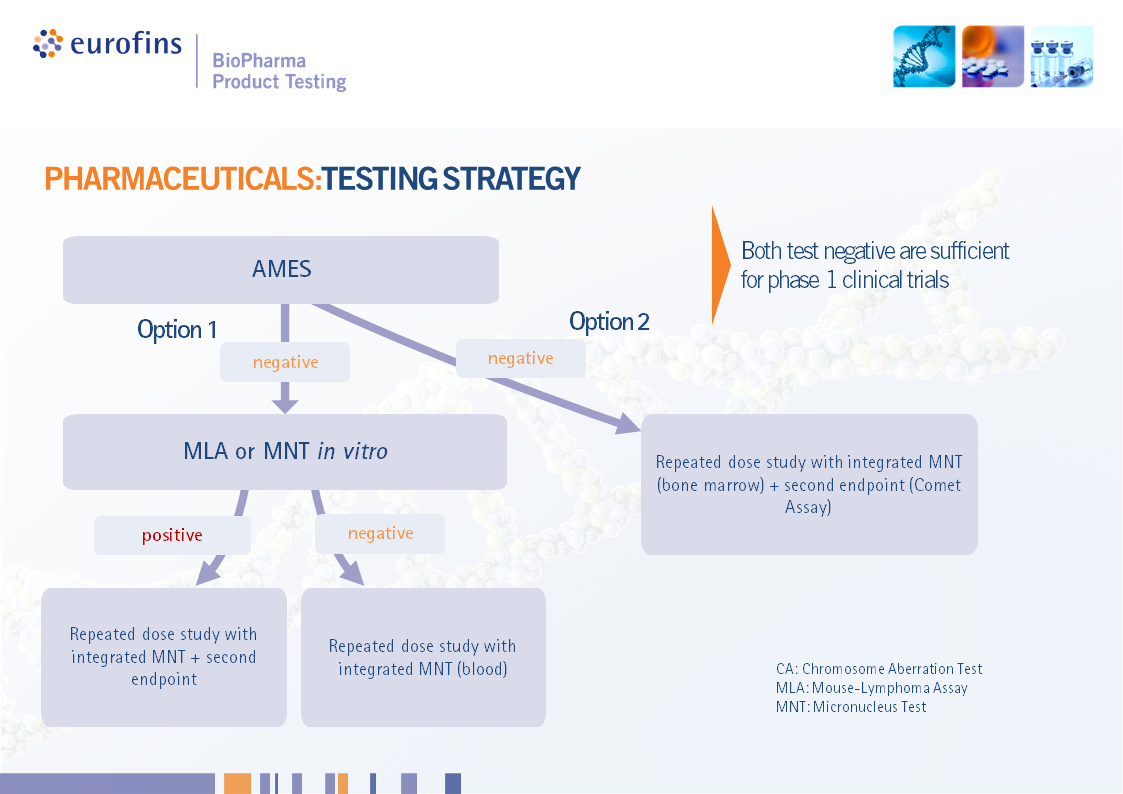
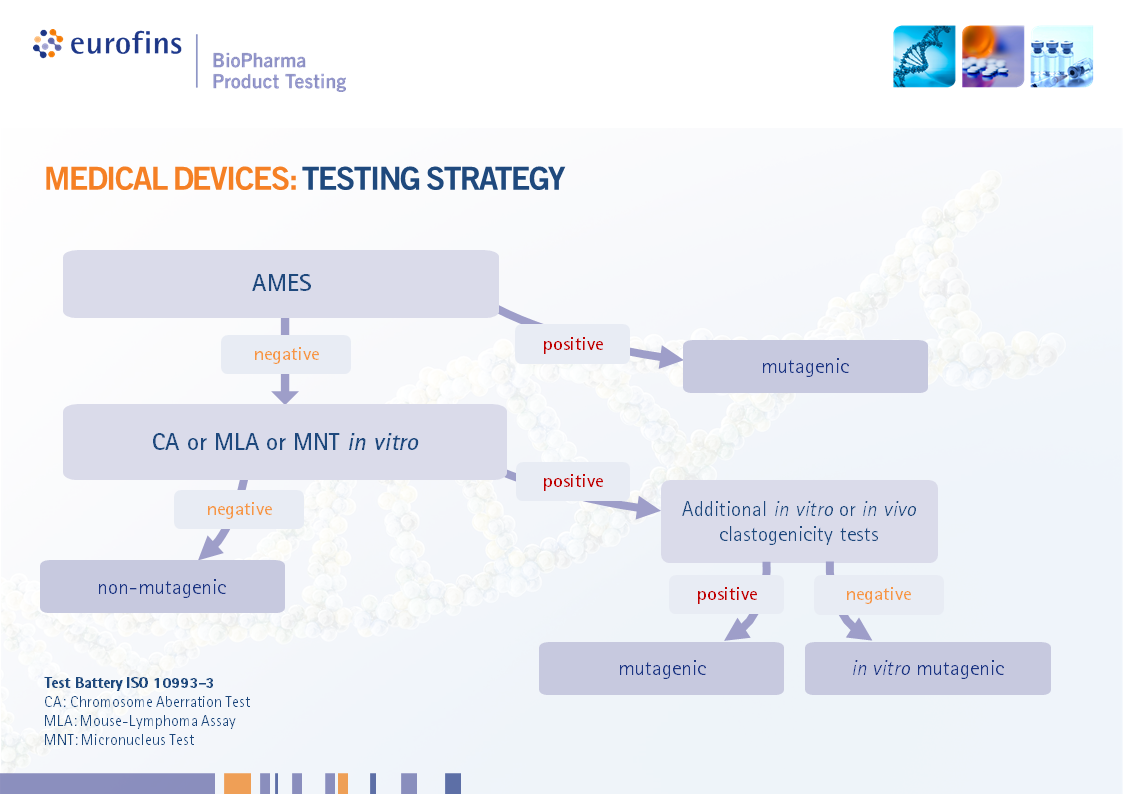
Current general strategy consists of in vitro assays capable of detecting all of these endpoints:
- Gene mutations: AMES (OECD 471), mouse lymphoma assay (OECD 490), HPRT test (OECD 476)
- Chromosome aberration or breakage: Chromosome aberration test (OECD 473, 475)
- Chromosome loss or gain: Micronucleus assay (OECD 478, 474)
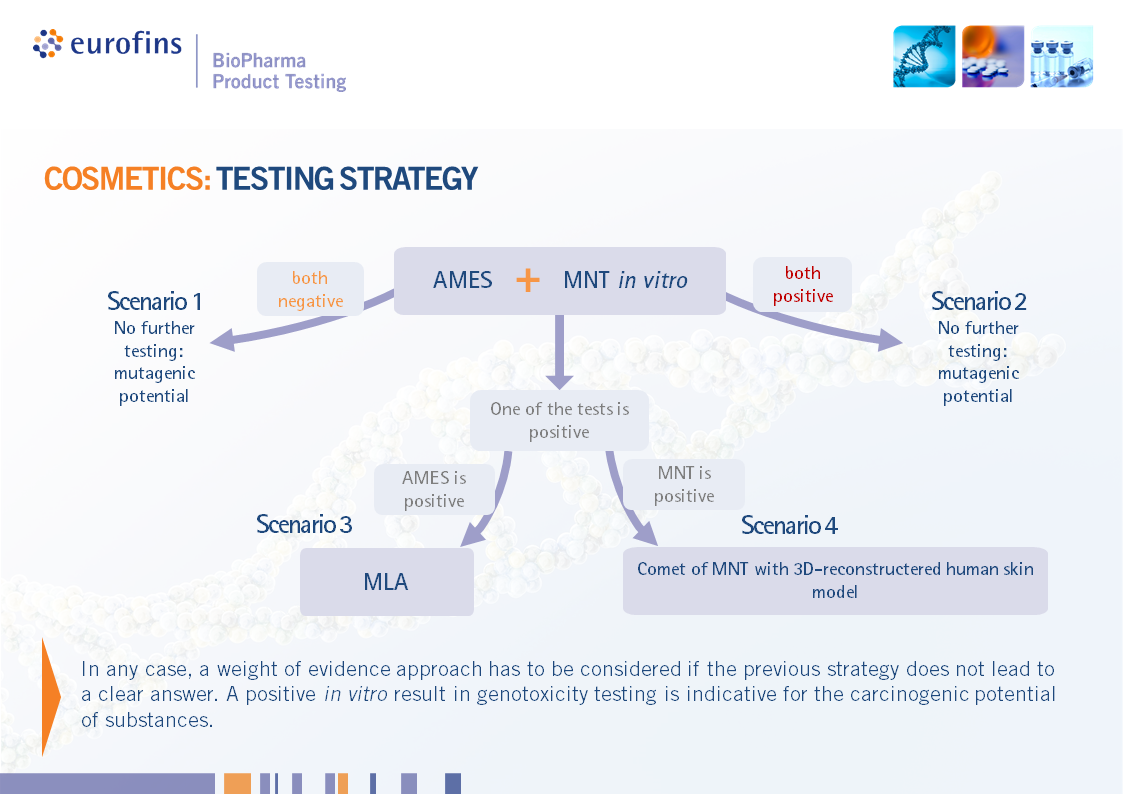
Possible follow-up evaluation (in case of positive results):
- in vivo micronucleus test (OECD 474)
- in vivo chromosome aberration test (OECD 475)
- in vivo UDS Test (OECD 486)
- Transgenic mutagenicity tests (OECD 488)
- in vivo comet assay (OECD 489)
- Comet with 3D-reconstructed human skin model
- MNT with 3D-reconstructed human skin model