Dust deposition monitoring
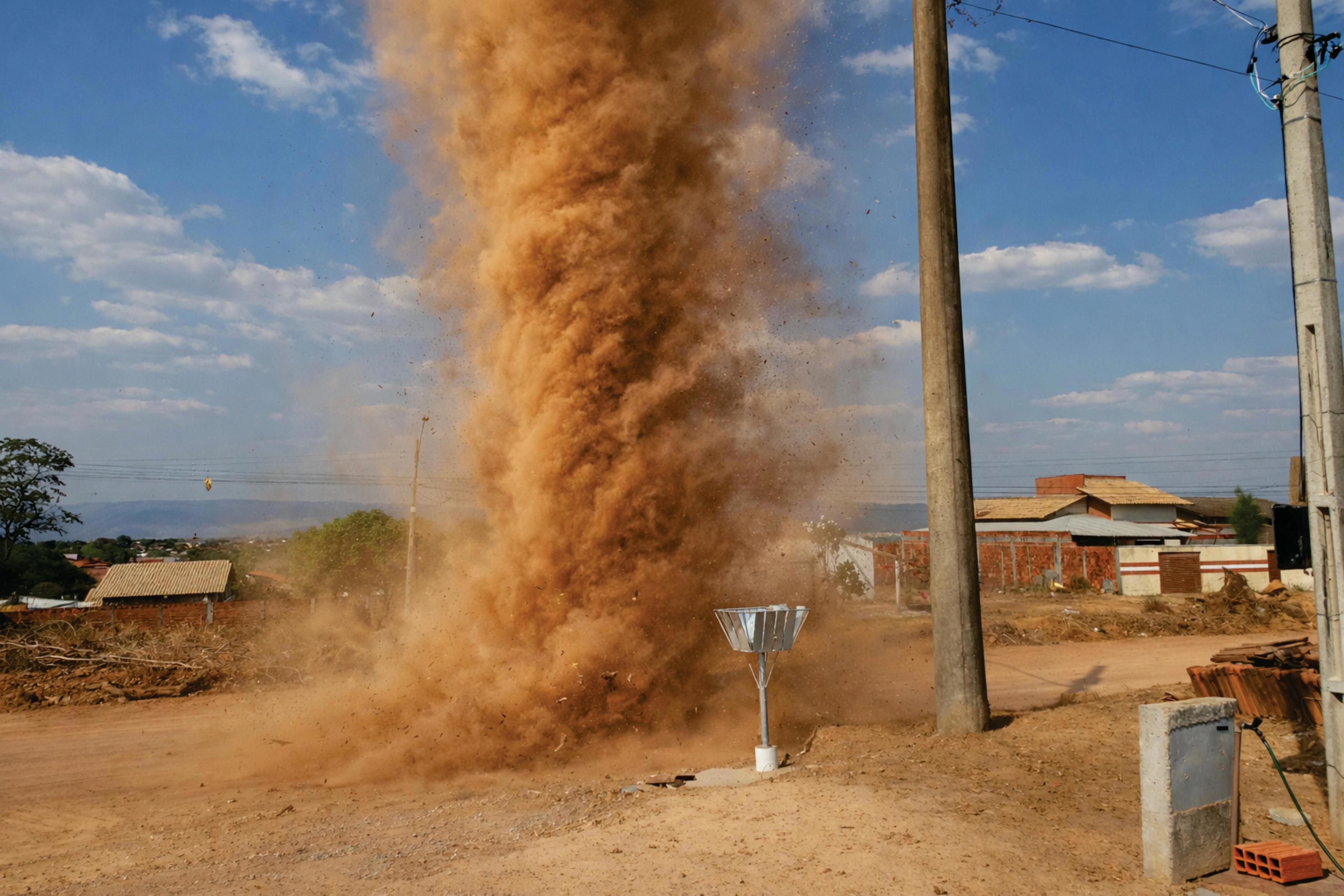
Dust deposition standard gauge and directional gauge monitoring is utilised for monitoring localised dust levels. The principle of this sampling and analysis is to determine over a given sampling period, (for example 30 days between April - October and 14 days between November - March), the amount of particles which settle from the ambient air. These particles are collected via a vessel, and are retained over the sample period with rain water in a sample container. The mass deposition rate of deposited matter is then calculated from the mass of total solids obtained and the exposure period. Insoluble solids & soluble solids can also be determined.
Our laboratories are NATA accredited for the sampling and analysis of dust deposition via Australian Standard AS/NZS 3580.10.1:2016 Methods for sampling and analysis of ambient air, Method 10.1: Determination of particulate matter - Deposited matter - Gravimetric method.
We can also undertake directional dust deposition testing via AS 2724.5-1987 (Directional dust gauge method). Analysis is also via AS/NZS 3580.10.1:2016 and is NATA-accredited.
Common activities/sources that require dust deposition monitoring
• Road & construction sites
• Industrial operations
• Remediation works
• Agricultural areas
• Landfills in urban areas
• Mining operations
Eurofins Environment Testing laboratories in Australia can supply gauges, set-up, samples, analyse and report deposition dust monitoring programmes. This includes sampling & analysis via high volume air samplers.
We routinely undertake work in Victoria (metro & Country), Tasmania, NSW and SA. All air sampling equipment is owned, maintained and calibrated by the Eurofins Environment Testing network of laboratories.
If you require further information or have any additional stack sampling requirements not listed above, including requesting a free quote, please contact us.