Microbial Identification
Eurofins BioPharma Product Testing Australia offers comprehensive environmental monitoring services to ensure safety and compliance in pharmaceutical manufacturing environments, focusing on pathogen control and Good Manufacturing Practices (cGMP)
Microbial Identification Services
Rapid and accurate microbial identification is critical for contamination investigations, environmental monitoring programs, product quality assessments, and regulatory compliance.
At Eurofins BioPharma Product Testing, we offer advanced microbial identification services using both 16S rRNA Genetic Sequencing and MALDI-TOF Mass Spectrometry, enabling clients to confidently identify bacterial, yeast, and fungal isolates from pharmaceutical, biotechnology, medical device, and complementary medicine environments.
Leveraging state-of-the-art technologies and extensive reference databases, our specialists deliver reliable, scientifically robust results to support effective root cause investigations and informed quality decisions.
Eurofins IDmyk Comparative Sequencing
The genetic identification services we provide allows for the identification and characterization of bacterial, yeast and mould isolates to the species level. This genetic identification technology outperforms phenotypic approach (such as the MALDI-ToF) in terms of accuracy in identification.
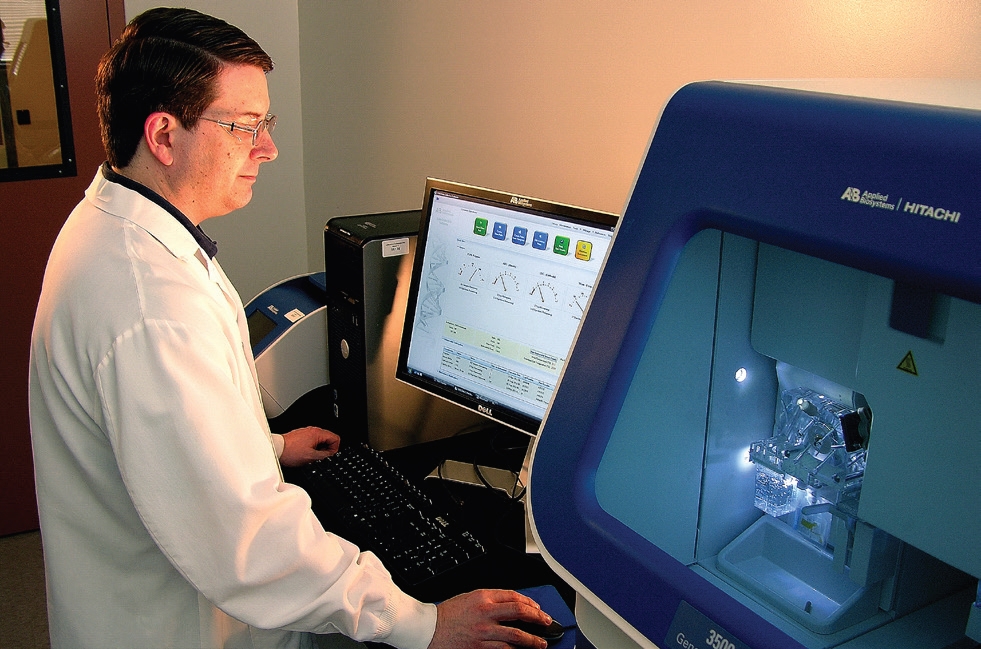
Genomic DNA is extracted directly from dead or alive bacterial colonies grown under any conditions. The 16S rRNA gene is amplified using universal primers and thermalcyclers. The amplified 16S rRNA gene product is sequenced using dye terminator cycle sequencing chemistry. The sequence reactions are analyzed using automated DNA sequencers and software.
Unknown bacteria samples are identified using microbial identification software and compared against the our Eurofins IDmyk Comparative Sequence Index database containing over 10,000 entries. Routine bacterial identification is performed (by default) using the long sequence (1,200-1,400 base pairs) of the rDNA. The longer sequence allows for better discrimination of closely related species and therefore gives higher confidence in the results provided.
Data analysis can be done using either automated or manual modes. Outcome predictions is done using the phylogenetic tree tool. The system also has the ability to build user-defined and user-validated custom libraries
The Eurofins IDmyk Comparative Sequence Index database which is proprietary to Eurofins is currently the largest database in the world. The Eurofins IDmyk fungal database complements the bacterial library. As we know, the larger the database, the better the reliability of the discrimination, and this truly sets us apart from other providers of this service.
Microbial Identification via MS / MALDI-ToF
Mass spectrometry (MS) is an analytical technique for determining the elemental composition of a sample. The MS principle consists of ionizing chemical compounds to generate charged molecules and to measure their mass-to-charge ratio. Such molecular “signatures” can be used for rapid bacterial identification (ID) from isolated colonies.
By determining an organism’s unique proteomic fingerprint and matching this characteristic pattern with an extensive reference library can reliably identify an unknown microorganism. The reference library includes common environmental species and rare microorganisms. Continuous expansion of the library ensures that a broad range of microorganisms can be easily identified.
MALDI-TOF technology (Matrix Assisted Laser Desorption Ionization Time-of-Flight) examines the patterns of proteins detected directly from intact bacteria. The sample to be analysed is mixed with another compound, called a matrix. The mixture is applied to a metal plate and irradiated with a laser. The matrix absorbs the laser light and vaporizes, along with the sample, in the process gaining an electrical charge (ionization). Electric fields then guide the ions into the time-of-flight mass spectrometer, which separates them according to their mass to charge (m/z) ratio, and ultimately the quantity of each ion is measured. Detection is achieved at the end of the flight tube.
Get in touch
Would you like to find out more about our testing solutions, or do you need tailored analytical support? Contact us today to get in touch with our experts.