During manufacturing, waste is an inevitable undesired outcome, no matter it is solid or liquid, hazardous or non-hazardous. As the obligations of businesses to operate responsibly and the advocate of circular economy are on the rise, traditional waste management in manufacturing industry is no longer enough to fulfil mandatory and moral expectations. The implementation of integrated waste management is what industry should be looking for.
What is waste management?
Waste management covers both the processes and actions that are required to manage waste in all forms from the generation point to final disposal. Different and complex perspectives including waste policy, waste identification, waste collection, waste segregation, waste storage, waste disposal procedure, national/ regional environmental and waste regulations as well as waste management person-in-charge are involved.
In the case of manufacturing waste, waste produced can be any unwanted or unusable materials generated in the manufacturing process that does not benefit the manufacturer and customers.
Integrated waste management in circular economy
With the realisation of the vitalness of sustainability among public and different stakeholders, however, focus is being shifted to circular economy where integrated waste management is built on the well-known 3R model – Reduce, Reuse and Recycle.
In a circular economy, long-term positive values on finance, ecology and society are all taken into accounts. No matter the materials are raw/ virgin materials, energy, components or even waste from the original or other manufacturing processes, they should be consumed with the 3R concept to minimise impacts and maximise value creation.
Planning of integrated waste management
When it comes to integrated waste management, the principle is to consider how to reduce, reuse, recycle as well as to manage waste that protects the natural environment and human. This requires first a thorough evaluation of local conditions versus needs/ expectations, and careful selection of most suitable waste management activities accordingly.
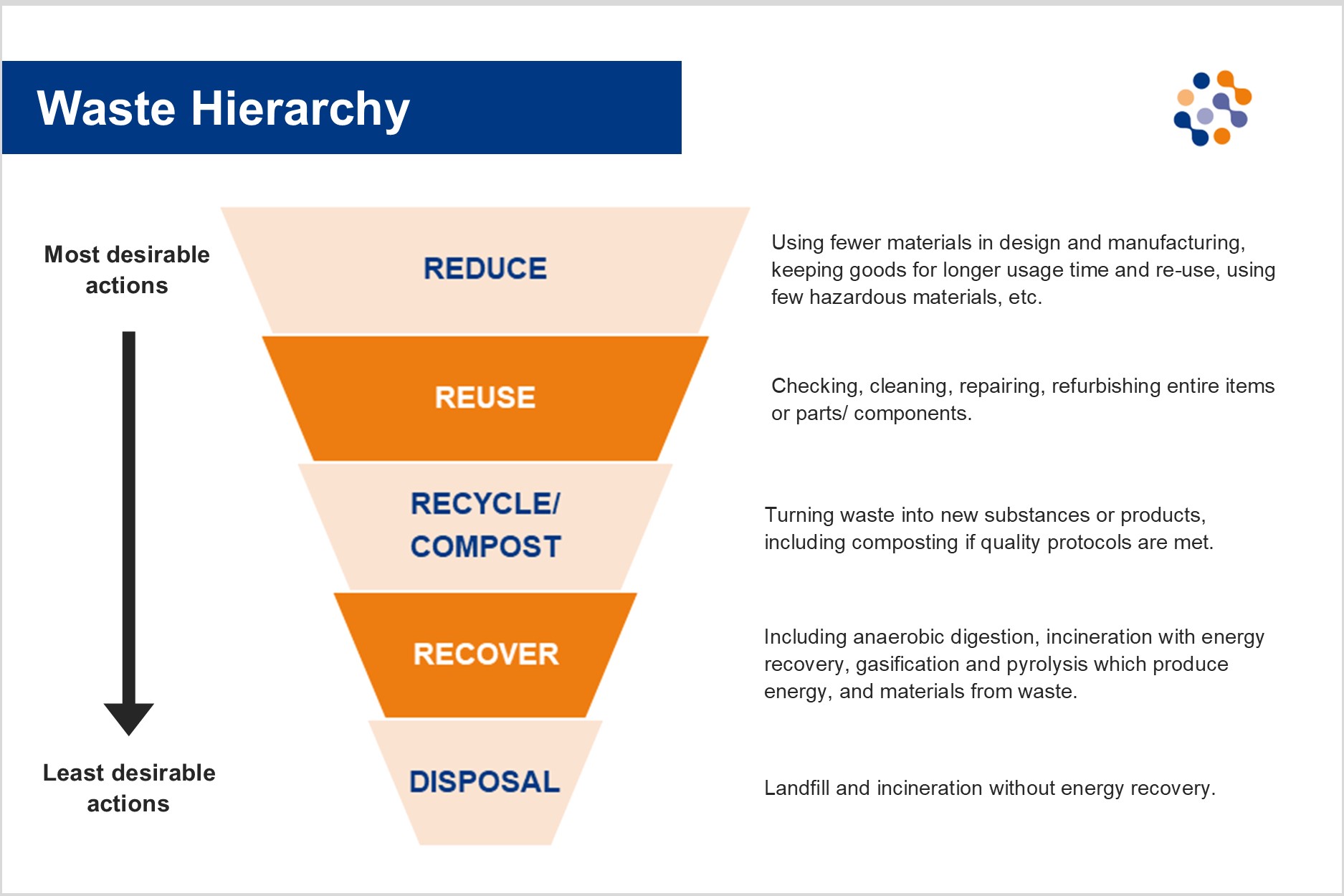
In the planning process, Waste Hierarchy should serve as the fundamental concept. By prioritising the actions with the most efficient use of resources, emphasising the use of renewable resources and less wasteful practices, Waste Hierarchy ranks waste management options in accordance with what is best for the environment.
4 key points for integrated waste management implementation
Without going into a long essay, four key points are listed here that can be taken as important steps in building up comprehensive and successful integrated waste management:
- Design and implementation of a sustainable waste management system
- Develop environmental management system
- Develop waste management system
- Layout waste management policy/ procedure that covers waste minimisation methods, proper handling of waste collection, waste segregation, waste storage, waste inventory and waste disposal
Need support in measuring your environmental performance? Consider our environmental audit or Zero Waste to Landfill Certification to achieve action-based sustainability commitments!