Plasmid DNA manufacturing expands new service footprint at Eurofins CDMO
Geraldine Buysschaert, Business Unit Manager Biologics Drug Substance, Eurofins CDMO, GeraldineBuysschaert@eurofins.com
Plasmid DNA (pDNA), originating from bacteria, is a small, circular piece of DNA that serves as a versatile tool in genetic engineering applications. Depending on the genes it carries, the plasmid will operate as a template to enable the production of a therapeutic protein or else by functioning as a vehicle for delivering therapeutic genes into cells. pDNA is a key starting material for the production of the viral vectors used in cell & gene therapy, as well as for the in vitro manufacturing of RNA species, like mRNA. Furthermore, pDNA is at the heart of DNA vaccines and non-viral gene therapies.
The growth trajectory of the pDNA market over the past few years has been remarkable and today is mainly driven by the cell and gene sector. With a boost in successful clinical studies and the progress of new therapies across different clinical phases, there is an undeniable need for greater pDNA manufacturing capacity.
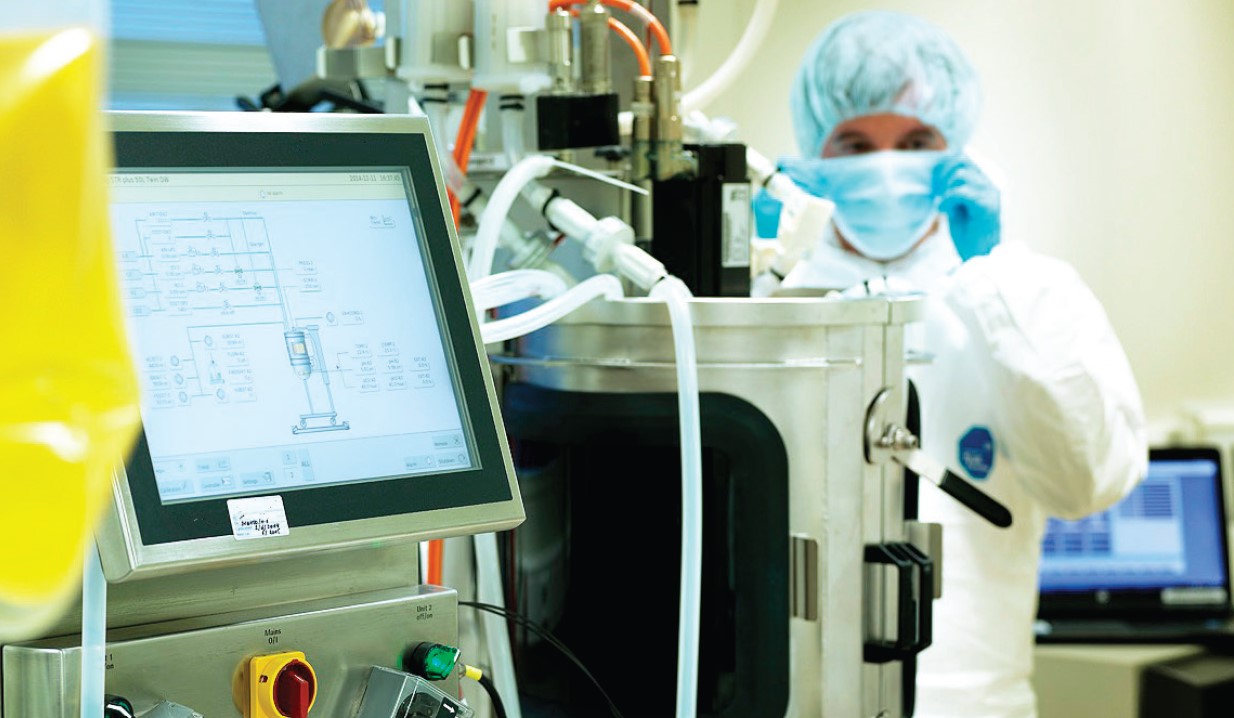
To support these rapidly growing fields, Eurofins CDMO in Ghent, Belgium, expanded its service offering with a broadly applicable production platform for pDNA. pDNA manufacturing starts with the fermentation of bacterial host cells, followed by steps for harvest, lysis (to break up the cells and release its content), flocculation (during which suspended particles bind together into larger particles called ‘flocs’), and then clarification (to separate material containing contaminants from the host cells). Next, chromatography is carried out to increase the purity of the pDNA, followed by filtration to concentrate, formulate and fill the product. The resulting bulk solution is subjected to a panel of analytical tests to guarantee the quality and safety of the batch.
Today, the CDMO site in Ghent can support productions for early development stages in shake flasks to manufacturing in a 100-litre stainless steel fermenter for later stages. Efforts are ongoing to release GMP-grade pDNA batches, which is expected in the near future within the current GMP (Good Manufacturing Practice) facility.
The Eurofins network is well positioned in the pDNA market. Activities are typically kicked off with gene design and synthesis, provided by Eurofins Genomics companies. Eurofins CDMO takes the project further along the scale-up and manufacturing phases, supported by the breadth of analytical tests available at Eurofins BioPharma Product Testing. Ongoing development will soon allow Eurofins CDMO to extend its manufacturing support to the cell and gene industry by offering Lipid Nano Particles (LNPs) formulation for pDNA and RNA, as well as manufacturing viral vectors and gene therapies. Undoubtedly, the unique breadth of the Eurofins network in the pDNA field is a key asset for clients looking for an end-to-end service. For more information, visit: www.eurofins.com/biopharma-services/cdmo/services/biologics-dsdp-development-manufacturing/pdna-manufacturing/ or contact us at: cdmo@eurofins.com
8 critical attributes your raw material testing partner must have
Kim Rhoades, Senior Director, Pharmaceutical Raw Materials, Kimberley.Rhoades@bpt.eurofinsus.com; Derek Stanley, Vice President, Business Development, Derek.Stanley@BPT.EurofinsUS.com
Raw material testing is essential as drug developers traverse the various stages of clinical development from qualification of vendors to ongoing support for commercial products. Establishing the identity, purity, and quality of starting materials helps avoid regulatory obstacles, costly production problems, delays, and most importantly ensures efficacy and safety for patient use. Here are 8 critical attributes to look for in your ideal raw material testing partner.
1. Vast Compendial Experience & Collaboration – Despite a prescriptive appearance, the global compendia are a challenging landscape to navigate. An ideal partner has decades of experience with USP, EP, and JP monographs and direct connections to collaborate and troubleshoot with those organisations.
2. Extensive Capacity & Assurance of Supply – Due to the myriad of techniques required to support a comprehensive raw material testing programme, you need a well-resourced partner who has instrumentation redundancy and well-trained technically diversified personnel to support the various tests. To minimize risk, your partner should have multiple sites on the same continent, providing these services.
3. World-class Turnaround Times & RUSH Capability – Even the most well-run manufacturing sites have an occasional oversight in their raw material and excipient supply, which causes raw material release to fall on the critical path. You need a partner with fast standard turnaround times, an ability to receive samples seven days a week, an operation that spans multiple shifts, and most importantly is able accommodate rush turnaround time requests to avoid impacts to your manufacturing schedule.
4. Digitalisation – The industry drive towards digitalisation ensures faster turnaround times, increased regulatory compliance, and few resources in your organisation processing outgoing samples and incoming data. An ideal partner would provide online ordering, including time-saving reorder functionality, online test/sample status visibility, delivery of electronic laboratory notebook raw data, and an option for LIMS-to-LIMS connectivity.
5. Comprehensive Modality Support – Your raw material testing partner should be able to support your ever-growing, mixed modality, diversified pipeline. They need to be experts in testing starting materials utilised to manufacture small molecules, traditional biologics, antibody drug conjugates, peptides/oligonucleotides, as well as cell and gene therapy products. Many of these newer modalities require technical and regulatory expertise to guide and execute strategies for non-compendial materials.
6. Global Footprint Mirroring Your Supply Chain – As your clinical trials and commercial launches expand globally, the raw material testing partner you’ve worked hard to establish a relationship and trust with should be there to continue the journey with you. Executing a global strategy presents enough challenges; finding a new raw material testing provider shouldn’t be one of them.
7. Industry Leading Regulatory Compliance & IT Security – Two of the greatest risks to your supply chain are gaps in regulatory compliance and IT security of your service providers. You need a partner that has a comprehensive understanding of both landscapes, has the resources to continuously invest and derisk their operation, and one that is routinely audited by global regulators and the broader industry.
8. Value – Any lab can provide a CoA. A true partner is going to provide you and your organisation with the greatest value for your spend as you work together to ensure the safety, efficacy, and availability of your life-saving product for patients. For more information, visit: www.eurofins.com/biopharma-product-testing-services/quality-control/raw-materials-and-excipient-testing/
Eurofins DiscoveryAI: Accelerating and empowering drug discovery with end-to-end computational services
Jessica Marty, DiscoveryAI Project Manager, Jessica.Marty@ discovery.eurofinsus.com; Sarah Biehn, PhD, Machine Learning Engineer, Sarah.Biehn@discovery.eurofinsus.com; Carleton Sage, PhD, DiscoveryAI Business Line Leader, Carleton.Sage@discovery.eurofinsus.com
Eurofins DiscoveryAI combines the power of AI with high-quality Eurofins Discovery proprietary data to build world-class platforms that supercharge drug discovery. The team, built from the ground up, features a collection of talented computational and medicinal chemists, machine learning engineers, and data scientists, all working together to create comprehensive tools that enable our clients to succeed early, improve decision-making, and explore chemical space beyond human capacity. DiscoveryAI offers several products and services to drive drug discovery, including:
- Advanced AI tools (SAFIRE): A collection of BioPrint-trained AI models that predict absorption, distribution, metabolism, excretion, and toxicity (ADMET) properties. SAFIRE also features two scoring functions, physiochemical properties, and drug-likeness filters. Try SAFIRE for free, and learn more about SAFIRE development and performance by checking out the recent publication.
- Data as a service (EMERALD): Allowing access to comprehensive, high-quality proprietary datasets. Eurofins DiscoveryAI currently offers ADMET and Dosage datasets, with plans to expand and update this offering under its PIXIE project.
- Comprehensive computational chemistry services: Eurofins DiscoveryAI’s group of seasoned drug hunters leverage advanced in-silico techniques to enable the rapid identification and optimisation of lead compounds, drastically reducing the time and costs associated with traditional methods to ensure clients stay ahead in the competitive landscape.
- Advanced visualisation tools that provide clients with interpretations of assay results and recommendations for follow-up studies.
Overall, DiscoveryAI supports customers with products and services that enable them to make better-informed decisions to accelerate the path to groundbreaking therapeutics. Experience the future of drug discovery with DiscoveryAI solutions, designed to maximise efficiency and innovation. For more information, visit: www.eurofinsdiscovery.com/solution/discoveryai
Environmental & Utility Monitoring Webinar offers clients key constraints & solutions
Aurélie Reltgen, Business Development and Customer Engagement Manager, Eurofins PSS Europe, Aurelie.Reltgen@pss.eurofinseu.com
Eurofins PSS Insourcing Solutions® (PSS) and Eurofins BioPharma Product Testing (EBPT) recently joined forces to offer a webinar on collaborative capabilities for “Environmental and Utility Monitoring: Key constraints and potential solutions,” benefitting customers in the biopharmaceutical industry.
Given the unique end-to-end testing services solutions offered by Eurofins’ network of companies, from initial sampling to secure online data access, customers were delighted to learn that PSS and EBPT can simplify their drug development by effectively handling all the product advancement steps required by the Regulatory Agencies.
Clients attended the informative webinar from across the globe, listening to Eurofins’ experts from Europe and the US giving recommendations on how to deal with this key topic from a logistical, organisational, and testing perspective. While PSS has the knowledge to implement a team of samplers for water and gas testing, EBPT has a worldwide network of laboratories that offers local testing support. As the microbiology portion requires sample testing within a short timeframe, Eurofins has implemented laboratories in each country, as well as efficient and reliable logistics to cope with the existing regulatory requirements.
PSS and EBPT are now in contact with the attendees to better understand their challenges and requirements to offer a customised solution. If you were not able to attend, you can find the recorded version at www.register.gotowebinar.com/. Contact the Eurofins PSS or BPT teams to discuss your project: pss@eurofins.com or information@bpt.eurofinseu.com
Assessing usability to improve Medical Device efficacy
Stefano Gatti, Stefano.Gatti@bpt.eurofinseu.com; Leonela Tita Gallo, Leonela.TitaGallo@bpt.eurofinseu.com; Eurofins Regulatory & Consultancy Services Italy
With the introduction of European Regulation 2017/745 and 2017/746, focus on the usability of medical devices and IVD devices has increased due to these newly introduced, specific requirements. Usability can be considered a part of the more general risk assessment of medical devices. A Usability Evaluation is intended to identify and minimise use errors and thereby reduce use-related hazards to an acceptable level.
A comprehensive approach to usability assessment involves several crucial phases and follows the reference standards IEC 62366-1 and IEC 62366-2:
- The first phase is the description and analysis of the user interface, which includes the design of the device itself, the instructions for use (IFU), labels, and, if necessary, specific training for users.
- Subsequently, the identification of hazardous situations related to device use is carried out, followed, if necessary, by exploring the interface through Formative Evaluation. The intent of this phase is to identify and resolve usability issues during different stages of device development and ensure that the device has reached an adequate level of quality for the subsequent validation phase.
- The validation phase is called Summative Evaluation, which is particularly critical and often includes a pass/fail usability test with a representative sample of users.
Possible documents that comprise a usability file in compliance with IEC 62366-1 and IEC 62366-2 include: User Interface Specification, Usability Risk Assessment, and in the case of Formative Evaluation, the Formative Plan and Report and the Summative Plan and Report.
Regarding legacy devices, Annex C of IEC 62366-1 presents an alternative process to evaluate the usability of medical devices. Annex C of IEC 62366-1 significantly streamlines the process for evaluating usability, enabling manufacturers to utilise post-market data for unmodified aspects of the design to determine the presence of use errors, use-related hazards, and appropriate mitigation measures without the need for a validation test.
Eurofins Regulatory and Consultancy Services Italy can support manufacturers in planning a usability evaluation, both in terms of documentation and activities to be performed, in accordance with IEC 62366.
For more information, visit: www.eurofins.com/medical-device/
Eurofins CDMO Alphora Inc. expands its Drug Product Analytical Laboratory
Sidra Satti, Marketing Specialist, Eurofins CDMO Alphora, sidra.satti@bpt.eurofinsca.com
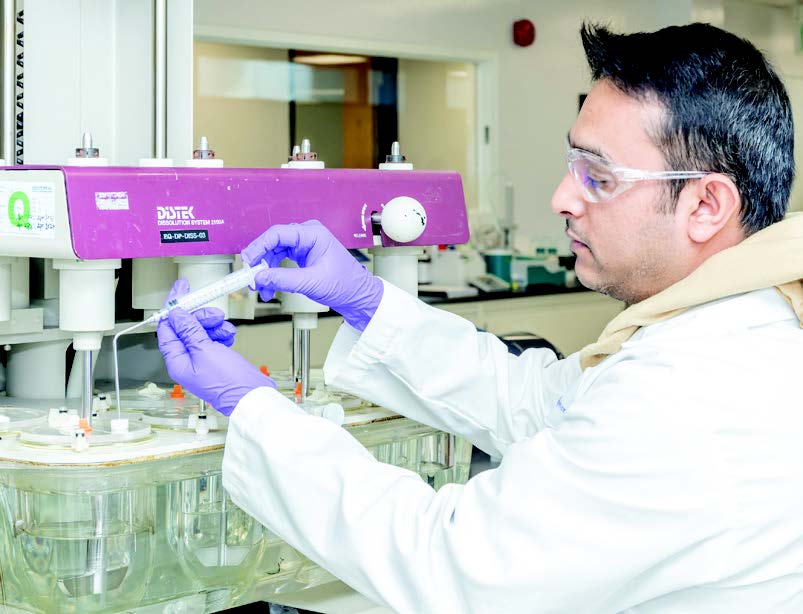
With a continued focus on the research and development of life-saving therapies and growing customer needs for quality testing, Eurofins CDMO Alphora Inc. has announced the expansion of its Drug Product Analytical Services Facility in Mississauga, Canada. To better serve increasing client demands, Eurofins CDMO Alphora has tripled the size of the facility, incorporating advanced analytical techniques and state-of-the-art instrumentation to enhance support for clients’ drug product programmes.
Expansion Highlights
This expansion includes the integration of water activity measurements, intrinsic dissolution studies, additional glovebox systems, added High-Performance Liquid Chromatography (HPLC) instruments, stability chambers, and gas chromatography capabilities. These enhancements aim to bolster the ability to deliver precise, high-quality analytical services tailored to our existing and prospective partners.
Integrated Solutions
With existing drug product capabilities and extensive Solid State Research and Development (SSRD) services, the expanded Drug Product Analytical Laboratory equips Eurofins CDMO Alphora Inc. with the ability to address drug development programme complexities from Phase I through to commercialisation. For more information, visit: www.eurofins.com/biopharma-services/cdmo/eurofins-alphora/ or Contact Us
MALDI-TOF creates unique proteomic fingerprint for microbial identification
Christoph Hoeppner, Senior Director Microbiology Operations, Eurofins Biopharma Product Testing Europe, Christoph.Hoeppner@bpt.eurofinseu.com; Edward Webber, Business Development Executive, Eurofins MGS Laboratories Portsmouth, Edward.Webber@bpt.eurofinseu.com
Annex 1 on the Manufacture of Sterile Medicinal Products was published by the European Commission on the 25th of August 2022 and entered into force a year later on the 25th of August 2023. It marks a significant shift towards risk management principles and the implementation of a Contamination Control Strategy (CCS).
Manufacturers are now required to develop and maintain a clear understanding of potential and actual contaminants within the production environment, including the identification of microorganisms detected in Grade C and Grade D areas. This creates additional demand for microbial identification capabilities to support finished product contamination analysis, environmental monitoring, and water analysis in the vicinity of production sites.
Genetic genus and species-level identification methods such as 16S rRNA long-sequencing for bacteria and 25S rRNA for fungi, are well-established and very reliable. Eurofins BioPharma Product Testing Europe has extended its European capabilities for fast and cost-effective identification with the MALDI-TOF (Matrix-Assisted Laser Desorption/Ionization Time-Of-Flight) technology to better meet clients’ current and future needs. The MALDI-TOF creates a unique proteomic fingerprint for each organism. The fingerprint is matched against characteristic patterns in the expanding instrument library, which currently includes over 11,000 entries, covering more than 4,000 species of bacteria, yeasts, as well as 222 filamentous fungi.
The method will occasionally not deliver a satisfactory result for certain organisms. Despite these challenges however, the Eurofins BioPharma Product Testing Europe team, along with its competence centres for genotypic identification, can successfully identify the isolate within a short turnaround time. This year, MALDI-TOF technology has been incorporated at three additional Eurofins laboratories in Portsmouth (UK), Colmar (FR), and Munich (DE), increasing the total number of competent sites that house the MALDI-TOF technology to six. As such, Eurofins BioPharma Product Testing Europe can better serve clients to solve microbial identification challenges on a more local level.
With over 25 years of experience in microbial identification and a proprietary and validated database, Eurofins BioPharma Product Testing Europe has consistently delivered outstanding quality cost-effectively and with reduced turnaround times. Learn more: www.eurofins.com/biopharma-services/product-testing/microbiology/microorganism-identification/ Contact us: information@bpt.eurofinseu.com