Which materials can we analyse?
We use accredited techniques for the quantitative and qualitative determination of asbestos in several materials.

Asbestos is a group of naturally occurring silicate minerals that form extremely fine, durable fibres. Due to its heat resistance and strength, asbestos was widely used in building materials throughout the 20th century.
Although its use has been restricted, asbestos is still commonly found in older buildings and may also be present in soil as a result of historical construction, demolition or contamination. It can occur as visible fragments or as microscopic fibres that cannot be detected without laboratory analysis.
Because asbestos fibres can pose serious health risks when inhaled, including respiratory diseases and cancer, accurate identification and quantification are essential before any renovation, excavation or land development work.
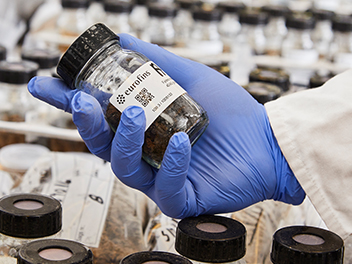
Comprehensive asbestos testing is available for bulk materials, soil and sediments. Samples are analysed in accordance with recognised UK and European standards, providing reliable data for risk assessment, compliance and safe handling.
Advanced fibre quantification and complete fibre counting can determine both the level and form of contamination, supporting informed decisions on remediation and site management.
In addition, surveys of hazardous materials can be carried out within the maritime sector, including onboard inspections to identify asbestos and other hazardous substances in vessels.
We use accredited techniques for the quantitative and qualitative determination of asbestos in several materials.

Asbestos fibres are not visible to the naked eye, but are detectable using light and polarization microscopy (PLM) as well as scanning electron microscopy (SEM). Here, the presence of asbestos and the exact type is determined by examining specific properties, such as morphology, refractive index and chemical structure.