On 25 March 2026, the Joint Nature Conservation Committee (JNCC) published the Indicators of Soil Health for England, 2026 release. The national statistics look at the contribution soils make to ecosystem services, with interim baseline data covering sustainable arable crop provision, long-term carbon storage and reducing runoff risk for surface-water flood prevention.
The indicators provide a high-level view across rural England. For farmers and advisers, soil health also needs to be understood field by field. Soil type, nutrient status, organic matter, physical condition and biological activity can all influence the condition and management of agricultural soil.
What makes a healthy soil?
Healthy soils support multiple functions, from plant production and nutrient cycling to water regulation, carbon storage and biological activity. Understanding soil health therefore requires looking at chemical, physical and biological properties together.
Chemical analysis provides information on macro- and micronutrients. Physical properties such as texture, water retention capacity, pH and cation exchange capacity affect soil structure and the amount of water and nutrients available. Biological measurements provide information on soil life, including microorganisms involved in the breakdown of plant residues and the release of nutrients.
From national indicators to field-level measurements
National indicators and field-level soil analysis answer different questions.
The national indicators give an overview of the contribution soils make at scale. At field level, the emphasis shifts to soil characteristics that can be measured and considered when making decisions about crop and soil management.
At field level, soil fertility and nutrient availability are among the factors relevant to crop production.

Bringing the different parts of soil health together
Assessing soil health at field level requires more than one measurement.
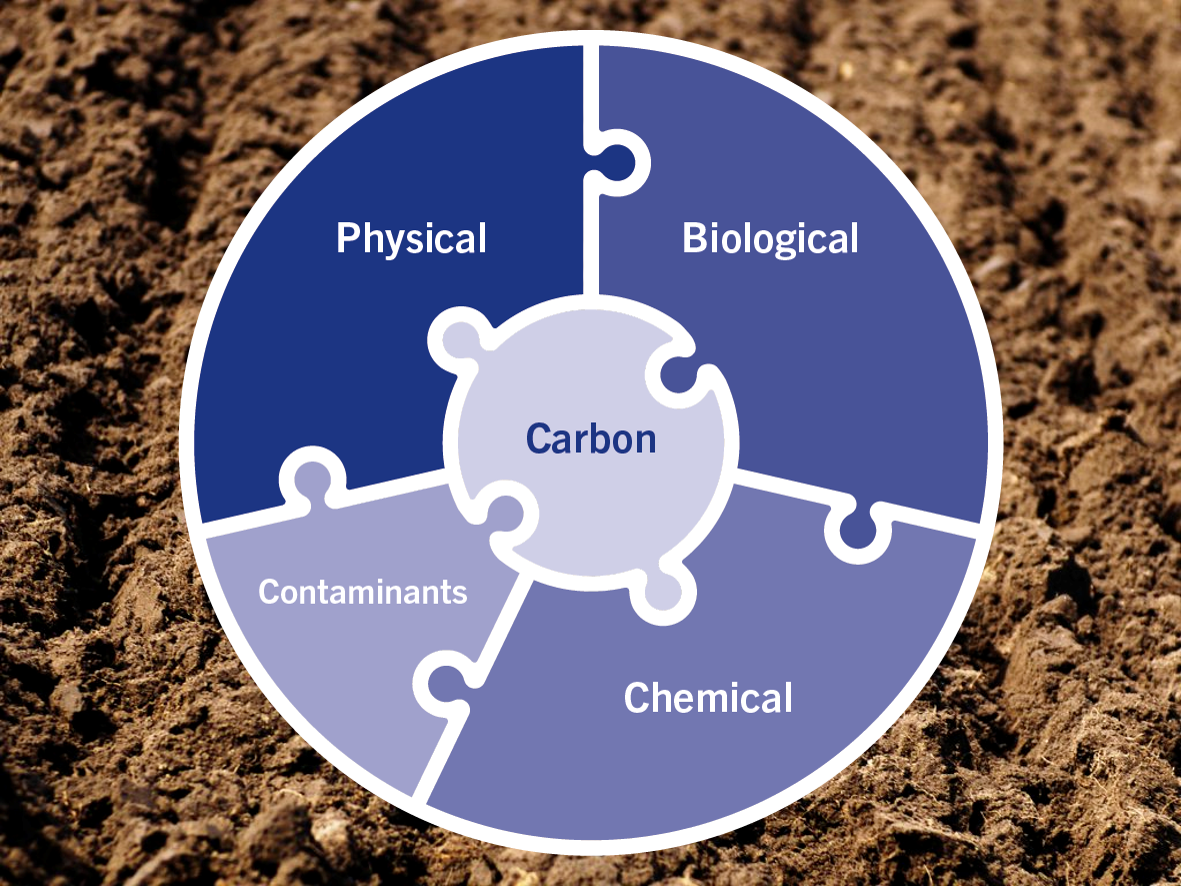
Soil Health Indicator available from Eurofins Agro Testing brings five areas of soil health into one assessment: carbon, chemical properties, physical properties, biological activity and contaminants.
Chemical analysis covers macro- and micronutrients. Physical measurements include water retention capacity, texture, pH and cation exchange capacity. Biological measurements provide information on soil life, while the assessment also covers carbon in soil organic matter and biologically available heavy metals.
Using soil results in practice
The value of soil testing lies in what can be done with the results.
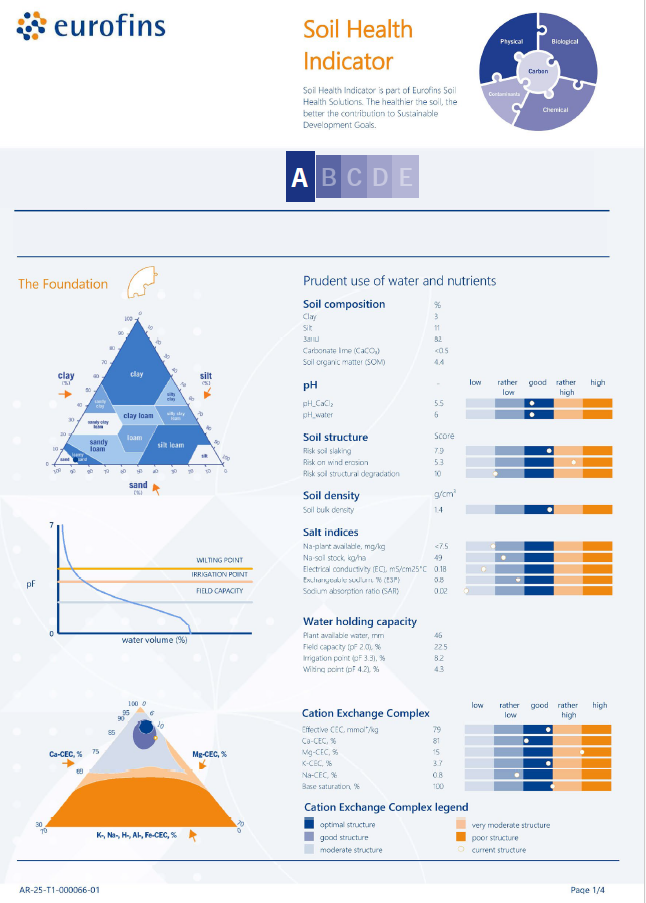
Soil Health Indicator includes crop- and soil-based recommendations. Depending on the results, these can cover fertilisation, pH, soil fertility, nutrient balance, soil structure and maintaining or improving organic matter status.
For farmers and advisers, soil analysis is therefore not simply about collecting a set of figures. Results can be considered alongside cropping plans and soil management to identify where attention may be needed.
Following changes over time
A soil analysis provides a picture of conditions at the time of sampling. Repeated assessment can show how those conditions change.
Soil Health Indicator uses an A-B-C-D-E soil health score. Regular evaluation can be used to monitor the effectiveness of soil management practices and progress in soil improvement.

From England's soils to individual fields
The national soil health indicators provide a high-level view of some of the functions soils perform across rural England. At farm level, the questions become more specific: what is the condition of this soil, what may be limiting it, and where might management need attention?
Good soil management starts with knowing what is happening in the field.
Understand your soil health
Find out more about Soil Health Indicator available from Eurofins Agro Testing:
Whether you are looking at overall soil health or have a specific testing requirement, the Eurofins Agro Testing team can discuss the available options with you.