Growing media testing
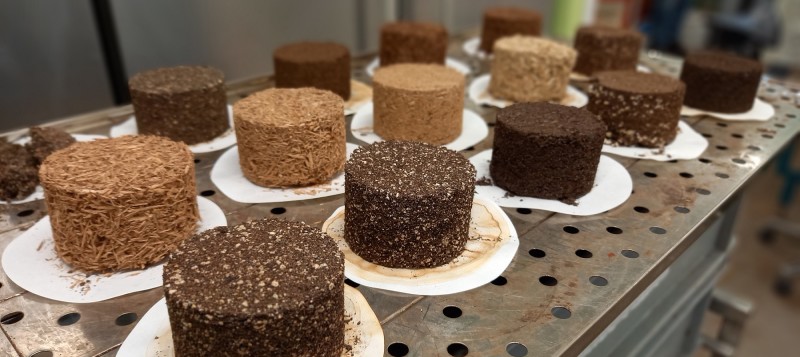
Insight into potting soil, coco peat and organic substrates
Growing media
Fresh potting soil usually contains enough basic nutrients for the start of a crop.
To ensure healthy and consistent growth, it is recommended to analyse your growing media regularly throughout cultivation.
Eurofins Agro Testing offers chemical and physical analyses for potting soil, coco peat and organic substrates, supporting both growers and substrate suppliers.
What is the Potting Soil Check?
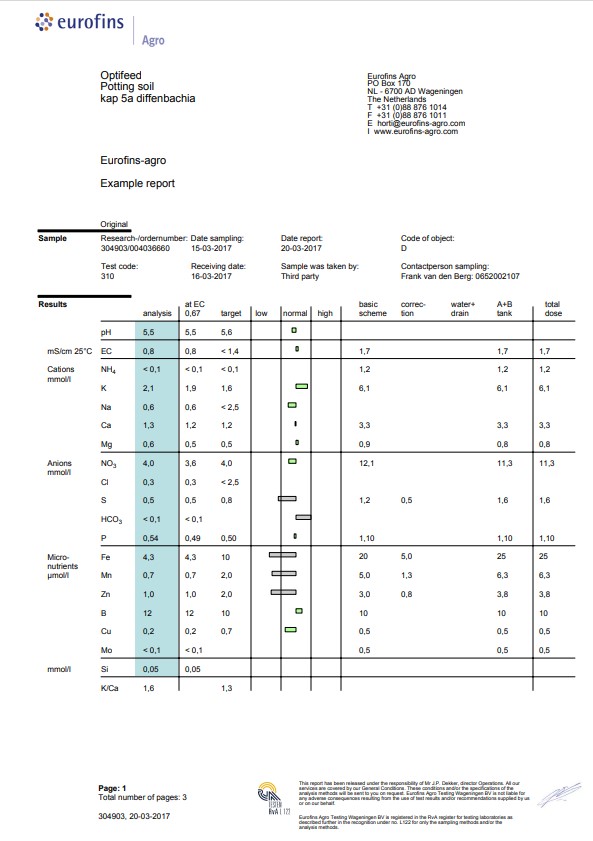
The Potting Soil Check provides chemical insight into plant-available nutrients in potting soil and coco peat. This analysis helps growers assess the nutrient balance, evaluate fertilisation strategies and maintain stable growing conditions throughout the crop cycle.
Eurofins Agro Testing provides fertilisation advice based on crop-specific target values, taking into account irrigation water composition, growth stage and recirculation systems. The results include bar charts that clearly show whether levels are low, sufficient or high, enabling immediate interpretation.
Potting Soil Check can be performed on:
- Potting soil
- Coco peat
- Organic substrates used in greenhouse and container-grown crops
When should you use it?
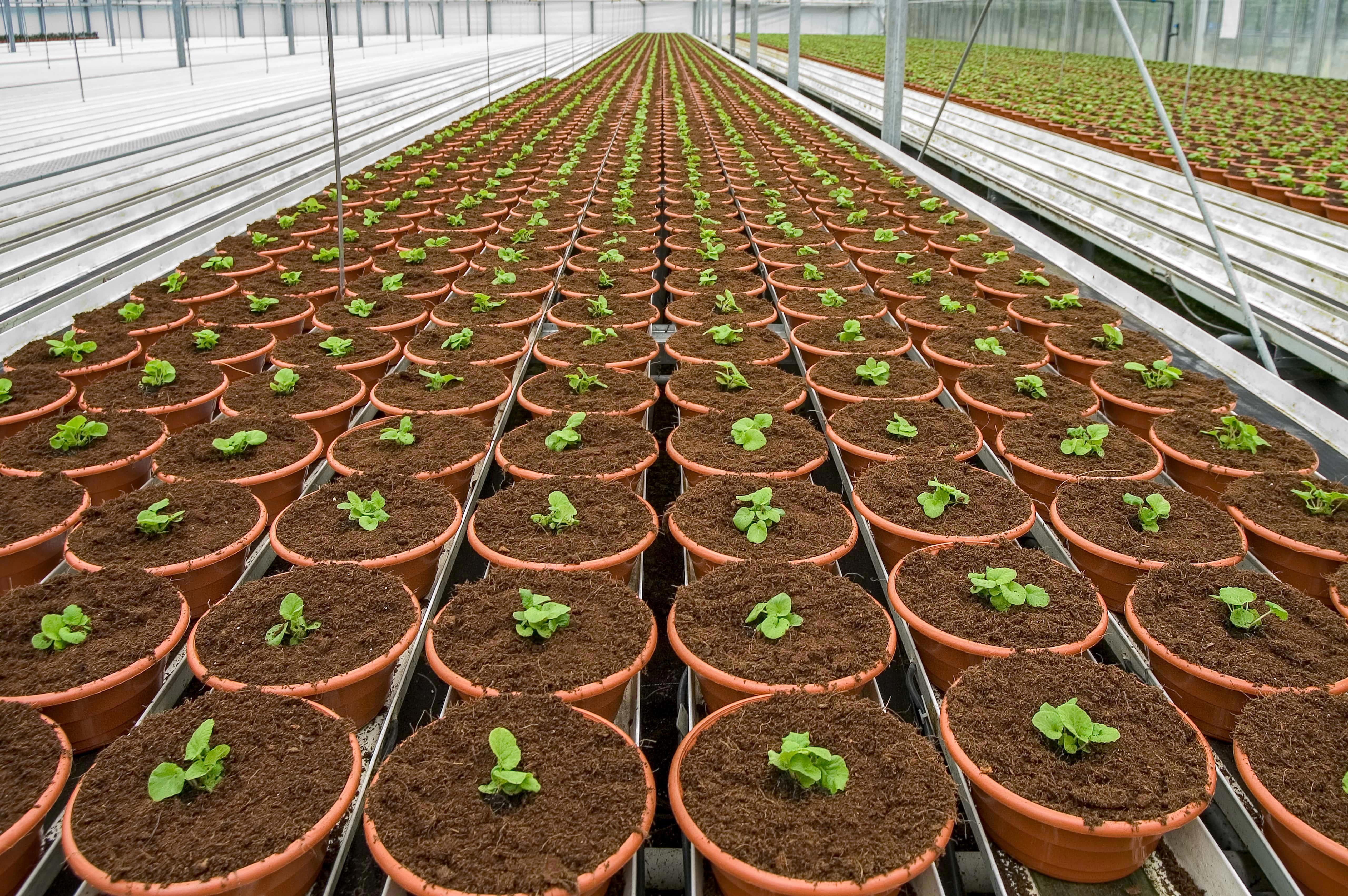
Growing media composition changes during cultivation due to nutrient uptake, water quality and substrate ageing. Repeating the analysis every 2 to 4 weeks helps maintain optimal crop performance.
The Potting Soil Check is recommended when:
- Starting a new cultivation
- Switching substrate suppliers
- Monitoring nutrient levels during growth
- Working with recirculation systems
- Assessing coco peat quality
Physical substrate testing for suppliers
For substrate suppliers, researchers and quality managers, Eurofins Agro Testing offers specialised physical analyses to evaluate the performance of organic substrates.
These analyses assess structural and physical behaviour, including moisture–air balance, shrinkage and bulk density. The methods used follow RHP (European Knowledge Centre for Growing Media) guidelines and are widely applied in the growing media industry.
Physical substrate testing supports:
- Product development
- Batch consistency and quality control
- Certification and compliance processes
- Optimisation of substrate mixes for specific crops

What does growing media analysis measure?
Growing media analysis evaluates the chemical and physical indicators that determine substrate quality and crop performance. Chemical analysis (Potting Soil Check) provides insight into plant-available nutrients, nutrient balance, pH and EC. Physical analysis for substrate suppliers assesses moisture–air balance, bulk density, shrinkage and structural properties of organic substrates.
These measurements help determine nutrient availability, substrate structure and the overall suitability of growing media during cultivation.
Download and read more!