Optimal farm management with soil, manure, compost, water, crop and forage testing to boost yields and sustainable profitability.
Accurate data on soil, crops, and feed, to enable better sourcing, traceability and sustainability decisions across the entire supply chain.
High-quality data on soil health, nutrients and crop performance to support smarter product development and targeted applications.
Detailed insights into soil quality and nutrient balance to help landscaping professionals and golf courses maintain healthy turf.
Reliable soil, crop and feed analyses with clear interpretation and practical advice to optimise yields, sustainability and profitability.
Supporting seed producers with science-driven solutions that enhance breeding, production, and quality assurance.
Verified data on soil health, crop performance and nutrient flows to support finance, carbon and sustainability platforms.
Insights into soil and forage quality to support optimal pasture management, balanced nutrition and equine health.
Precise analyses and clear insights to optimise crop production, improve sustainability and strengthen cooperative advisory services.
Data-driven insights into soil, crop and nutrient conditions to support smarter, more precise and sustainable agricultural machinery.
Reliable soil, crop and nutrient data to support policy development, sustainable land use, infrastructure planning and research.
Find a site near you!
Get in touch with our main office.
Fill in the form and our team will get back to you shortly.
View in a different locale / language
Stomata are small pores found mainly on the surface of plant leaves and stems. They are surrounded by specialised guard cells that regulate their opening and closing. Stomata play a crucial role in gas exchange, allowing carbon dioxide to enter for photosynthesis and oxygen to exit. They also enable transpiration, the process by which water vapour leaves the plant, helping to control water balance and temperature.
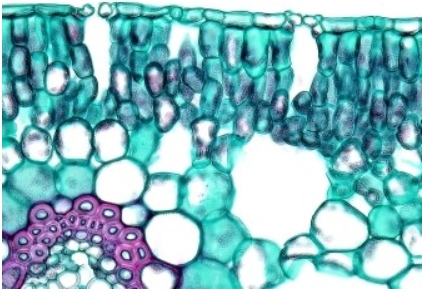
Figure 1: Stomata in the leaf. Photo: BCC Bioscience Image Library
A stoma consists of two closing cells. Below the closing cells are cavities in the mesophyll. When the relative humidity (RH) in these cavities is lower than in the greenhouse air, stomata close because the cell tension, the turgor, decreases.