

- No Results
- Global
-
Australia

-
Austria

-
Azerbaijan

-
Brazil

-
Belgium

-
Canada

-
Chile

-
China

-
Costa Rica

-
Croatia

-
Czech Republic

-
Denmark

-
ESTONIA

-
Finland

-
France

-
Germany

-
Hong Kong

-
Hungary

-
India

-
Italy

-
Ireland

-
Japan

-
Korea

-
Latvia

-
Lithuania

-
Malaysia

-
Mexico

-
Morocco

-
Netherlands

-
New Zealand

-
Norway

-
Philippines

-
Poland

-
Portugal

-
Romania

-
Singapore

-
Slovakia

-
Slovenia

-
Spain

-
Sweden

-
Switzerland

-
Taiwan

-
Turkey

-
United Kingdom

-
UNITED ARAB EMIRATES

-
United States

-
Vietnam

Understanding needle-based combination product design verification and validation
 Tyler Harris, Senior Scientific Advisor; Ryan Bair, Manager of Medical Device Package Testing/CCIT; Medical Device Services, Christina Mendat, Vice President Eurofins Human Factors MD
Bio/pharmaceuticals have rapidly shifted from conventional small-molecule products to complex biologic modalities, often delivered by injection. Historically, administration occurred in medical facilities by healthcare professionals. Over the past decade, new product configurations have accelerated growth and shifted point-of-care administration to the home through combination products.
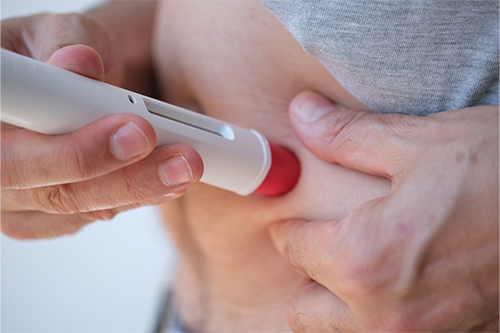
Combination products may be device-led or, more commonly, drug-led. Device constituents include auto-injectors, prefilled pens, and on-body delivery devices (OBDD), with automated or semi-automated features that require in-depth design verification and usability testing.
Design verification
For drug-led combination products, design verification demonstrates the system meets mechanical, functional, stability, and user requirements so both drug and device constituents perform under expected use conditions. Design Verification Testing Protocols vary by intended use, critical quality attributes (CQAs), critical material attributes (CMAs), usability, regulatory expectations, and risk.
Requirements and compliance
Combination products are regulated by the agency overseeing the primary mode of action. For drug-led devices, CDER provides final product approval, while the device constituent must still comply with applicable CDRH requirements. Risk (ICH Q9 and ISO 14971) and Quality by Design (ICH Q8) underpin design and design verification by encouraging a holistic view of the device and drug constituents across the product lifecycle.
Component level
Each configuration needs a tailored set of component-level assessments (e.g., primary and secondary containers) to confirm functionality and build a foundation that reduces primary-container risk. Standards and guidance, including ISO 11040-4/-6/-8, ISO 80369-20, ISO 11608-3, and USP <382> address elastomer performance, physio-chemical interactions between drug and package, container closure integrity, and standardized dimensions. Testing includes:
- Break-loose force
- Extrusion force
- Closure system liquid leakage
- Tip-cap pull-off force
- Inherent integrity
- Needle self-sealing capacity
Assembled level
Assembling the primary container into the device constituent warrants additional assessment of the resulting combination product. Complex mechanical systems can fail due to manufacturing issues (e.g., injection molding processes), fitment problems, and assembly variability. Guidance and standards for assembled needle-based injection systems (e.g., ISO 11608-1, ISO 11608-5, FDA Guidance for Industry) emphasize mechanical, automated, and usability specifications, and provide data to support design verification.
Usability and human factors
Component performance can look acceptable in bench testing yet create real-world challenges for intended users that reduce usability and market viability. For example, excessive break-loose or cap-removal force may cause sudden release and physiologic hand rebound, increasing the risk of inadvertent needle exposure, accidental activation, or loss of control. If the force needed to overcome break-loose is too high, users may experience strain or injury, incomplete dose preparation, or unintentional medication loss.
At the assembled level, user-based testing should include early-stage, formative, and late-stage (end-stage) evaluations, since user performance can only be validated on the final finished product.
Conclusion
Safeguarding patient safety starts in the design phase and continues through the product lifecycle. Testing and inspection support this goal by helping deliver quality, user-friendly needle-based injection systems. Eurofins supports manufacturers by expanding our auto-injector testing footprint and onboarding universal test systems that can sequentially measure cap removal, activation force, deliverable volume, click detection, injection time, needle depth, and needle lockout. This approach can reduce sample quantity needs, lead times, and cost. For more information, contact us at: Medical-Device@BPT. EurofinsUS.com.
Contact Us